Get Full Government Meeting Transcripts, Videos, & Alerts Forever!
Get email alerts on the Student Health Opioid Harm Reduction topic
No spam. Unsubscribe anytime.
Subcommittee advances bill to require resident assistants be trained and carry opioid antagonist doses
Summary
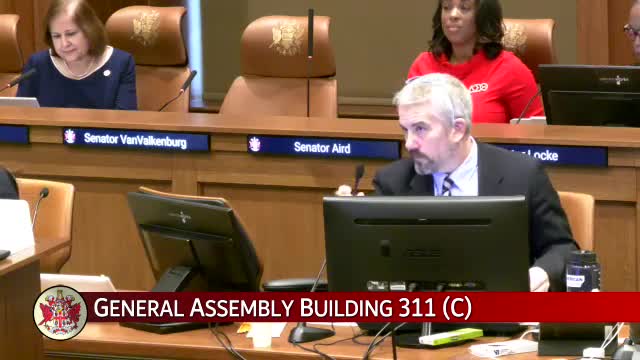
A measure that would require resident assistants in public student housing to be trained to administer an opioid antagonist and to keep at least two unexpired doses on‑hand was recommended for reporting by the Virginia Senate Higher Education Subcommittee after a voice vote.
A measure that would require resident assistants in public student housing to be trained to administer an opioid antagonist and to keep at least two unexpired doses on-hand was recommended for reporting by the Virginia Senate Higher Education Subcommittee after a voice vote.
Senator L. Bagby, the bill patron, told the subcommittee the legislation “requires each resident assistant in a student housing facility at a public institution of higher education [to] complete, prior to the commencement of his or her duties, training and authorization for administration of an opioid antagonist to any student, faculty, or staff member who is believed to be experiencing or about to experience a life‑threatening opioid overdose.” He added the bill “ensures that each resident…has access to at least 2 unexpired doses of the opioid antagonist at all times.”
Why it matters: Supporters say rapid access to opioid antagonists such as naloxone can prevent death from opioid overdoses when first responders are delayed. Opponents raised concerns that university residential settings have a high prevalence of alcohol intoxication and that untrained or minimally trained lay administrators could misidentify overdoses or cause harmful side effects in certain patients.
Questions and concerns: Senator Hashmi asked about liability for resident assistants if they are unable to manage a crisis; she said she was “concerned about the issue of liability, particularly for the resident assistance” and whether stakeholders had raised specific legal concerns. Bagby responded that the training requirement could be incorporated into existing first‑aid trainings and described it as brief and simple.
University of Virginia opposition: The University of Virginia submitted a written statement and supporting remarks from Dr. Chris Holstitch, Senior Associate Vice President for Student Health and Wellness and a professor of emergency medicine. Holstitch said UVA’s experience over 25 years included only two opioid‑related overdoses and emphasized that alcohol is the primary toxin seen in emergency visits. He told the subcommittee that UVA had 226 student alcohol‑related emergency department visits in the previous year and warned that intranasal naloxone can cause vomiting, which could worsen outcomes for students with severe alcohol poisoning. The university’s statement said it “strongly opposes a bill that requires RAs to be trained in opioid antagonist administration and to provide them with these doses.”
Scope and implementation details: Under the bill language described in committee, institutions must adopt policies and procedures for administration and must ensure RAs are authorized by a prescriber and trained. Senator Bagby indicated the RA training could be integrated into other required trainings and that the bill applies to university‑controlled housing; he said it likely would not apply to off‑campus Greek housing unless that housing is under university control.
Outcome: The subcommittee moved and seconded that the bill be recommended for reporting. The committee recorded a voice vote and the clerk announced the tally as 4 ayes, 1 nay; the transcript records the bill as recommended for reporting to the next committee level.
Next steps: The bill will be carried forward to the full committee for consideration. The transcript records requests from members for additional stakeholder input about liability and implementation from institutions and health providers.