Get Full Government Meeting Transcripts, Videos, & Alerts Forever!
Get email alerts on the Utility Construction Standards topic
No spam. Unsubscribe anytime.
Council adopts updated water, wastewater and electric construction standards; staff say changes increase flexibility
Summary
The Lebanon City Council suspended rules and adopted ordinances updating water/wastewater (2025-06) and electric (2025-07) construction standards. Utilities staff said the changes codify modern materials and make standards more developer friendly; council approved both ordinances by voice vote after unanimous motions to suspend rules.
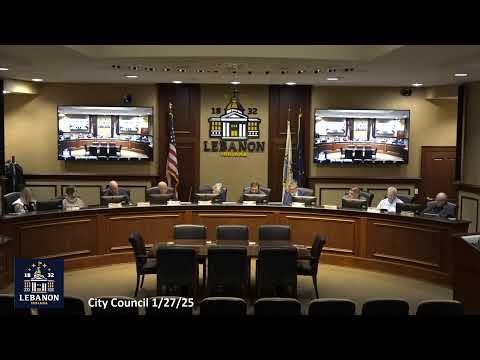
The Lebanon City Council on Jan. 27 adopted ordinances 2025‑06 and 2025‑07 to update construction standards for water/wastewater and electric systems, respectively, after the council unanimously voted to suspend the rules and move both ordinances to second reading the same night.
Ordinance 2025‑06 revises the city’s water and wastewater construction standards, superseding prior ordinances 95‑07 and 2020‑04 and directing the utility to maintain publicly accessible copies of the new standards. Jeff Jacob, attorney for Lebanon Utilities, told the council the update codifies recent practices and new allowable materials, and is meant to make the standards “a little more user friendly” for developers and builders. He said the Board of Public Works and the Utility Service Board previously discussed and unanimously recommended the changes.
Ryan Ottinger, water/wastewater operations manager, explained the technical updates include newly permitted materials — for example, allowing PVC in some circumstances where ductile iron was previously required — and clarified that where PVC is used it should not be mixed with ductile iron for a continuous run unless noted on the plans. He said the standards also make forms and specifications searchable and downloadable on the utility website.
During discussion, council members raised questions about the city’s standard easement width. Staff said the city’s standard utility easement is 20 feet; they described flexibility to reduce easement widths on a case‑by‑case basis for certain subdivisions but said the 20‑foot figure is the written standard used to ensure crews have room for equipment and repairs. Staff also said the utility generally prefers front‑yard easements to rear‑yard easements to reduce homeowner impacts and that fences and some plantings are discouraged or prohibited within easements because they can impede maintenance.
A member of the public, Jody Stewart, urged clearer disclosure to homebuyers about easements and said some residents do not understand how easements affect backyard use. Staff replied that developer packets and plot plans include easement information but acknowledged that homeowners sometimes miss those details when buying property.
Ordinance 2025‑07 updates electric construction/installation standards and adopts an electric service installation manual; the ordinance states that the National Electric Safety Code governs where not in conflict with the city manual. Jeff Carino, electric operations manager, said the manual clarifies confusing areas from the prior document and reflects current practices.
Council voted unanimously by voice to suspend the rules and move both ordinances to second reading, and then voted to adopt both ordinances on second reading the same evening. Rob (staff member) read each ordinance for the record.
Votes at a glance
- Ordinance 2025‑06 (Water/Wastewater construction standards): motion to suspend rules approved unanimously; ordinance adopted on second reading. - Ordinance 2025‑07 (Electric service installation manual): motion to suspend rules approved unanimously; ordinance adopted on second reading.
Why it matters: the revised standards change technical requirements builders and developers use when constructing utilities for dedication to Lebanon Utilities; staff said the changes will reduce delays, ease material shortages (by allowing alternatives such as PVC), and provide clearer, searchable forms for applicants.
What’s next: the utilities will maintain the new standards on file with the utilities office and the planning department; staff retain final discretion for design choices not covered by the standards.