Get Full Government Meeting Transcripts, Videos, & Alerts Forever!
Get email alerts on the School Transportation Policy topic
No spam. Unsubscribe anytime.
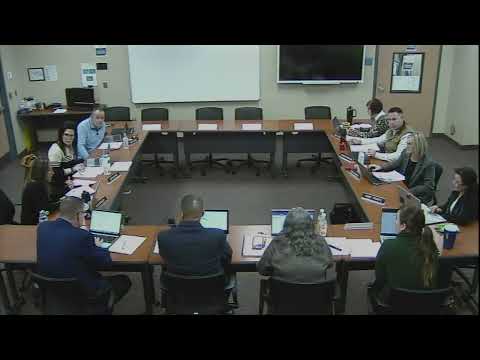
Prior Lake-Savage board keeps student walking distance at 1.5 miles; votes 4-3 to send policy to second reading
Summary
The Prior Lake‑Savage Area Schools board debated whether to align its maximum student walking distance with statutory language but voted 4‑3 at a study session to keep the current 1.5‑mile maximum and advance the revised policy for a second reading.
Chair White and school board members debated proposed edits to district policy 707 concerning maximum student walking distance during a study session. The policy advisory committee had proposed language allowing the district to align its maximum with statute (2 miles) to give administrators flexibility, but several directors raised safety and cost concerns. After discussion, the board voiced its will to maintain the current 1.5‑mile maximum and to bring the revised policy to a second reading with that figure retained.
The district’s policy advisory committee recommended changing the maximum walking distance in policy so the board could later adjust routes without returning the policy to the committee. Supporters said aligning the policy with statute would give administrators more flexibility should budget pressures prompt route changes. Opponents, including several board directors, said they would not support expanding the maximum — citing Minnesota winters, crossings of busy roads and neighborhoods where students might lack sidewalks.
Board members and staff also clarified the operational limits on any change: the district’s bus contract does not specify mileage limits, and safety exceptions already exist under state statute. District staff said safety routing decisions (for example, when a student must cross a major highway or lacks a sidewalk) are reviewed and granted on a case‑by‑case basis; those safety exceptions would remain regardless of the policy’s maximum.
The board’s action was procedural: members recorded a voice tally of 4‑3 to maintain 1.5 miles and to bring the edited policy forward for a second reading with that wording. The board did not adopt a final budget or operational change at the meeting; speakers said any route changes driven by budgetary decisions would come back to the board for separate consideration.
Administration indicated that, if the board later wanted to pursue route changes tied to budget reductions, staff would present cost, safety and routing analyses as part of any recommendation. The staff member who answered contract questions said there is nothing in the current transportation contract that mandates a mileage figure, and the district’s safety review process continues to govern exceptions.
The discussion occurred in the context of the district’s broader budget planning cycle; board members said they expect possible staffing and transportation adjustments to reappear in future budget work sessions.