Get Full Government Meeting Transcripts, Videos, & Alerts Forever!
Get email alerts on the Budget Cuts topic
No spam. Unsubscribe anytime.
Evanston CCSD 65 board approves $13.3 million in reductions, cuts 73 positions
Summary
After hours of public comment and debate, the Evanston CCSD 65 Board of Education voted unanimously to adopt a district plan to cut $13.3 million and eliminate 73 full‑time equivalents, prioritizing classroom staff and some student supports while reducing central office roles and several district programs.
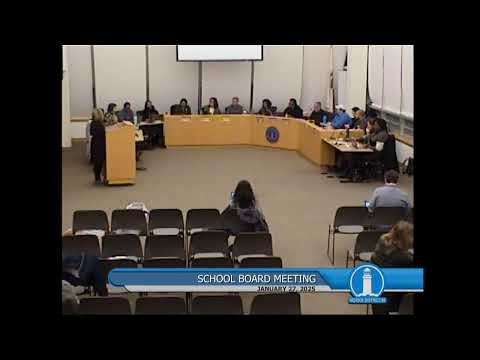
The Evanston CCSD 65 Board of Education voted Jan. 27 to adopt the administration’s recommended structural deficit reduction plan (scenario 2), a package of cuts intended to close about $13.3 million and eliminate 73 full‑time equivalent positions. The motion passed by roll call vote, with all board members voting yes.
Superintendent Dr. Turner told the board the recommendation was shaped to “minimize impact to our students” while meeting the district’s $13.2 million reduction target. The plan keeps several student‑facing services in place while reducing central office positions and non‑personnel spending.
The district presented a set of line‑item changes the board weighed before the vote. Major elements of scenario 2 include: a reduction of 26 central‑office FTEs; school‑level section reductions reduced from the previously proposed 22 to 18 sections; elimination of the previously proposed pre‑K transportation cut; a combined reduction to the academic skills center and summer learning programs of roughly $1.0 million; a transportation reduction of about $2.3 million (other than the pre‑K item); a 10% reduction in supplies (about $432,000); and a 5% reduction in “other objects” (about $370,000). The school‑level non‑direct‑instruction reductions total 29 FTEs under the adopted scenario.
“My recommendation to move forward with this board is scenario 2,” Dr. Turner said during the meeting. She and district staff described the recommendation as the result of cabinet deliberations, community engagement sessions, and a preliminary racial impact assessment (RIA) used to identify where mitigation should be focused. “The reality is you can’t really assess mitigation until you enact the actual changes,” Dr. Turner said, noting the district will continue to analyze and document equity impacts as implementation proceeds.
District staff from its external services (SES) team and administration explained tradeoffs and contingencies. Dr. Greg (SES) told the board the staff reduced the planned school‑level section closures from 22 to 18 after reviewing building‑level needs and capacities. Melissa Messenger, a district staff member who led stakeholder outreach for phase 2, said the district held multiple community and staff sessions and an online survey; turnout for phase 2 engagement was lower than for phase 1, but the feedback emphasized preserving student‑facing roles, wraparound services and small class sizes.
Board members pressed staff for detail on how dollar amounts tied to FTE totals were calculated and how reductions might affect special education, out‑of‑district placements and class sizes. The district said the FTE counts are based on current personnel data and that the dollar totals are derived from actual payroll and budget figures rather than averages. Staff also said they will attempt to limit immediate impacts to the most vulnerable students and preserve core instructional programs.
Board members repeatedly urged administrators to seek additional non‑personnel savings where feasible, for example by renegotiating vendor contracts and using cooperative purchasing. Several trustees also emphasized the heavy human impact of the cuts. “There are real people behind these numbers,” one board member said, urging compassion as the district implements the reductions.
The board approved the motion after more than two hours of discussion. Implementation work begins immediately if the board’s decision is to stand; the administration said it would coordinate bargaining‑unit notifications, building‑level workload analyses, and mitigation planning in the weeks before July 1, 2025, when many reductions would take effect.
Votes at a glance - Adopt structural deficit reduction plan (scenario 2): passed (unanimous).