Get Full Government Meeting Transcripts, Videos, & Alerts Forever!
Get email alerts on the Attendance Boundaries topic
No spam. Unsubscribe anytime.
Appleton board approves new Edison attendance boundaries adding Columbus, parts of Franklin and Dunlap
Summary
The Appleton Area School District board voted to redraw Edison Elementary’s attendance area to include the entire Columbus attendance area, the portion of Franklin south of Wisconsin Avenue and the portion of Dunlap east of Richmond Street, citing walkability and safety concerns.
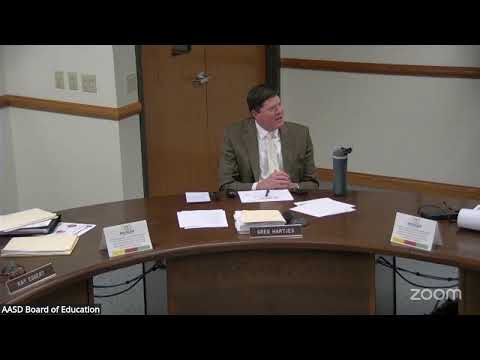
At a meeting of the Appleton Area School District Board of Education, members voted to redefine Edison Elementary School’s attendance boundaries to add the entire Columbus attendance area, the Franklin attendance area south of Wisconsin Avenue and the portion of Dunlap east of Richmond Street.
The change, adopted by roll call vote, was presented by district staff as a three‑option plan after two months of study and public outreach. Assistant superintendent Dr. Nanbano joined the presentation and described outreach that included mailed letters, door drops coordinated with the Appleton Historic Central Neighborhood, a listening session and an online survey. "We did have 5 individuals complete the survey," she told the board, and four of five respondents strongly supported adding the Franklin area south of Wisconsin Avenue.
The board majority framed the change as advancing safety and walkability. During public comment, Oliver Zorno, speaking as a neighbor and father of two Edison students, urged the board to “please prioritize walkability and neighborhood integrity” when adjusting attendance lines. District staff noted that the new Edison boundary would place no household more than about 1.5 miles from the school, and that students in the added areas would no longer have to cross Richmond Street or Wisconsin Avenue in many cases.
Administration presented numeric context: Edison currently has classroom capacity for about 140 more students than enrolled; 59 students live inside the Columbus attendance boundary and 79 students currently attend Columbus (including 20 who live outside the Columbus boundary). The district said adding Columbus and the other areas would raise Edison’s share of students of color from about 32% to about 38% and increase the share of students eligible for free or reduced‑price meals from 49% to about 57% — figures the presenters said are roughly at the district elementary average.
Board members discussed concerns the change could reduce enrollment at Franklin and noted the district will continue to monitor grade‑level cohort sizes so schools keep stable class-section structures. The board and staff also discussed transportation and pedestrian safety; district staff said they will work with the City of Appleton and Safe Routes partners on crossing guards and other mitigations where needed.
Edward Ruffalo, board member, made the motion the board approved. He stated: "So towards that end, I'll make a motion that we define the new Edison Elementary School attendance boundaries to be the existing boundaries, the entire Columbus Elementary School attendance area, the Franklin Elementary School attendance area that is south of Wisconsin Avenue, and the Dunlop Elementary School attendance area that is east of Richmond." James Bacon seconded the motion; a roll‑call vote followed and the motion carried (see "Votes at a glance" below for the roll call list).
District staff advised families already attending their current school may remain through fifth grade and that families who prefer another school can apply through the district’s school‑of‑choice process; staff also said the district will evaluate school‑of‑choice requests for students with individualized education plans on a case‑by‑case basis to ensure the IEP can be met at the requested site.
The board’s approved boundary map takes effect for the 2025–26 open‑enrollment cycle. Staff said additional implementation work — including outreach on transition plans, walking/bike routes and any needed crossing‑guard requests to the city — will follow.
Ending: The board approved the boundary change as presented and asked staff to return with follow‑up details on transition supports, crossing‑guard requests and any needed parent communications.