Get Full Government Meeting Transcripts, Videos, & Alerts Forever!
Get email alerts on the Pay Equity Transparency Ordinance topic
No spam. Unsubscribe anytime.
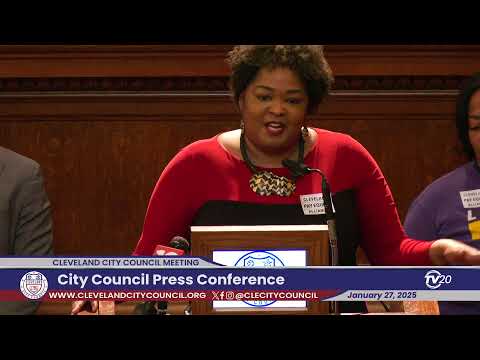
Cleveland councilmembers introduce pay equity, salary-transparency ordinance
Summary
Councilmembers introduced an ordinance requiring employers hiring in Cleveland with more than 15 employees to post salary ranges and limiting use of salary history; the measure would rely on the reconstituted Fair Employment Wage Board for complaints and enforcement and faces further committee review.
Cleveland City Council members introduced a pay equity and salary-transparency ordinance Wednesday that would require businesses hiring in Cleveland with more than 15 employees to post a salary or salary range in job advertisements and curtail the use of applicants' prior salary information in setting pay.
Councilman Charles Slife, who said he represents Ward 17 and is a lead sponsor, told the chamber the proposal is part of a broader push to help Cleveland workers earn livable wages. "Pay equity and transparency is a natural outgrowth and a way to ensure that people in Cleveland ... have the opportunity, to have jobs that pay them fairly and allow them to build wealth for them and their families," he said.
The ordinance would apply to positions being hired in the city and require either an hourly wage band or an annual salary to be posted in job listings. It would also limit employers' ability to rely on applicants' salary histories when setting pay, a practice advocates say perpetuates pay gaps. The legislation, as described at the introduction, includes a complaint process administered by the Fair Employment Wage Board: complainants would have 180 days to file, the board would first seek to have employers cure violations, and civil penalties are described in the legislation with discussed maximums ranging from about $1,000 for initial failures up to roughly $2,500 for repeat or uncured violations.
Austin Davis, an official from the Office of the Mayor speaking on behalf of Mayor Bibb, framed the change as part of a joint city administration–council pro-worker agenda, saying the policy follows practices adopted in other cities and states. "This is really about folks who ... had a first job or a job earlier in their career trajectory where that salary held them back for years," Davis said.
Supporters from the business and labor communities also addressed the council. Dr. Jennifer Bosco, director of the Business Inclusion Hub at Plexus, the LGBTQ Chamber of Commerce for Northeast Ohio, said employers that adopt pay-equity practices have streamlined hiring and reduced turnover. "Transparency and equitable frameworks when it comes to salaries also build a lot of trust between the business, employees, and potential candidates," she said. Sandra Ellington, a longtime city worker and executive board member of SEIU Local 1, described the ordinance as a step toward fairness across Cleveland neighborhoods: "We did it. We put a mark in the sand, and we said enough was enough," Ellington said.
Council members and administration staff said the city has reconstituted the Fair Employment Wage Board, which had been dormant for many years, to administer enforcement and outreach. Council staff and the administration said they plan a coordinated communications campaign and training to reach employers and employees; council members also said the board will emphasize helping businesses come into compliance rather than immediately imposing penalties.
During a question-and-answer period, council members and staff clarified that the ordinance applies to employers hiring in Cleveland (not merely headquartered in the city) and that posting an open salary range is acceptable under the proposal; the council also acknowledged that some businesses already post pay information and that the new rules will primarily affect smaller employers that do not. When asked whether the ordinance will set numerical outreach or impact goals for the first year, staff said those metrics will be discussed after the ordinance moves through the legislative process and after the board and administration coordinate an implementation plan.
The ordinance was introduced at the council meeting and will proceed through the council's legislative process, including committee hearings and staff briefings; no vote was taken on the ordinance at the session. Council members urged residents to follow forthcoming hearings and to contact their council representatives with feedback.
For now, the measure remains an introduced ordinance pending committee review and any amendments during the legislative process.