Get Full Government Meeting Transcripts, Videos, & Alerts Forever!
Get email alerts on the Wildfires Property Tax Relief topic
No spam. Unsubscribe anytime.
Board of Equalization members press for property-tax relief and informational hearings after Southern California wildfires
Summary
Board members at the Board of Equalization meeting on Jan. 23 focused opening remarks and follow-up proposals on the recent Southern California wildfires, discussing property-tax impacts for displaced residents, possible deferrals, and plans for informational hearings and a February planning item.
At its Jan. 23 meeting, the Board of Equalization opened with multiple members detailing the effects of recent Southern California wildfires and discussing how property-tax policy might help displaced residents and businesses.
Controller Cohen said the BOE had staff on the ground and pledged the board’s support, saying, “this body, the Board of Equalization, as well as other state agencies are here to support and to serve you.” Controller Cohen’s remarks opened a series of comments from board members who described damage to homes, businesses and schools and urged action on tax and administrative relief.
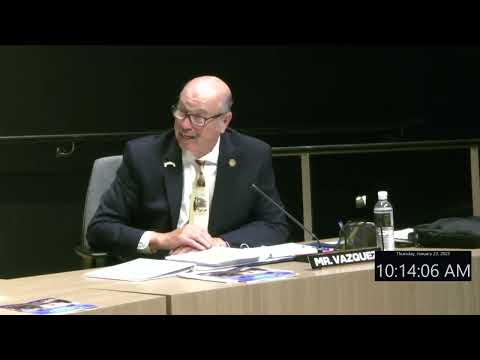
Member Vasquez described the scale of destruction and discussed options for taxpayers whose homes and businesses were destroyed. “They’re still gonna owe these taxes, but whatever we can do, I think, to defer it as long as possible,” he said, and suggested the board consider a special hearing or extended relief timeline. Vasquez said he had seen “over 17,000 structures” affected and cited the human toll of the fires in his district.
Member Schaeffer noted executive action already in place and urged proactive steps from county assessors: “Governor Gavin Newsom has waived the penalties for late payments for anybody affected by the disaster through 2026,” Schaeffer said, and recommended that local assessors proactively initiate reductions where applicable so displaced owners would not have to apply themselves.
Vice Chair Lieber framed the issue as one that will affect the board’s work and the Legislature, saying, “I think this is really going to shape our work here and the work that goes on in the Legislature over the next year and beyond,” and flagged housing, insurance and the impacts on caregiving and local economies as follow-up priorities.
After discussion, the board approved the concept of holding an informational hearing on “the importance of California’s property tax system in addressing the disproportional impact of poverty,” with scheduling and detailed planning to return at the February meeting so members can set dates and logistics. Vice Chair Lieber moved to approve the concept and the board adopted it by roll call vote with all members present voting aye.
The board and members emphasized several implementation areas for follow-up: tax-deferral or waiver mechanics for destroyed structures; how to backfill county and school funding if large property-tax rolls decline; insurance-related issues and rapid-disaster relief for small businesses; and outreach to undocumented and underserved residents who may not qualify for federal aid.
Members and staff also discussed practical next steps: (1) the executive director’s team will circulate a prepared assessor survey and follow up with counties, though some counties were temporarily excused from immediate contact because of active disaster response; (2) the board will agendize a brief planning item for February to review survey results and shape an April work session or a separate informational hearing; and (3) individual members intend to pursue legislative concepts tied to wildfire relief and property-tax responses.
The item closes with the board asking staff to continue the outreach and to return with a proposed schedule and a draft hearing plan at the February meeting so the board can decide on locations, formats and whether to hold a full hearing in Los Angeles or a hybrid session.
Ending: Members said they would continue to coordinate with state agencies and local assessors and to refine proposals for tax relief and administrative steps at the February meeting, and they signaled interest in legislative proposals to support long-term recovery.