Get Full Government Meeting Transcripts, Videos, & Alerts Forever!
Get email alerts on the Transportation Infrastructure topic
No spam. Unsubscribe anytime.
Sumner details 2026–2031 six‑year transportation improvement program; public hearing set for Feb. 3
Summary
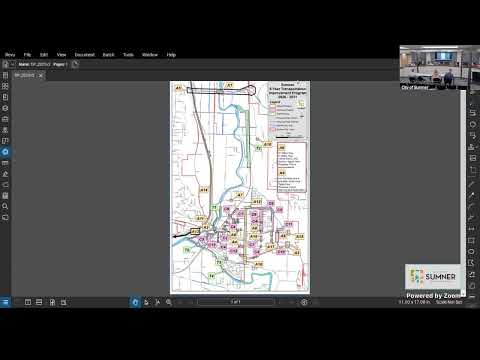
City engineering staff walked council through the 2026–2031 Six‑Year Transportation Improvement Program, highlighting funded design phases, unfunded construction phases, grant awards and several arterial and trail priorities; the plan must be updated annually and will be filed with WSDOT.
Assistant Engineering Manager Courtney Littrell and Senior Associate City Engineer Andrew Leach presented Resolution 1713, Sumner’s 2026–2031 Six‑Year Transportation Improvement Program update, at the Jan. 27 study session. Littrell said state law requires an annual update and that the plan will be filed with the Washington State Department of Transportation; the city will hold a public hearing on the update at the council’s Feb. 3 regular meeting.
Littrell reviewed arterial projects in the draft TIP. Highlights included the Stewart Road bridge replacement (construction beginning in March with expected completion in 2028), the 166th Avenue East widening and double‑roundabout project (currently in design with environmental permitting and a planned fish‑passage culvert replacement for Salmon Creek), and a newly added Main Street crossings project for which the city received a TIV grant covering roughly 76 percent of project costs. The 166th/64th project has a recent award of $2,249,000 from PSRC and STGB funds for right‑of‑way; Littrell said the construction phase remains unfunded.
Littrell and Leach described intersection problems identified in the updated transportation plan, calling out the East Valley Highway and Forest Canyon Road East intersection as operating at level‑of‑service F with a reported minor‑leg delay of more than 180 seconds. Several other intersections and corridor projects were listed as priorities for future funding and design.
On collector and local street projects, staff noted Hunt Avenue and Elizabeth Street among the worst pavements that need full rebuilds rather than overlays. Littrell said collector streets and pedestrian‑improvement projects are more difficult to fund with grants, and that local funding options (including a forthcoming Transportation Benefit District proposal) will be discussed during the budget process.
Trail and multimodal projects described included the Friar Avenue Trail (right‑of‑way and design expected complete this year with construction next year), the White River Restoration Trail (in redesign with an estimated 2027 construction), the River Grove Pedestrian Bridge (30 percent design complete and $5,000,000 received in construction funding, with remaining construction costs unplanned) and a proposed Puyallup River Trail bridge connection.
Littrell also summarized annual maintenance programs (overlay, chip seal, crack seal, striping, sidewalk maintenance) and said the city is planning an update to its ADA transition plan later in the year tied to climate‑planning grant funds. She told council that Washington Street preservation work likely will move into early 2026 to allow utility coordination and ensure accurate bids.
Littrell closed by reminding council that projects must be listed on the six‑year TIP to be eligible for many state and federal grants and that the council will consider public comment at the Feb. 3 hearing before final action.