Get Full Government Meeting Transcripts, Videos, & Alerts Forever!
Get email alerts on the Housing Zoning topic
No spam. Unsubscribe anytime.
Haverhill declared compliant with MBTA Communities Act; city officials highlight grant opportunities, reject build mandate
Summary
The Executive Office of Housing and Livable Communities found Haverhill in compliance with the MBTA Communities Act. Mayor Barrett and Economic Development Director William Pillsbury said the determination opens competitive state infrastructure grants and does not mandate new housing construction.
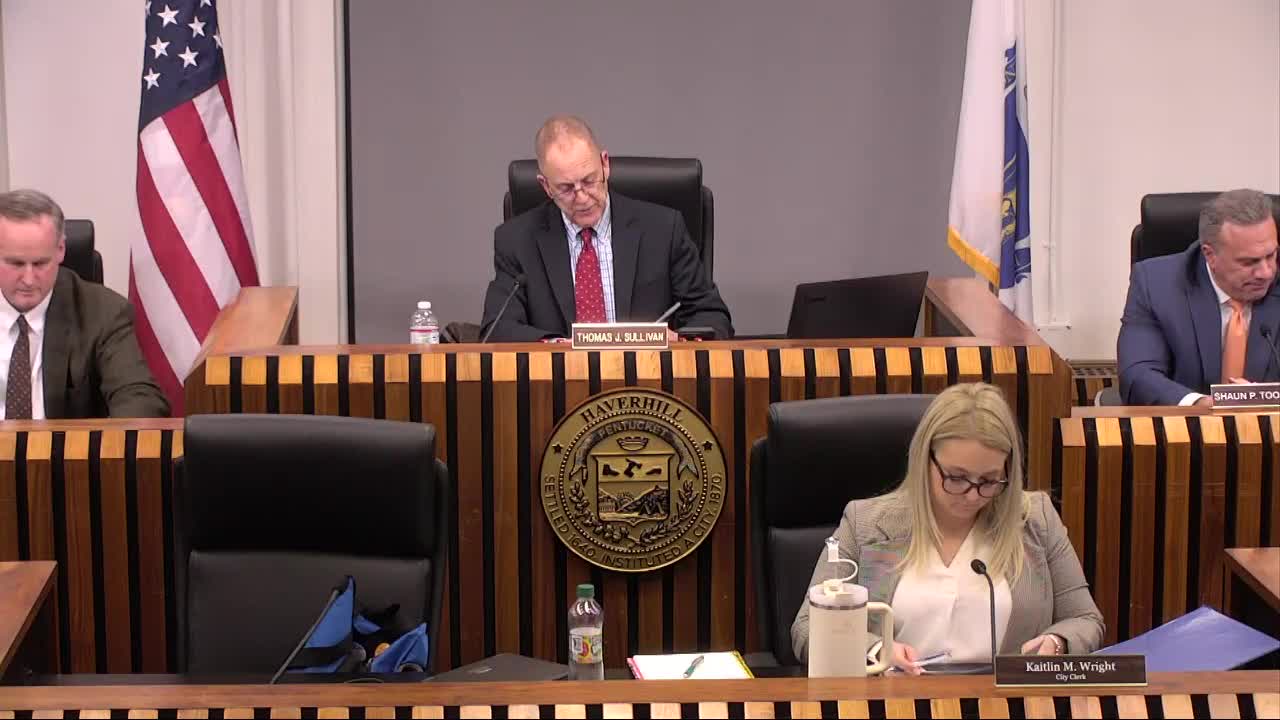
Haverhill Mayor Barrett announced the Executive Office of Housing and Livable Communities has determined the city is in compliance with the MBTA Communities Act under Section 3A of the Zoning Act, a decision officials said preserves eligibility for state grant programs.
The finding matters because it makes the city eligible for a new, infrastructure-focused competitive grant limited to compliant communities and for MassWorks funding, William Pillsbury, the city’s economic development and planning director, told the council. Pillsbury said the infrastructure grants range from $250,000 to $1,000,000 and are targeted to projects in or near the MBTA zoning district.
“This is just a zoning bill, and we are compliant, which allows us to get grants from the state,” Mayor Barrett said, adding that compliance does not translate into a mandate to construct new housing. “To be clear, we will not be required to build 10,000 more units.”
Why it matters: officials said only 32 of about 130 communities subject to the MBTA Communities Act are currently compliant, a status they said gives Haverhill a competitive position for the early rounds of grant funding. Pillsbury said the city’s eligible district covers about 118 acres including downtown corridors and waterfront districts where zoning already allows multifamily housing "by right," a factor he said helped the city meet the statutory density test.
Councilors pressed staff about what kinds of infrastructure could be funded. Pillsbury said allowable work includes sidewalks, streets, water and sewer improvements, telecommunications (broadband), lighting, and riverfront walkways; he also noted remaining combined-sewer overflow (CSO) issues in the area. Officials suggested funds could support projects around Essex Street, linkages to Lafayette Square and infrastructure work that would assist organizations such as Historic New England.
Council members and the mayor repeatedly emphasized that the MBTA Communities Act determines zoning compliance and funding eligibility, not a direct building mandate. Pillsbury said the state “presumes” potential buildable capacity when assessing whether a district can achieve the statute’s density target, but that presumption does not impose a construction requirement on property owners.
Proponents framed the compliance determination as an opportunity to pursue targeted infrastructure investments to support downtown revitalization. Councilors and staff cited potential uses such as riverfront walkways, sewer work, and broadband improvements as priorities for grant applications.
Looking ahead: staff said they will pursue applicable grant rounds and coordinate project lists aligned with the MBTA district’s boundaries and the council’s earlier zoning actions.