Get Full Government Meeting Transcripts, Videos, & Alerts Forever!
Get email alerts on the School Hvac Infrastructure topic
No spam. Unsubscribe anytime.
Medford committee reviews $5 million phase of proposed HVAC and roof bond for two schools
Summary
Medford City Council’s Committee of the Whole heard details on paper 24510, a loan order seeking $5 million in phase 1 funding to pre-purchase equipment, continue design and preconstruction work on HVAC and roof refurbishment at the McGlynn and Andrews schools; no vote on the bond was taken at the meeting.
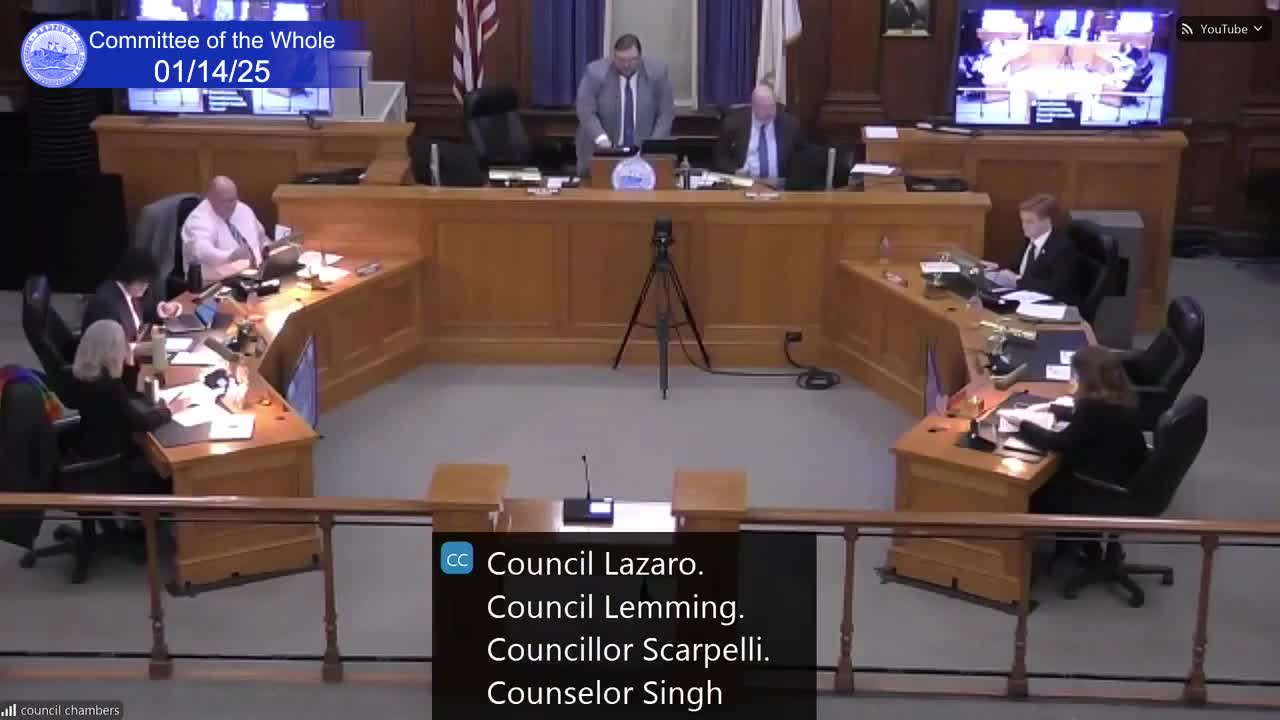
Medford City Council’s Committee of the Whole on Jan. 14 reviewed paper 24510, a loan order requesting $5 million in phase 1 funding for HVAC system replacements and roof refurbishment at the McGlynn complex and Andrews Middle School.
The presentation from Medford Public Schools and city project staff said both buildings, opened in 2001, have aging systems and “are currently in various stages of failure,” and recommended moving now to pre-purchase long-lead equipment and advance construction documents so classroom heating and cooling can be available for the start of the 2025–26 school year. Phase 2 was described as a larger construction phase estimated at roughly $23 million to $26 million to be brought back to the council in spring for additional authorization.
Why it matters: School officials said deferred maintenance and obsolete refrigerants (R‑22) make repairs costly or impractical and that early procurement is needed to avoid increasing material and tariff-driven price risk. The administration said Mass Save incentives are expected to reimburse about $2.2 million, but rebates are reimbursed after expenditure and so the city must appropriate funds up front.
Presentation and timeline: An unnamed assistant superintendent for the schools and the city’s project team outlined work already done: an HVAC options study (B2Q) for Andrews completed in November 2023, schematic designs completed in December 2024, weekly design meetings since late August, prequalification for construction managers, and bids currently out. The team expects Inspector General approval for a construction manager at‑risk procurement in January, contract execution in February, pre‑purchase of equipment with long lead times in the coming weeks, and summer 2025 construction when buildings will be taken offline. Officials said commissioning, staff training and three years of maintenance contracts are part of the plan.
Scope and budget highlights: The presentation listed phase 1 preconstruction items totaling $5,000,000, including $3.1 million for equipment pre‑purchase, $300,000 for construction manager preconstruction fees, $750,000 for designer through construction documents and other soft costs and contingencies. Construction-phase estimates shown were about $21.8 million for installation labor and equipment, with additional owner contingencies and soft costs bringing the total phase 2 estimate to roughly $23 million–$26 million. The McGlynn roof refurbishment was estimated at $1.5 million; a full replacement estimate presented earlier exceeded $3 million. Solar was presented as an ad alternate, with an initial estimate of about $1.2 million if included at McGlynn.
Funding options considered: Staff reviewed potential external sources: the Massachusetts School Building Authority (MSBA) accelerated repair program (recently reopened and likely not fast enough to meet the district’s timeline), Green Communities and Green School Works grants (some not immediately available), Energy Efficiency programs including Mass Save rebates (estimated $2.2 million reimbursed) and federal direct-pay tax credits (applicable to solar if included). The presentation said Renew America Schools and other large grants were considered but phased timelines made them impractical for the immediate need.
Council response and concerns: Councilors praised the presentation’s detail but some sought broader fiscal context. Councilor Scarpelli said he could not support the request at this time because he has not received requested financial breakdowns from the administration, though he said he would not block the item: “I can’t support it because it’s against what I feel is my position here as a city councilor, and that is being steward of our finances and understanding what the big picture is.” Councilor Hussain argued for prompt approval, citing rising costs and the health and learning impacts of failing HVAC systems: “I believe that our parents and teachers and students would say that it’s a resounding yes.” Councilor Callahan said the presentation gave the information he needed and commended staff for pursuing grants and balancing electrification goals with cost considerations.
Procurement and compliance notes: Officials said the project will follow required procurement steps, including Inspector General review for construction manager at‑risk selection and planning for commissioning and staff training. The presentation noted that work exceeding 30% of a building’s assessed value would trigger an accessibility review and funds were set aside for related ADA upgrades.
Next steps: The committee did not take a final vote on paper 24510; the item is on the regular meeting agenda and is eligible for a third reading. Staff said advancing phase 1 funding now is critical to secure equipment with long lead times and to keep the project on a schedule that would allow classroom cooling by the start of school.
Votes at the meeting: A procedural motion to adjourn the Committee of the Whole was moved by Councilor Fleming and seconded by Councilor Callahan and passed by voice vote; the committee then recessed for the council’s regular meeting.