Get Full Government Meeting Transcripts, Videos, & Alerts Forever!
Get email alerts on the Comprehensive Growth Plan topic
No spam. Unsubscribe anytime.
Rutherford County planning staff, GNRC present Plan Rutherford draft; commissioners debate densities, infrastructure and farmland protection
Summary
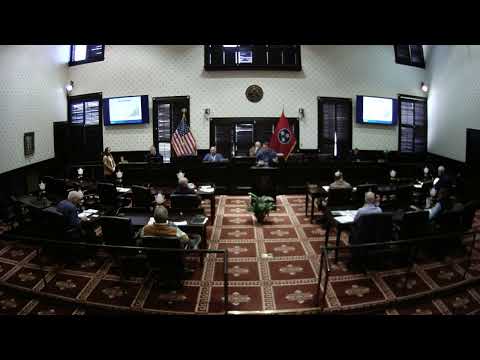
GNRC principal planner Michael Skipper and county planning staff reviewed the draft Plan Rutherford at a Rutherford County Planning Commission work session; commissioners asked for clearer density rules, build-out numbers and more detail on water and transportation capacity before any regulatory changes are proposed.
GNRC principal planner Michael Skipper and his team presented the draft of Plan Rutherford at a recent Rutherford County Planning Commission work session, laying out growth projections, a character-area policy and recommendations for coordinating infrastructure and municipal planning. The session was a work session only; no votes or formal approvals were taken.
The draft projects roughly 60% population growth in Rutherford County between 2020 and 2045 — "about another 215,000 people expected to land somewhere within the county," Michael Skipper said — and urges policy changes to guide that growth. Skipper emphasized that "this is not a regulatory document," describing the plan as a policy framework intended to inform zoning, subdivision regulations and infrastructure priorities.
GNRC framed the draft around four goals — manage growth, preserve character, enable prosperity and align infrastructure — and a set of "character areas" meant to guide where different types and intensities of development are encouraged. The draft maps include: rural preserve (large-acreage, low-density and farmland), rural living (lower-density residential and small commercial nodes), and county suburban (higher residential intensity, focused within urban growth boundaries around Murfreesboro, Smyrna, Eagleville and La Vergne). Jessica Hill of GNRC walked commissioners through typical forms and preferred density ranges included in the draft: rural preserve lower-end suggested at 1 unit per 15 acres and an upper- threshold shown at 1 unit per 5 acres; rural living from 1 unit per 5 acres up to 1 unit per acre; county suburban from about 1 unit per acre up to 3 units per acre (the draft shows the upper end as 3 units per acre).
Commissioners pressed on enforceability, housing supply and whether the plan’s density recommendations could unintentionally accelerate sprawl. Planning staff and consultants acknowledged statutory and practical limits: county staff noted Tennessee’s subdivision threshold and the practical effect of a 5-acre minimum on enforceability, and GNRC staff said the plan team will remove or clarify any lower-density floors that are inconsistent with state law. Planning Director Doug (name not specified in the transcript) reminded commissioners that "this is a work session. We're not looking for any kind of a final approval," and that any regulatory changes that implement the plan would require separate public hearings and regulatory amendments.
Several commissioners and participants asked for more detail on capacity and timing. GNRC said it completed modeling and a parcel-level build-out analysis and that the county currently has development capacity under existing policy that could exceed the plan’s 2045 forecasts if density entitlements are realized. Commissioners asked GNRC and staff to produce explicit build-out numbers and realistic "life expectancy" estimates for the supply of developable land under the proposed character-area policy so elected officials can weigh housing supply and affordability tradeoffs.
Infrastructure emerged as a central concern. GNRC presented maps of marketability, developability and combined land-suitability that account for existing water and sewer service, soils and geological constraints (karst, sinkholes, shallow bedrock), and transportation capacity. The draft includes recommendations for prioritizing capacity improvements and enhanced shoulders and multimodal accommodations on county roads. Commissioners and members of the public raised water supply and watershed concerns (Stone River Watershed Association questions were noted), school siting and the fiscal burden of building roads to serve new development.
Speakers also discussed coordination with municipalities and state agencies. GNRC and staff said many businesses expect jobs to locate within municipal limits or urban growth boundaries and urged coordinated planning with cities, school districts and the Tennessee Department of Transportation, particularly because TDOT is pursuing managed/toll lanes on I-24 that could affect development pressure at interchanges.
Public and stakeholder input is ongoing: GNRC reported roughly 150 people attended the October public open house at Lane Agra Park and that comments continue to arrive via planrutherford.org, which hosts the draft document, posters and an interactive map. Planning staff said they had received written questions from the Middle Tennessee Association of Realtors and other stakeholders and intend to compile formal responses and identify precise changes the planning commission and staff want GNRC to make.
Next steps described at the session included additional work sessions dedicated to Plan Rutherford and a request from staff that GNRC produce a revised draft that reflects the commission’s guidance and written comment. Planning staff said they will publish a change log showing "this is the original draft, this is the new draft, this is what we changed, and this is why we changed it," and then begin the formal public hearing and adoption sequence, which requires advertised hearings and cannot be completed at the work session.
The session repeatedly separated discussion from decision: the commission treated the meeting as a deliberative review and asked for more analysis and revised draft language rather than taking regulatory action. Commissioners asked for clearer language in the plan describing the relationship between county policy and zoning entitlements so that the plan guides long-range priorities without unintentionally overriding existing parcel entitlements.
As no votes or formal actions were taken, the immediate outcome is a directive to GNRC and county staff to revise the draft, provide requested build-out and capacity analyses, clarify density language tied to state subdivision law and propose outreach and scheduling for follow-up work sessions and formal hearings.
Ending: County staff and GNRC stressed that Plan Rutherford remains a draft for public review and a living document. "We're still taking input," planning staff said; commissioners scheduled an additional dedicated session to continue review and asked staff to return with the technical numbers and proposed edits commissioners requested.