Get Full Government Meeting Transcripts, Videos, & Alerts Forever!
Get email alerts on the Short Term Rentals topic
No spam. Unsubscribe anytime.
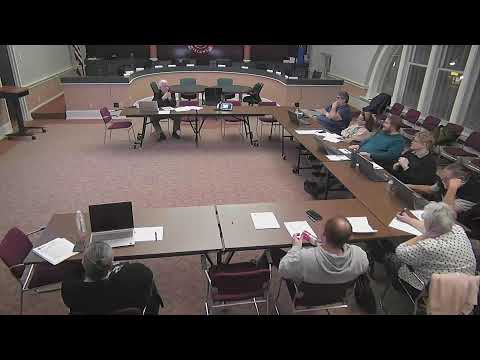
Two Rivers debates short-term rental changes: occupancy limits, enforcement and possible caps
Summary
The Two Rivers City Council devoted extensive discussion on Jan. 27 to potential changes to short-term rental rules, including occupancy limits tied to bedrooms, changing the enforcement trigger from calls to citations, notice to neighbors, lighting limits and whether to cap very short stays under seven days.
The Two Rivers City Council devoted extensive discussion on Jan. 27 to possible changes to city ordinances and policies governing short-term rentals (STRs). Staff presented legal background, enforcement options and a menu of changes for the council to consider; council provided direction but did not adopt ordinance amendments at the meeting.
Attorney Andrew (city attorney) told the council that state law constrains municipal authority over certain stays and noted Wisconsin Statutes §66.1014 as the dividing line: “66.1014 of the statutes prohibits a ban on short term rentals — rentals of 7 days or more,” he said. That statutory line means municipalities have greater discretion to regulate rentals shorter than seven days, while rentals of seven nights or longer are largely protected from outright bans under state law.
Staff and council discussed several clarifying and enforcement-focused options:
- Occupancy limits: staff proposed enforceable occupant caps tied to unit size — examples included a fire-code style standard (50 square feet first occupant, 100 square feet per additional occupant) and a simpler rule used by other municipalities: two people per bedroom plus two (some council members discussed two per bedroom plus four to allow extra flexibility). Council voices showed general support for an occupancy cap applied specifically to short-term rentals rather than to long-term owner-occupied households.
- Enforcement standard for revocation: the existing ordinance allows council action after “two calls” to authorities; councilors and staff said that language can be abused and discussed replacing it with a standard tied to enforceable municipal citations (for example, two municipal citations within a 12‑month rolling period) or conviction/citation outcomes rather than calls for service.
- Licensing and notice: staff recommended clearer licensing provisions, including posting the STR license and maximum-occupancy limit at the unit and keeping a business register of guests and payments. Council discussed requiring the city to notify neighbors within a radius (staff suggested 200 feet by analogy to zoning notices) when a license is issued; staff said that could be built into licensing as a mailed notice and funded via a modest fee.
- Conditional use vs. permitted use: the council reviewed whether short-term rentals should be treated as a permitted residential use subject to licensing or as a conditional use that requires a public hearing and 200-foot notice. Several council members were wary of imposing universal conditional-use hearings for every new STR license because that would increase administrative burden and public expectations; others said a conditional-use route could give neighbors more direct input.
- Caps and proximity limits: members debated whether to impose a citywide numerical cap on very short-term rentals (under 7-day stays) or to limit new licenses by proximity (for example, no new sub‑7-day license within X feet of an existing license). Attorney Andrew warned a total ban on rentals of seven days or more is preempted by state statute; however, he said the council can consider restrictions or caps that apply only to rentals of less than seven days and suggested both numerical caps and spacing rules are legally plausible for that subcategory.
- Lighting and nuisance controls: councilors urged clarity about excessive outdoor lighting at STRs, particularly when units are unoccupied for stretches of the year. Members suggested standards to limit light spill and preserve neighborhood character while preserving reasonable security lighting (motion-activated fixtures, downcast shielding).
- Room tax reporting and reconciliation: staff noted the city receives lump-sum remittances from some online marketplace providers on a quarterly basis while STR licensees are required to file monthly room tax reports. Council discussed requiring property-level reporting from STR owners so staff can reconcile amounts and compare them to marketplace remittances; staff cautioned that additional disclosure and enforcement require staff capacity and clear processes.
Council gave staff direction to draft ordinance language and bring options back for further review; specific items staff will draft include occupancy limits tied to bedrooms, clearer standards for license revocation (citation-based rather than ‘‘two calls’’), notice requirements when a license is issued, and options for handling very short-term rentals under seven days (including possible proximity or numerical limits). No ordinance changes were adopted at the Jan. 27 meeting; staff said they expect to return with draft language for council review at a future work session.
Quotes in the meeting came from council members, city staff and the city attorney; staff emphasized that several elements — especially any cap on rentals of seven days or more — are constrained by state law and that more-detailed language would be required for legal review before any formal ordinance changes.
Next steps: staff will produce draft ordinance language reflecting the council’s preferred options (occupancy limits, enforcement standard and notification), bring that draft back for review and, where changes affect zoning, route proposals to the Plan Commission for advisory input.