Get Full Government Meeting Transcripts, Videos, & Alerts Forever!
Get email alerts on the Shoreline Resilience topic
No spam. Unsubscribe anytime.
Two Rivers council approves $405,354 Stantec contract for shoreline resiliency planning
Summary
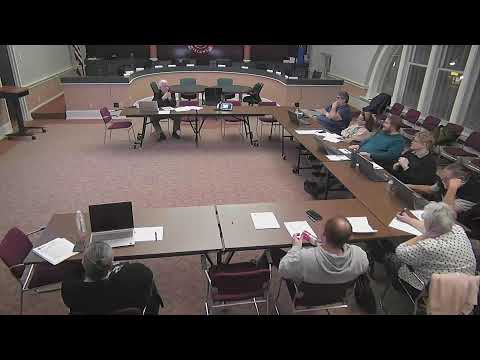
Two Rivers City Council on Jan. 27 voted to authorize the city manager to execute a $405,354 professional services agreement with Stantec Consulting Services to create a resilient waterfront parkland plan and address long-term shoreline resiliency.
Two Rivers City Council on Jan. 27 voted to authorize the city manager to execute a $405,354 professional services agreement with Stantec Consulting Services to create a resilient waterfront parkland plan and address long-term shoreline resiliency.
The contract will be funded entirely by three grants: a Sustain Our Great Lakes (SOWL) grant administered through the National Fish and Wildlife Foundation, grant funding from the Great Lakes and St. Lawrence Cities Initiative, and a Fund for Lake Michigan award. Council also approved a separate letter of agreement with the Great Lakes and St. Lawrence Cities Initiative to provide $135,000 toward the project’s task focused on modeling immediately south of the South Pier.
The project is intended to cover the city’s Lake Michigan frontage and concentrate on the area between the south pier and the lighthouse. Work orders included wave and sediment-transport modeling, evaluation of detached breakwater options and other alternatives, and limited implementation tasks such as plantings and pollinator gardens. City staff said the modeling will draw on past U.S. Army Corps of Engineers studies of local wave and current conditions and could provide technical background to pursue implementation funding later.
Greg (staff member) told the council the city has been assembling funding for more than two years and that Fund for Lake Michigan dollars are in hand. He said the National Fish and Wildlife Foundation funds are in the foundation’s account and staff do not foresee interruption because those monies are federal Inflation Reduction Act funds processed through the foundation. “They have all of the grant funds in their account, and they don't foresee any issues,” he said.
Matt, the city engineer, described technical tasks in the contract, including offshore wave and sediment-transport modeling that will inform design decisions such as armor-stone sizing for detached breakwaters or options to extend the south breakwater. “They'll be doing some wave modeling, both wave modeling and trying to model the sediment transport to evaluate the best approach for addressing shoreline stabilization and controlling sediments in that area,” he said.
City staff noted the contract was selected through an RFP process and that the city has worked with Stantec on prior projects (wetland delineations, plantings and stream restoration). Attorneys and staff negotiated edits to standard contract provisions before presentation to council, including limiting the city’s obligation to pay for specialist consultants only if staff agreed and shortening a unilateral termination notice so the city also had a shorter termination window.
Council approved the Stantec contract by voice/call vote; members recorded as voting yes included Bill O'Claire, Doug Brandt, Jim Petrie, Bonnie Schindelumis, Scott Steckmesser, Adam Woske and Darla O'Clare. The council later approved the $135,000 agreement with the Great Lakes and St. Lawrence Cities Initiative; staff said that program’s funds are directed to task 3 (the modeling task) and would reimburse the city on an invoiced, reimbursement basis.
Staff said the work schedule is ambitious, with most tasks targeted for the first two quarters of the year, and that two of the three funding sources are reimbursement grants so the city may need to cash-flow some fees. The modeling and planning work are planning- and engineering-level tasks; staff emphasized the contract does not itself fund large-scale construction, though it could strengthen future funding requests to agencies such as the U.S. Army Corps of Engineers.
Next steps: staff will execute the contract and proceed with the task schedule; council and staff said they will monitor grant conditions and federal executive orders that could affect federal funding streams and will return to council with implementation details as they develop.