
Lynn charter committee advances modernization package; public raises concerns about home rule petition and oversight
Get AI-powered insights, summaries, and transcripts
Subscribe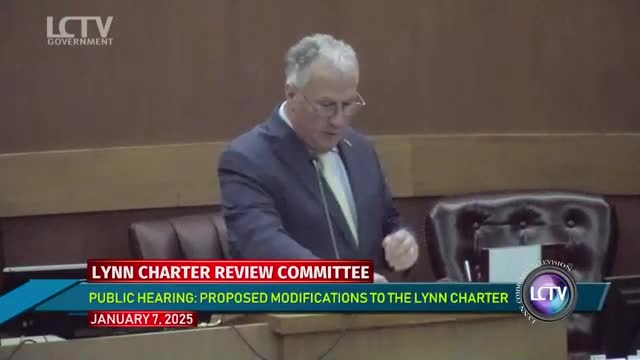
Summary
The Lynn City Charter Review Committee presented a set of proposed updates intended to modernize the 1978 charter, including new rules on mayoral appointments, department head terms and school committee vacancy fills. Residents at a public hearing urged ballot approval, stronger council oversight and clearer auditing and transparency provisions.
The Lynn City Charter Review Committee on Thursday presented a slate of proposed updates to the city’s 1978 charter intended to modernize language and streamline governance while stopping short of sweeping structural changes.
The committee’s chair, Tom McGee, told attendees the panel’s work — a 10-year statutory review — focused on clarity and administrative improvements rather than wholesale reform. “The mission was to modernize language and to make Lynn’s governance more effective and efficient,” McGee said at the public hearing.
The committee outlined several substantive proposals it plans to forward to the City Council and mayor: the city council would continue to appoint the city clerk but not other city officials; council confirmation authority would be retained over mayoral appointments; department heads would no longer serve for indefinite terms; school committee vacancies would be filled by the remaining school committee members by selecting a defeated candidate who received at least 20% of the ballots cast for that office, and if no eligible person exists the seat would be filled by a joint convention of the city council and the school committee. The proposed charter would also remove Lynn’s current requirement to seek state approval for reorganization of city government via a Home Rule Petition, and it would require the mayor to prepare a five‑year capital improvement program for council approval. The committee said it has met six times in public and will meet once more before forwarding recommendations to the City Council.
Nut graf: The changes are framed as technical and procedural updates to improve readability and local control, but residents at the hearing pressed the committee on process and oversight — urging that some of the proposals be decided by city voters rather than forwarded to the Legislature via a Home Rule Petition, and asking for stronger council checks on mayoral authority.
Public commenters asked that major changes be placed on the ballot rather than handled through a Home Rule Petition. Gina O’Toole, a Lynn resident, said she opposed using a Home Rule Petition to finalize charter changes because it removes a direct public vote. “Changing a city charter is changing the way the governance of the city works, and it takes away a lot of the times home rule petitions,” O’Toole said. Joanne Lynn, also a resident, asked for clearer definitions of proposed audit language and questioned lowering signature thresholds required to qualify city ballot questions.
Other speakers pressed for more explicit limits or council authority on mayoral appointments. Gordie Jean Francois asked that some appointment approvals require a two‑thirds council vote to reduce the risk of nepotism. Charlie Clark, a resident who said he has attended both school committee and council meetings, supported giving the council better access to information earlier in the hiring and confirmation process so the council can provide meaningful oversight rather than acting as a “rubber stamp.”
The committee also proposed shortening from two years to one year the waiting period before a former mayor or council member may hold a paid city position after leaving office.
The committee said the proposals are not intended to be major structural reforms but to make the charter “more efficient, readable, and understood by the public at large.” McGee said the committee will incorporate public input before sending its final recommendations to the City Council; the council will hold its own public hearing before any changes move to the state as a Home Rule Petition.
Ending: The committee set its next meeting for the 23rd at 4 p.m. to review public comments and finalize recommendations; that meeting was described as a committee working session (recorded but described as not a public hearing). The hearing closed with a motion to adjourn that passed by voice vote; a formal tally was not specified in the record.