Get Full Government Meeting Transcripts, Videos, & Alerts Forever!
Get email alerts on the Cervical Cancer topic
No spam. Unsubscribe anytime.
Senate adopts resolution recognizing Cervical Cancer Awareness Month
Summary
The Senate adopted Senate Resolution 11 recognizing January 2025 as Cervical Cancer Awareness Month; the sponsor, a survivor, urged screenings and education while floor members discussed HPV vaccination and prevention.
The California State Senate unanimously adopted Senate Resolution 11, recognizing January 2025 as Cervical Cancer Awareness Month and urging education, screening and outreach.
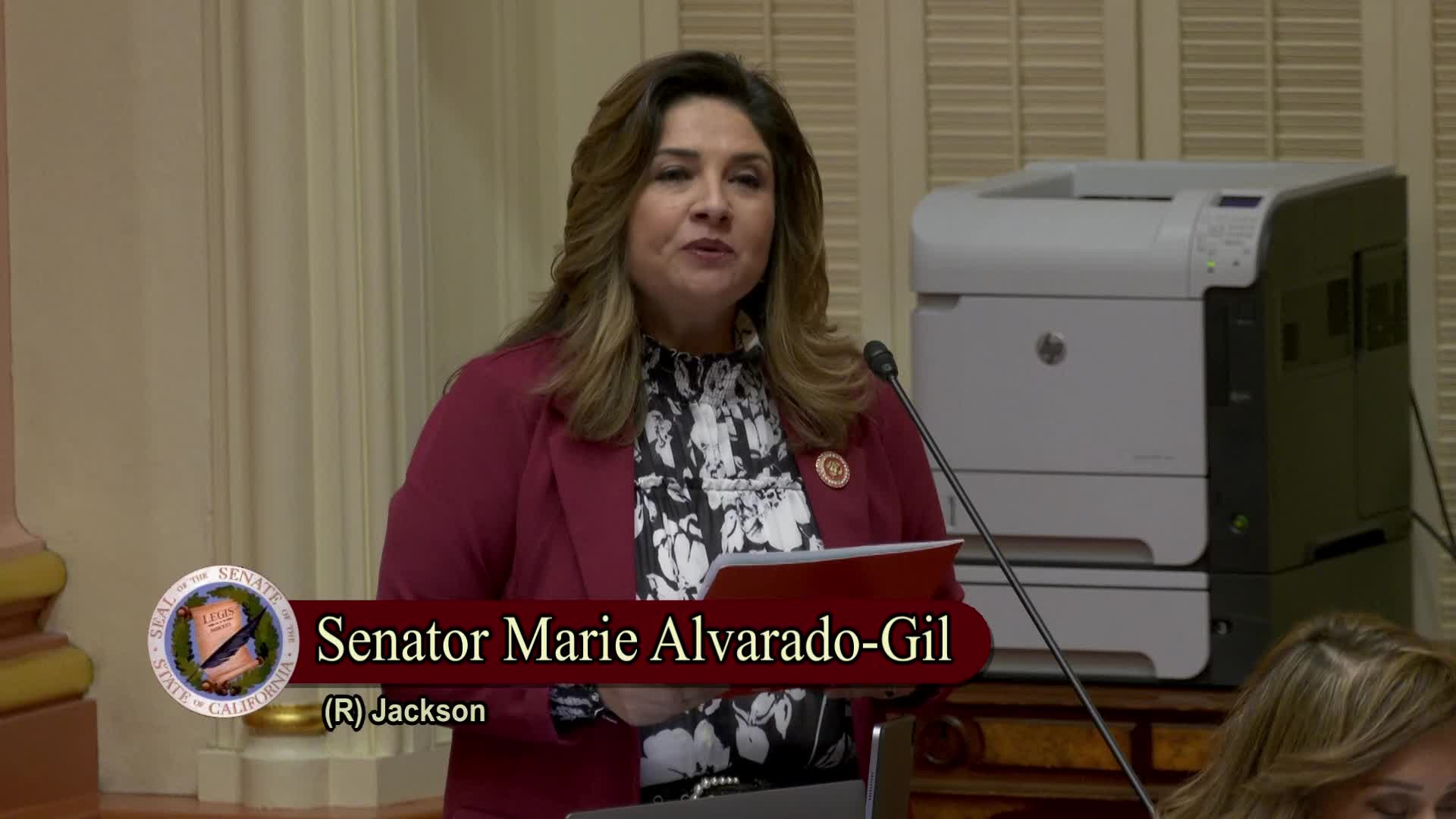
Senator Alvarado Gill, who identified herself as a cervical cancer survivor, introduced the resolution and said it was a personal issue that transcended partisanship. "All women should take time to talk to their doctor and ask questions about their bodies and their health when dealing with something as serious as cancer," she said on the floor.
Why it matters: Sponsors noted that cervical cancer disproportionately affects women of color and that early-stage cervical cancer often has no symptoms; regular screening can detect precancerous cells. Senators on the floor also discussed HPV vaccination. Senator Weiner asked whether the resolution referenced the HPV vaccine; the sponsor replied it did not and said her emphasis was on older women because the vaccine was not available when she was younger. Senator Weiner and others urged both screening and broad HPV vaccination where appropriate.
The resolution was adopted by unanimous roll call (Ayes 35, No 0). The measure is a nonbinding recognition intended to raise awareness and encourage screening and preventive care.
Ending: Floor speakers urged continued public outreach, screening access and attention to disparities in diagnosis and mortality.