Get Full Government Meeting Transcripts, Videos, & Alerts Forever!
Get email alerts on the Higher Education Budget topic
No spam. Unsubscribe anytime.
Lewis Clark State College urges funding to close faculty pay gap, highlights LAUNCH and prison education gains
Summary
Lewis Clark State College presented its FY2026 budget request to the Joint Finance-Appropriations Committee, stressing enrollment trends, the effect of the Enrollment Workload Adjustment formula, salary gaps compared with K–12, and operational capacity needs to sustain new facilities and workforce programs.
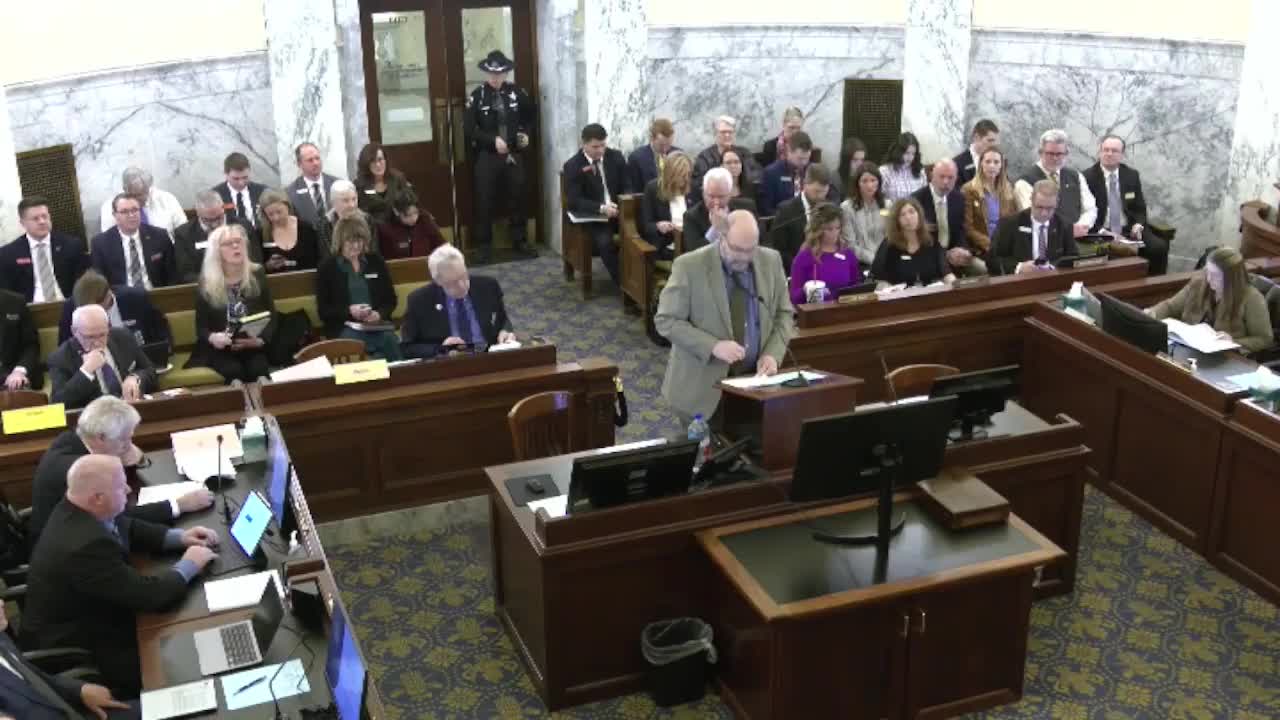
Kevin Campbell, the Legislative Services Office budget analyst, opened the colleges-and-universities portion of the Joint Finance-Appropriations Committee hearing with an overview of Lewis Clark State College’s budget and finance structure. "Madam Co Chair, Mr. Co Chair, Vice Chairs, members of JFAC, good morning. My name's Kevin Campbell. I'm a budget and policy analyst with the Legislative Services Office," he said, before outlining tuition reappropriation, endowment funds and recent enhancements.
The college's president, Dr. Cynthia Pemberton, told the committee Lewis Clark is emphasizing workforce programs, student supports and efforts to close a persistent salary gap with K–12. "I am doctor Cynthia Pemberton, and I have the pleasure and the honor of serving as president at Lewis Clark State College," she said. Pemberton said the college used operational capacity enhancement funds largely to cover occupancy and operating costs for the new Schweitzer Career Technical Engineering Building, to expand marketing and to shore up IT and custodial support.
Why it matters: The presentation framed small regional universities' funding needs in several dimensions: (1) an enrollment-weighted formula called the Enrollment Workload Adjustment (EWA) that can raise or lower appropriation levels, (2) persistent salary differentials that college leaders say hinder hiring and retention, and (3) targeted state support applied to occupancy, instructional capacity and student success programs that officials say directly affect regional workforce pipelines.
Key budget and program details presented
- Enrollment, staffing and base budget: Lewis Clark reported enrollment of 3,881 students supported by 341.6 full-time equivalent staff. Its FY2026 base general-fund budget was reported as about $41.7 million (not including tuition and fee reappropriations). (Kevin Campbell)
- Tuition and reappropriation: Campbell explained that tuition and fee revenue is included via a reappropriation authority because institutional fiscal years and the state's budget cycle do not align. He cited FY2024 figures: a total appropriation of $40,517,100 and $23,700,000 in tuition and fee receipts that were reappropriated into FY2025. (Kevin Campbell)
- Endowment and statutory authority: Campbell pointed to the Normal School Endowment Fund as a legacy trust managed by the Endowment Fund Investment Board and identified Idaho Code section 33-304 as specifying sources and uses for some endowment distributions. (Kevin Campbell)
- Operational Capacity Enhancement (OCE) and CEC: Lewis Clark received $440,200 in OCE for FY2025 and other enhancements including endowment adjustments. The college requested $287,000 in OCE for FY2026 to address competitive employee compensation (CEC) and related costs; it also expects a $102,500 reduction under the EWA for FY2026. (Kevin Campbell; Cynthia Pemberton)
- Salary comparisons: Pemberton and committee staff cited internal comparisons showing LC State instructors earn about $9,000 less than the K–12 average and assistant professors about $3,777 less. Committee staff said a cross‑institution salary compilation would be circulated. (Cynthia Pemberton; Kevin Campbell)
- LAUNCH and workforce outcomes: President Pemberton said about 240 students received Idaho LAUNCH support in the fall, concentrated in career-technical programs. She reported a 19% rise in career-technical enrollment in fall and a further 10% uplift in spring, and she cited an electrical-apprenticeship outcome where 36 of 54 fourth‑year apprentices completed the program with LAUNCH support. (Cynthia Pemberton)
- Prison education expansion: Pemberton said Lewis Clark is the first Idaho institution to transition from the experimental Pell program to full prison-education approval and that nearly 200 incarcerated students are now served at sites in Orofino, Pocatello and Boise. (Cynthia Pemberton)
Committee questions and follow-up requests
Committee members pressed on EWA mechanics, enrollment trends, retention and financial metrics. Representative Petzke corrected one line of testimony, noting EWA can produce a net system increase or decrease and is not strictly zero-sum statewide. Members asked for comparative salary data, further detail on the use of recent OCE funding, and additional enrollment and completion metrics by term. Lewis Clark committed to provide institution‑specific salary and operational detail to the committee by email. (Representative Petzke; Senator Growe; Representative Tanner)
Decisions and actions
There were no formal committee votes or motions on the record during the Lewis Clark segment. The presentation concluded with committee members requesting follow-up materials (salary comparables, enrollment and financial spreadsheets) and acknowledging the college’s FY2026 enhancement request for OCE and endowment adjustments. Those requests were recorded as follow-up directions rather than formal committee actions.
Ending
President Pemberton closed by reiterating Lewis Clark’s role as a small four‑year public college focused on workforce training and student supports and by asking the committee to consider additional help to narrow the salary gap. "We are a teaching focused institution. We connect learning to life, college to career," she said.
(Discussion only; no formal votes recorded.)