Get Full Government Meeting Transcripts, Videos, & Alerts Forever!
Get email alerts on the Housing Coliving topic
No spam. Unsubscribe anytime.
Council studies coliving/SRO zoning standards as option to expand lower‑cost housing
Summary
City planning staff presented a draft ordinance to allow and regulate 'coliving' units in higher‑density districts, propose occupancy and parking guidelines, and recommended further review with legal and environmental health staff before a public hearing.
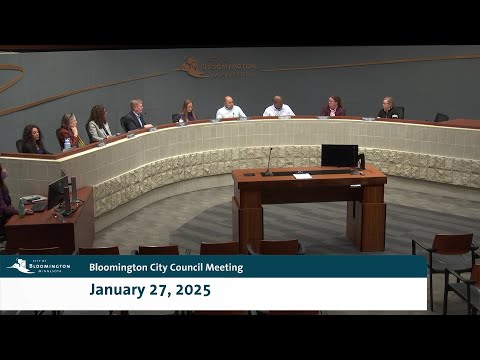
City planning staff presented a draft ordinance on Jan. 27 proposing a regulatory pathway for co‑living (single room occupancy, or SRO) developments intended to expand lower‑cost housing options in Bloomington.
The draft would add definitions for “co‑living unit” and “co‑living development,” amend the zoning definition of family, and allow co‑living as a permitted use in high‑density residential and commercial mixed‑use districts where multifamily housing is allowed. "We generally thought that coliving should be allowed anywhere that multifamily is allowed," planner Nick Johnson told the council.
Why it matters: Staff said Bloomington has made progress meeting most regional affordable‑housing goals but remains short in the deeply affordable (about 30% AMI) band. Coliving or room‑rental models can create lower‑cost units that require less subsidy than traditional deeply affordable multifamily projects, though standards and limits will affect cost and feasibility.
Key draft standards discussed included a parking standard of 0.5 spaces per co‑living unit (staff noted this is higher than some peer cities but lower than typical multifamily), a density conversion where three co‑living units would equal one dwelling unit for density calculations, and an option to rely on building‑code minimums rather than set minimum unit sizes in zoning. Staff recommended not imposing mandatory covered parking or storage requirements because of cost impacts, and said they would prefer letting the market and building code govern minimum unit sizes, subject to later review.
The draft also proposed changing the city’s family definition to allow up to six unrelated adults (or any number of related persons) to live in a single housekeeping unit, a point staff said has equity implications and affects occupancy rules. Staff presented a Saint Paul model as an alternative and noted potential impacts on multigenerational households.
Council discussion focused on parking levels, whether to make co‑living a permitted use or conditional, unit and common‑space minimums, how coliving should be treated during office‑to‑housing conversions, and a recommendation that staff track early projects and adjust standards after initial prototypes. Multiple council members asked staff to return with a one‑page summary tying coliving to parallel code projects (ADU, missing middle, office conversions) and to include commission feedback before a public hearing.
Ending: Staff will continue legal and environmental‑health review, refine the draft ordinance and bring it back for planning‑commission review and a council public hearing in coming months.
Quotes are taken verbatim from the meeting transcript and attributed to listed speakers.