
City approves letter of intent with Turtle Mountain Band to explore resort and Class III casino
Get AI-powered insights, summaries, and transcripts
Sign Up Free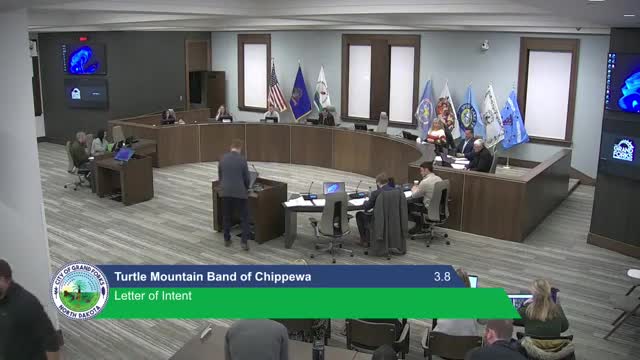
Summary
The Grand Forks City Council voted Jan. 27 to approve a letter of intent to negotiate a development and host‑community agreement with the Turtle Mountain Band of Chippewa to explore a proposed $250–$300 million resort including a Class III casino on land the tribe owns southwest of the city.
The Grand Forks City Council on Jan. 27 voted to approve a letter of intent with the Turtle Mountain Band of Chippewa to begin negotiating a development agreement and host‑community terms for a proposed resort and Class III casino on land the tribe owns southwest of the city.
The vote followed a multihour presentation and public questioning. Council Member Weigel moved approval and Council Member Friedolphs seconded; the motion passed with Council Members Osowski, Lenski and Vien recorded as voting no.
The letter of intent lays out a process to negotiate a broad development framework that city staff and tribal leaders said could include a 200‑room, 3.5‑ to 4‑star hotel, a conference/banquet facility, a smaller entertainment center and family entertainment amenities. Consultants and the tribe cited an economic impact study that estimated roughly 400,000 visitors, more than 800 jobs at the facility, about $31 million in annual payroll and an estimated $72 million annual increase in local GDP tied to the development.
Tribal and city speakers stressed the project remains at an early stage and would require multiple state and federal approvals before any gaming could occur. Mr. Phelan, who introduced the item on behalf of the city, told the council the tribe would need state action and federal approvals through the Department of the Interior and the Bureau of Indian Affairs, and that any off‑reservation gaming also requires changes to state law and renegotiated compacts. Chairman Jamie Azure of the Turtle Mountain Band emphasized the tribe’s historical ties to the Red River Valley and said the tribe is vetting experienced national gaming management firms to operate the resort.
Council members pressed officials on taxes, enforcement and potential impacts on local nonprofits that run charitable gaming. Speakers discussed possible payment‑in‑lieu‑of‑tax (PILOT) arrangements, how property placed into federal trust for gaming would be taxed or reimbursed to the city, and what infrastructure and public‑safety costs the city could expect. Council members asked whether the tribe would commit to enforceable payments for services and whether the city could suspend services for nonpayment; city staff said such enforcement clauses and service conditions could be negotiated in the development agreement.
Several council members also requested more public outreach and detailed documentation before the council moves beyond the letter of intent. The council president noted additional public hearings are expected as negotiations proceed.
The letter of intent approved Jan. 27 authorizes city staff to continue formal talks with the Turtle Mountain Band and to begin drafting more detailed development and host agreements; it does not commit the city to any final fiscal incentives, zoning decisions or infrastructure expenditures.
A series of additional public meetings and formal council actions were described as likely next steps in the months ahead.