Get Full Government Meeting Transcripts, Videos, & Alerts Forever!
Get email alerts on the Disability Services topic
No spam. Unsubscribe anytime.
Interim director of Office of Disability Concerns urges coordinator training and stable leadership
Summary
Interim Director Brenda Hafer told the committee the office answers disability-related inquiries statewide, runs disability-awareness training (including CLEET-certified programs for the Highway Patrol), and plans an ADA coordinator conference while operating with limited staff and no additional appropriation request.
Brenda Hafer, interim director of the Office of Disability Concerns, told the Appropriations and Budget committee her office acts as the state’s referral point for Oklahomans with disabilities, provides agency ADA compliance assistance and plans a summer training for ADA coordinators.
Hafer said the office answers constituent calls, provides disability-awareness training that is CLEET-certified and used in Oklahoma Highway Patrol cadet training, manages a governor’s advisory committee and maintains a client-tracking system called My Case. She said most calls relate to housing and paying daily living expenses and that many constituents seek assistance navigating benefits and local resources.
Why it matters: The office advises other state agencies about ADA compliance, offers disability awareness and has a statewide role connecting people to resources; staffing and leadership lapses can affect statewide access to assistance and coordination of ADA implementation.
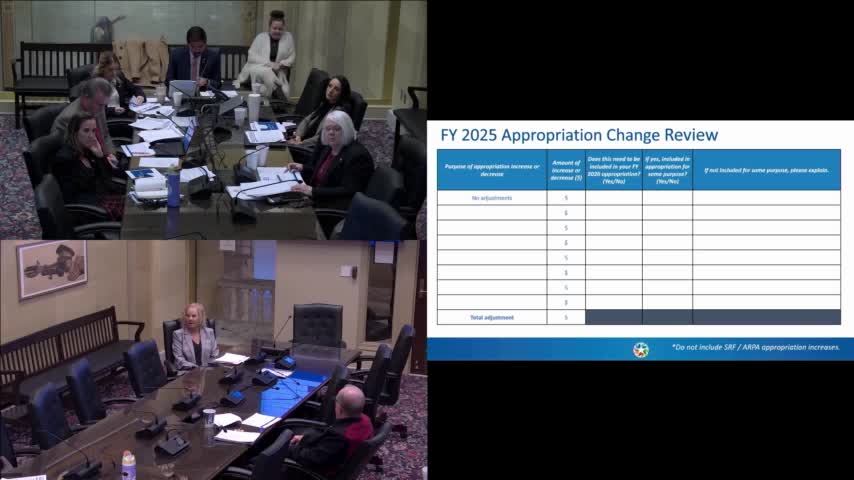
Staffing and operations: Hafer described a small staff complement (three full-time, two part-time) operating from the Sequoia Building following a move that eliminated prior rent. She said the office is currently not requesting additional appropriations and that OMES financial staff support its budget administration. Hafer said she has served as interim director for about two years following the unexpected death of the previous director and has applied for permanent appointment; she reported ongoing contact with the governor’s office on appointments to the governor’s advisory committee.
Coordinator training and access concerns: Hafer said she plans an ADA coordinator conference this summer to clarify roles and responsibilities for agency coordinators and that maintaining an up-to-date coordinator list has been difficult because personnel change frequently. She also asked the committee to consider exceptions for staff who cannot work in noisy shared office space (one part‑time employee uses voice‑to‑text software due to quadriplegia).
Committee members raised multiple topics: Representative Williams suggested reviewing the governor’s advisory committee size (statute allows up to 70 members) and committee structure to improve functionality; Representative Stock pressed for clarity on how many members currently serve (Hafer said eight). Vice Chair Gause and other members offered to help with virtual distribution of coordinator training to reach rural providers.
What was decided: Hafer told the committee she is not requesting additional appropriations and intends to continue existing operations; lawmakers encouraged her to supply more data on caseloads and to pursue appointments to the advisory committee so the office can regain full functionality.
Not specified: Hafer said the office’s client-tracking software (My Case) is built for attorneys and may be expensive to replace; she could not provide precise program-outcome counts during the hearing but agreed to return with more program metrics.