Get Full Government Meeting Transcripts, Videos, & Alerts Forever!
Get email alerts on the Economic Development topic
No spam. Unsubscribe anytime.
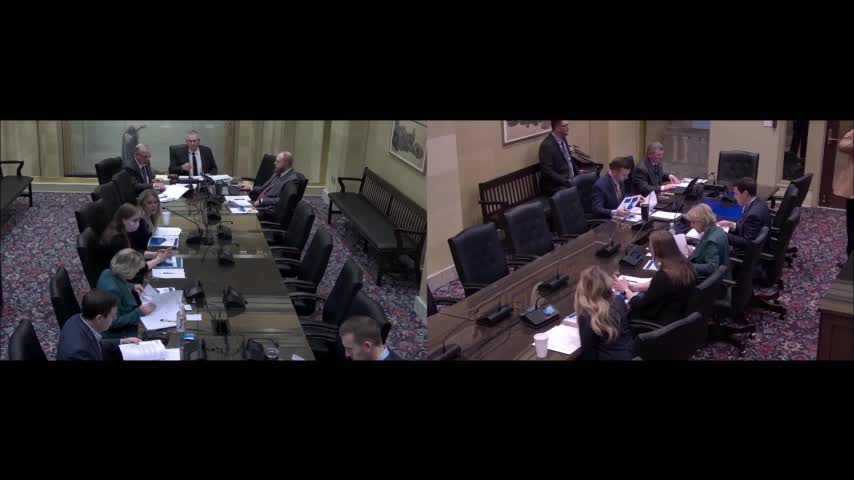
Department of Commerce outlines incentives, data push and funding requests in budget hearing
Summary
Deputy CEO Heather Turner told the Appropriations and Budget subcommittee the Department of Commerce is shifting toward a data-driven approach to target incentives, highlighted programs and requested line-item budget changes including pass-throughs and flexible recruitment funds.
Deputy CEO Heather Turner told the Appropriations and Budget Natural Resources Subcommittee on [date] that the Oklahoma Department of Commerce will emphasize data gathering and community-aligned recruitment to guide incentive spending and regional development work.
Turner said Commerce participates in roughly 20–30% of statewide projects and is collecting wins/losses and community-level surveys to understand what succeeds locally. "We're trying to gain more knowledge about what's most likely to succeed in their communities," Turner said, describing one-on-one outreach to economic development directors and a new survey of communities.
Commerce presented its recent accomplishments, including a reported contribution to 10,344 new jobs and the nonprofit relief program that awarded 289 nonprofits about $16.6 million. Turner also outlined CORE (Community Outreach, Revitalization, and Enterprise) and EDGE (Economic Development, Growth and Expansion) roles and introduced staff on hand to answer technical questions about incentives and implementation.
CFO Stacy Willis reviewed recent appropriations and cash balances, saying Commerce holds restricted ARPA/PREP funds and a $70 million cash balance related to a Mid-America Industrial Park appropriation for which a contract has not been executed. Willis described $9 million in the 205 fund and explained some FY23 spike in carryover tied to an accelerator program moved to OCAST.
Commerce identified several FY26 requests: a $650,000 reallocation from targeted energy/bioscience recruitment to a flexible business recruitment pool for cross‑training staff in EDGE; a $250,000 pass-through increase for the Community Expansion Nutrition Assistance (senior meals) program; $242,000 additional pass-through for community action agencies (administration and early Head Start support); and $30,000 to substate planning districts. Turner and Willis said many Commerce programs are administered as pass-through dollars and provided examples of current grant and program activity, including the Sites Ready program, Main Street grants and Venture Forward workforce recruitment funding.
Committee members pressed on metrics and return on investment. John Chappie, chief of partnerships and programs, said the agency reports program‑level ROIs (for example, the closing fund historically produced roughly $28 million of fiscal impact from $9.5 million in awards over three years) and agreed to provide more detailed ROI breakdowns. Members also asked about oversight of film and music, Canoo incentives and the Murray State gunsmithing grant; Commerce staff provided the status they had and said legal counsel had drafted clawback language in the Canoo matter.
The department said it has upgraded its grants management system and plans to replace an aging customer relationship system to better aggregate project and pipeline data. Turner said Commerce will continue regional stakeholder meetings and expand training for smaller communities to complete competitive RFPs and site applications.
The subcommittee did not take formal votes during the hearing; Commerce’s requests will be considered in the larger appropriations process.