Get Full Government Meeting Transcripts, Videos, & Alerts Forever!
Get email alerts on the Parks And Rec topic
No spam. Unsubscribe anytime.
St. Mary’s Recreation and Parks outlines programs, facility budgets and gaps including lifeguard shortages
Summary
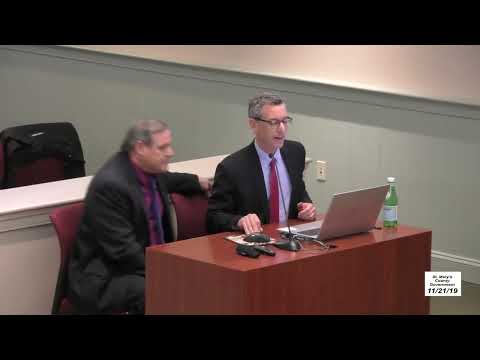
Recreation and Parks Director Arthur Shepherd briefed the YMCA exploratory committee on county recreation facilities, budgets and programs. He outlined operating models, enterprise fund revenues and deficits at several sites, staffing challenges (notably lifeguards), and gaps in northern-county facilities and teen programming.
Arthur Shepherd, director of St. Mary’s County Recreation and Parks, gave a comprehensive overview of the department’s facilities, programming model and finances to the YMCA Local Exploratory Committee, describing how programs are funded, which sites run surpluses or deficits and where the department sees gaps that a community partner could help fill.
Shepherd said the department operates 21 parks, three waterfront parks, more than a dozen playgrounds and multiple indoor recreation sites. The department’s combined operating budget — general fund plus two enterprise funds (golf and recreation) — is roughly $10 million; 43% is general fund support while enterprise revenues cover about half the costs of enterprise programs. Shepherd said that local taxation supports roughly two cents of every tax dollar for recreation and parks, “about the national average.”
Shepherd walked the committee through individual facilities and their financial profiles. He said Carver Recreation Center runs programs including cheer and gymnastics and operates some programs at no cost for neighborhood children; its utility and hourly staffing costs are covered by user fees and program revenues, although some enterprise accounts are held separately. Margaret Brent Recreation Center’s air-conditioning added summer program capacity. Leonard Hall, the county’s busiest facility, produces significant fee revenue (Shepherd cited about $200,000 annual revenue for Leonard Hall) and hosts a wide range of indoor sports, summer camps and rentals. The Great Mills Pool has both indoor and outdoor seasons and recorded tens of thousands of admissions; Shepherd said indoor pool heating and water heating drive a larger operating deficit than outdoor pools.
Shepherd said the county contracts or leases some programs (for example, the county leases a gymnastics center) and that some leased operations are high‑revenue performers. He reported that therapeutic recreation and summer camp programs carry higher staff ratios and therefore higher per‑participant costs and that scholarship activity is concentrated in summer camps and youth sports.
Committee members pressed staff on staffing: Shepherd said the county continually recruits lifeguards and swim instructors and that lifeguard availability constrains swim lesson and class capacity at Great Mills Pool. He also said staffing patterns for before‑and‑after‑school programs require early morning and late‑afternoon shifts, which make hiring and retention challenging. Shepherd identified gaps in northern‑county facility access and said intergenerational, multi‑generational facilities are an unmet need.
Shepherd described collaboration with volunteer youth leagues and the public school system (the county operates before‑ and‑after‑school programs in school facilities under contract) and estimated the recreation enterprise fund balance at roughly $664,000 — a fund reserve that helps manage year‑to‑year swings in program revenue and costs.
Shepherd invited committee members to tour multiple sites on planned dates and agreed to supply additional details requested by committee members, including facility capacity/utilization by season, square footage figures for leased gyms and a breakdown of Great Mills Pool revenue by swim team rentals versus general admissions.