Get Full Government Meeting Transcripts, Videos, & Alerts Forever!
Get email alerts on the Budget Finance topic
No spam. Unsubscribe anytime.
Downers Grove GSD 58 previews $2M+ in reductions, proposes return to pre-pandemic class-size targets
Summary
At a Jan. 27 special meeting, administrators outlined roughly $2.0–$2.2 million in savings measures to restore the district's 35% fund-balance target after federal ESSER funding ends and state reimbursements shrink.
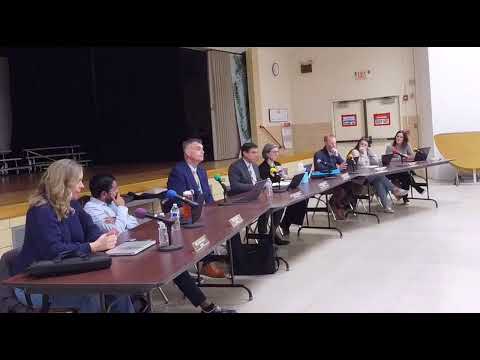
Administrators for Downers Grove Grade School District 58 laid out proposed budget reductions and program changes on Jan. 27 at a special board workshop at O'Neil Middle School, saying the district must close a multi-million-dollar gap in the coming fiscal year as federal ESSER aid ends and state reimbursements continue to be prorated.
Dr. Russell, a district administrator who led the presentation, said the immediate goal is to both balance next year's budget and preserve the district's 35% fund-balance policy, which the administration and the district's Financial Advisory Council view as necessary to avoid short-term borrowing during the district's low-cash months. "If reductions aren't made, we are not on a sustainable path," Dr. Russell said.
The administration presented a mix of savings already captured and recommended changes totaling roughly $2,000,000 to $2,200,000. Key items the presentation listed as contributors to that total include:
- A board policy directing a transfer of $750,000 to capital reserves (previously adopted in December) and the need to return to regular capital contributions once federal aid ends.
- Programmatic adjustments that were already in motion: realigning gifted services so more instruction occurs at students' home schools (reported savings listed as $51,000) and shifts that will end some out-of-district special-education costs when current 8th graders leave district programs (described as a one-time, nonrecurring reduction).
- Transportation changes, including moving 5th graders from weekly instruction at Henry Puffer to daily instruction at home schools, which the presentation identified as yielding transportation savings (presentation excerpt: approximately $71,000).
- Software and contracts: a one-time targeted review of instructional and operational software with an estimated $100,000 in annual savings through consolidation, renegotiation, or elimination of underused products.
- Personnel and staffing configuration changes: an administrative reduction equivalent to 1.0 FTE by eliminating two halftime assistant-principal positions (Highland and Kingsley), a proposed reduction of a 0.6 floating registered nurse position, and further alignment of occupational therapy services by hiring more in-house therapists rather than contracting (anticipated but unspecified savings).
- Class-size realignment: a proposal to move decision-making closer to pre-pandemic class-size targets the district uses each September (80% of K'2 students in classes of 24 or fewer; 80% of grades 3'8 classes of 26 or fewer). Administrators said the district has been exceeding those targets (94% in K'6 under the target in the most recent September), and shifting closer to 80% could yield nearly $1 million in recurring savings. The administration estimated this could amount to the equivalent of up to six elementary sections collapsing and roughly 5.5 FTE teaching reductions at the middle-school level, depending on enrollment and retirements.
Administrators emphasized priorities: preserve core programming and extracurriculars, comply with Illinois State Board of Education mandates, and minimize student- and staff-facing impacts where possible. They also repeatedly warned that the COVID-era ESSER funds end after this school year and that state categorical reimbursements (including transportation and special-education reimbursements) have been subject to proration that has reduced expected revenue.
Board members pressed for concrete details and cautioned against moving too quickly. Several asked how the district would support classrooms if average sizes moved toward the high 20s; Justin Sissle (named in the discussion as an administrator involved in class-size work) and other presenters said supports could include reallocating reading specialists, targeted instructional-assistant time, creative scheduling, or other building-level interventions but that "there will be moments in the day where it is a teacher and 27 students." Board members also asked for a clearer list of secondary or contingency options should enrollment or outplacement costs change after the initial plan is adopted. One board member asked the administration to build and share a "pessimism index" or conservative scenario for revenue and cost assumptions.
Administrators said they had already built conservative estimates into projections after recent state reimbursement surprises (notably a CPPRT correction described in the presentation). They committed to returning with more-detailed backup materials, secondary options to pull if conditions worsen, and the enrollment-driven staffing allocations once registration numbers solidify in March and April. The administration also said it has had individual conversations with staff who might be affected and will continue to do so before any final decisions are implemented.
The workshop closed with board members asking for more granular analyses of risks (utilities, transportation bid results, outplacement averages, and contingency allowances) and for the administration to present additional options and a clearer conservative scenario. The administration said it would provide the requested materials and coordinate next steps with the board president.
Votes at a glance: There were no budget votes at the Jan. 27 workshop; the board did later move the meeting into closed session by motion and roll call (see "Votes" in the meeting actions).