
Bill would create advisory commission to coordinate advanced nuclear planning; witnesses sharply divided
Get AI-powered insights, summaries, and transcripts
Subscribe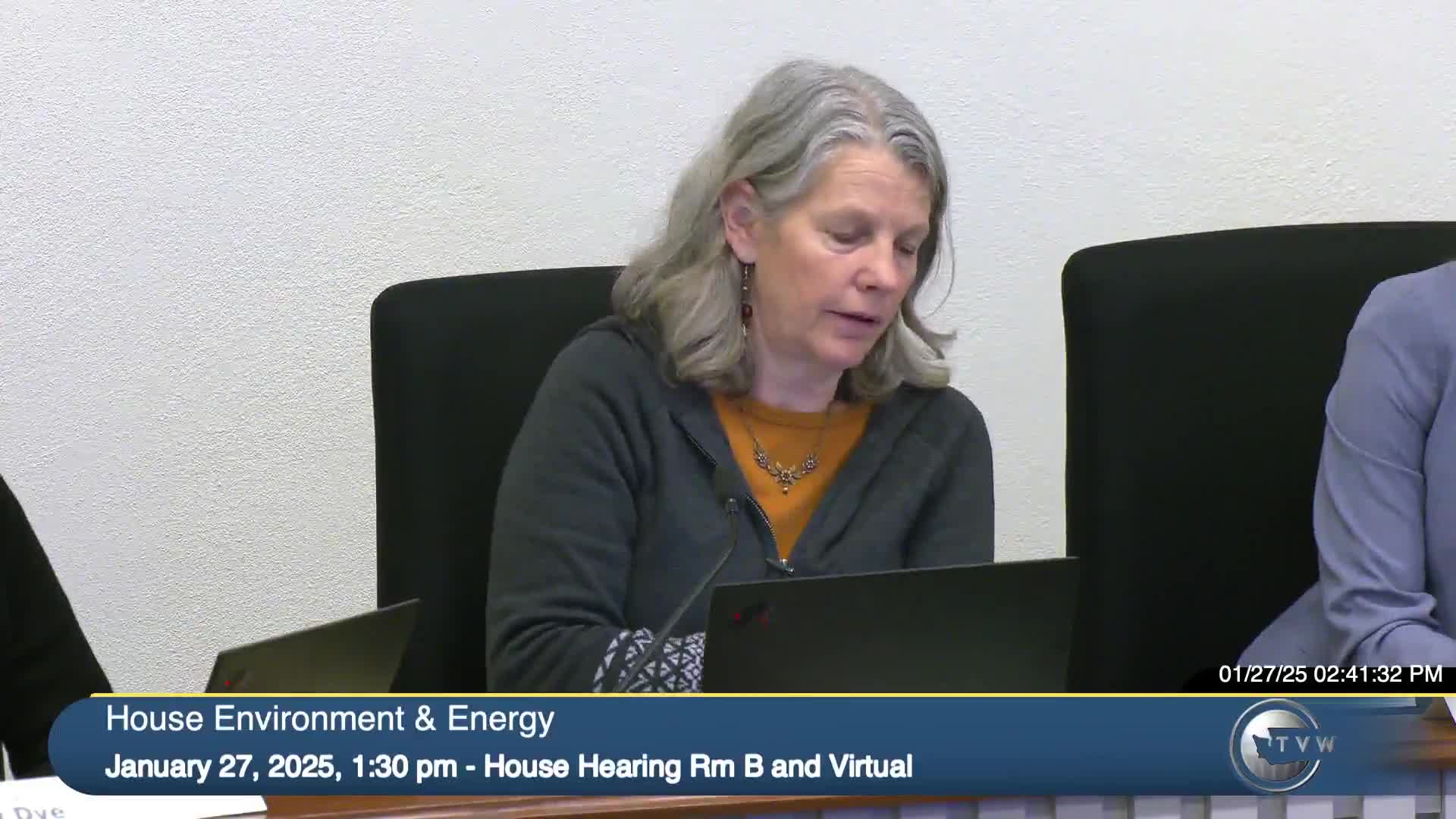
Summary
House Bill 1249 would establish a 13-member advisory commission to coordinate advanced nuclear development. Utilities, ports and industry proponents urged passage as a way to accelerate supply-chain and siting planning; environmental, tribal and river-protection groups opposed the bill citing cost, waste and unresolved safety and justice issues.
House Bill 1249, which would create the Commercial Lift Off for Energy from Advanced Nuclear advisory commission, drew sharply divided testimony at an Oct. 12 hearing of the House Environment & Energy Committee.
Sponsor Representative Barnard said the commission would assemble nonpartisan experts and practitioners to coordinate action across the advanced‑nuclear value chain — siting, manufacturing, fuel and workforce — and submit recommendations to the governor and legislature. ‘‘What we aim to do with this bill is…provide nonpartisan credible experts…to coordinate action across the value chain for nuclear energy development and be a trusted resource for the public and for lawmakers,’’ Barnard said.
Proponents included ports, industry associations and a trade cluster. Cassie Hammond of the Port of Benton and other local economic-development witnesses said nuclear can provide carbon‑free, grid‑reliable power and economic activity. The Clean Energy Supplier Alliance and business and labor representatives testified in favor, and several public utilities and utility-adjacent groups said additional coordination would help inform siting and supply-chain work.
Opponents included the Sierra Club, Columbia Riverkeeper, Conservation Northwest and multiple individual residents who urged rejection. Kathleen Saul, representing the Sierra Club’s Washington chapter, cited rising cost estimates in recent SMR projects and argued that small modular reactors have proven uneconomic in multiple international cases. ‘‘NuScale estimated cost of their SMRs to be $10,000 per kilowatt in 2015…by 2023 that estimate had topped $23,000 per kilowatt,’’ Saul said.
Other opponents noted unresolved radioactive waste storage issues, tribal harm from uranium mining and potential multigenerational impacts at Hanford. Collected concerns argued new state resources should prioritize near-term, lower-cost renewables, storage and efficiency measures rather than an advisory effort focused on speculative and costly nuclear technologies. Proponents countered that advanced nuclear could provide firm, dispatchable, low-land‑use generation that complements renewables.
The committee did not take a vote during the hearing. The bill would require the commission to meet up to five times per year and report recommendations by Oct. 1 of even‑numbered years; the commission could solicit funds, hire staff and establish offices.
Why it matters: Supporters argue a focused, expert advisory body would help the state plan for advanced nuclear as a tool to meet decarbonization and reliability goals. Opponents contend the technology remains unproven, expensive and carries unresolved waste and justice concerns — making an advisory commission premature.