Get Full Government Meeting Transcripts, Videos, & Alerts Forever!
Get email alerts on the Committee Organization topic
No spam. Unsubscribe anytime.
Iowa Senate State Government Committee adopts Rule 39, approves March minutes
Summary
The Iowa Senate State Government Committee adopted its committee rule 39 by unanimous consent and approved minutes from the March 26, 2024 meeting during an organizational session focused on introductions and the committee's operating philosophy.
The Iowa Senate State Government Committee adopted Rule 39 as its governing committee rule and approved the minutes from its previous meeting on March 26, 2024, by unanimous consent during an organizational session that opened the committee's work for the year.
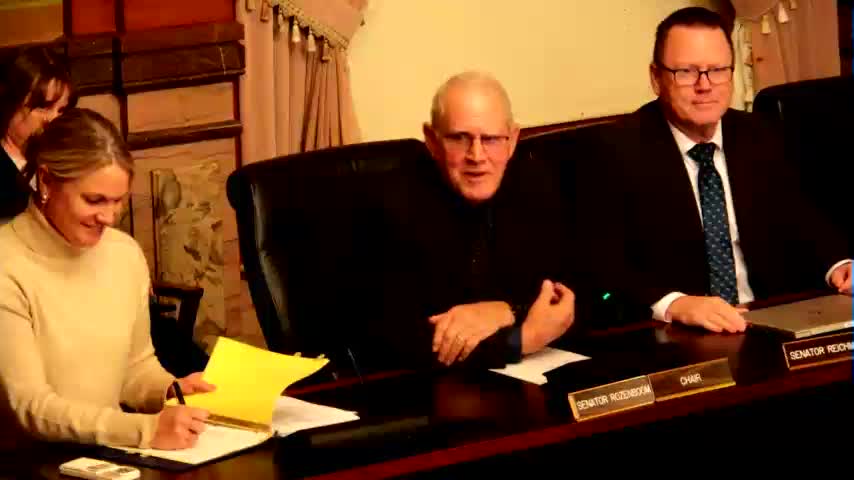
The committee chair opened the meeting, directed a silent roll call to be taken by the clerk and asked for unanimous consent to approve the distributed minutes and to adopt Rule 39. With no objections recorded, both the minutes and Rule 39 were approved as presented.
Committee members used the meeting largely for introductions. Several senators introduced themselves and their Senate districts, and the committee chair outlined a general approach for the session, saying they will scrutinize bills and ask "why are we doing this?" before advancing changes. Senator Tony Bizzignano, a longtime member of the committee, offered collegial advice to newer members, saying, "if you need advice, you know, you can come and see me."
Senators also noted administrative-review responsibilities and the volume of administrative rule changes that will come through related committees. A member said Democrats on the committee will press to protect public-employee retirement and collective-bargaining rights where relevant, and emphasized a desire to work bipartisanly on election-access issues and efficient, accountable government.
The formal business concluded when Senator Visignano moved to adjourn; the motion was adopted and the meeting was closed.
The session covered organizational matters rather than substantive bill debate; members signaled priorities for the legislative session and administrative rule oversight but took no policy votes beyond adopting the committee rule and approving minutes.