Get Full Government Meeting Transcripts, Videos, & Alerts Forever!
Get email alerts on the Education topic
No spam. Unsubscribe anytime.
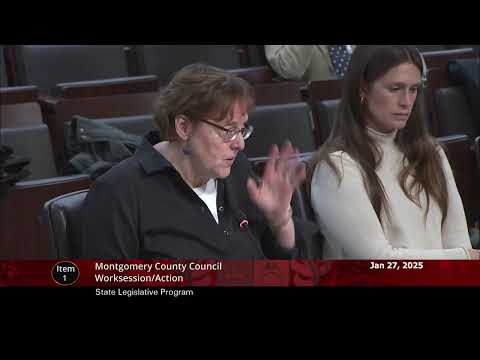
Council signals support for school board pay bill, raises timing and student-member questions
Summary
The Montgomery County Council voted 10–1 to generally support MC725, a bill to raise Board of Education compensation, and asked staff to forward council concerns to the sponsors about phased implementation, staggered terms and whether the student member’s award should be scholarship, stipend or a combination.
The Montgomery County Council on Oct. 12 signaled its support for MC725, legislation to change compensation for the county Board of Education, voting 10–1 to provide sponsors with the council’s feedback while reserving detailed amendments for the delegation in Annapolis.
Council members said the bill raises legal and policy questions about how new pay levels would be phased in, how staggered four‑year terms interact with the state constitution’s protection against mid‑term salary changes, and how to treat the student member of the board (SMOB) — scholarship, stipend or both.
Staff presenting the bill said the Board of Education Compensation Commission recommended a range for publicly elected members of $110,000 to $130,000 (the commission described that as a base), a president salary range of $123,000 to $143,000, and that the student member receive either a scholarship or stipend equal to 30–35% of the base. Staff showed order‑of‑magnitude fiscal comparisons for current law, the bill and the commission recommendation when fully phased in and warned the exact year‑by‑year cost depends on which incumbents’ staggered terms are affected.
“Because of the staggered terms … it’s not all phased in until Dec. 1, 2028,” a staff presenter said, describing how different cohorts would move to new pay in different years and how that produces short‑term discrepancies among members.
Dale Tibbets, special assistant to County Executive Mark Elrich and staff to the compensation commission, urged the council to preserve the commission’s option that the SMOB be eligible for a scholarship rather than only salary. “If it was a scholarship, then it kind of cuts out anybody who wasn't college bound as a potential candidate for running for this SMOB,” Tibbets said, arguing the commission worried a scholarship requirement might exclude students not headed to college.
Council members voiced competing policy views. Vice President Giuando said she supported the bill’s compensation levels and favored paying at least some SMOB funds as a stipend so students can meet living and work obligations during the school year. Council Member Glass said he preferred the SMOB award remain a scholarship to avoid changing the character of the office; Council Member Mink said a combination of stipend and scholarship would help ensure the role is accessible to students who must work.
Members also discussed one possible path to accelerate implementation: whether resignations and reappointments could create new terms not protected by the constitutional restriction on changing sitting officials’ pay. Staff said the county attorney is reviewing that question.
A motion by Vice President Giuando asking the council to “generally support” MC725 and forward a summary of the council’s comments to the bill sponsors passed 10–1; the dissenting vote was not recorded by name in the meeting transcript.
Council members said they expect the bill to change as it moves through the House and Senate and emphasized they were offering guidance rather than binding amendments.
The council requested staff follow up with sponsors on a set of issues the body raised, including: clarifying whether any portion of the SMOB award may be used for non‑college uses, whether a stipend should be distributed over time or as a lump sum, the fiscal phasing given staggered terms, and whether staff complements for a full‑time board were addressed (the bill does not address staffing).
Council members also asked staff to flag the constitutionally based limits on changing pay for sitting officials, and to return with options for addressing the timing discrepancies as the bill evolves in Annapolis.
The council’s action was procedural: it did not amend the bill language or adopt final county positions on specific technical changes, and council members said they expected more detailed negotiations and possible amendments during the legislative process in Annapolis.