Get Full Government Meeting Transcripts, Videos, & Alerts Forever!
Get email alerts on the Open Meetings topic
No spam. Unsubscribe anytime.
Santa Ana council amends meeting rules on recording and aisle obstruction, cites Brown Act
Summary
The council updated its rules and procedures to clarify media and public recording rights and to simplify the rule prohibiting obstruction of aisles, entrances and exits in the chambers; the changes track the Brown Act and passed unanimously.
The Santa Ana City Council approved amendments to its council rules and procedures to clarify audio, video and photographic recording during public meetings and to simplify the rule on obstruction of aisles, entrances and exits in the council chamber.
The action keeps language consistent with the California Brown Act while trimming local wording that council members said risked confusing the public. City Attorney staff read the Brown Act language aloud during the discussion to show the required state standard: "any person attending an open and public meeting of a legislative body of a local agency shall have the right to record the proceedings ... in the absence of a reasonable finding by the legislative body that the recording cannot continue without noise, illumination, or obstruction of view that constitutes ... a persistent disruption of the proceedings," the city attorney said.
Council Member Lopez requested removing a local provision that could be read as limiting recording, and the council ultimately retained the Brown Act-aligned language but revised subsection 7(b) to read: "No person shall obstruct the aisles, entrances, or exits of the council chambers." Supporters said that simpler language helps enforcement and public understanding while remaining subject to the state law exception for persistent disruption.
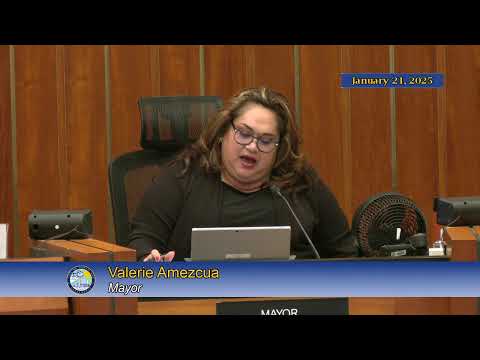
The motion, moved by Council Member Becerra and seconded by Mayor Valerie Amezquah, passed 7-0.
Council members said they wanted rules that are transparent, clear to the public and consistent with state law. The city attorney confirmed the Brown Act provisions remain controlling and that a majority council finding is the mechanism to stop a recording that would be a persistent disruption.
The revised rules are procedural and apply to conduct in the council chambers; they do not add new criminal penalties or change public-records law.