Get Full Government Meeting Transcripts, Videos, & Alerts Forever!
Get email alerts on the State Budget topic
No spam. Unsubscribe anytime.
JLBC baseline flags constrained resources; difference over Medicaid access caseloads could swing hundreds of millions
Summary
At a Jan. 22 House Appropriations Committee hearing, the Joint Legislative Budget Committee presented its baseline revenue and spending outlook and highlighted a major disagreement with the governor's executive budget over Medicaid "access" caseload projections that could widen a multi-year gap by roughly $800 million, JLBC staff said.
PHOENIX
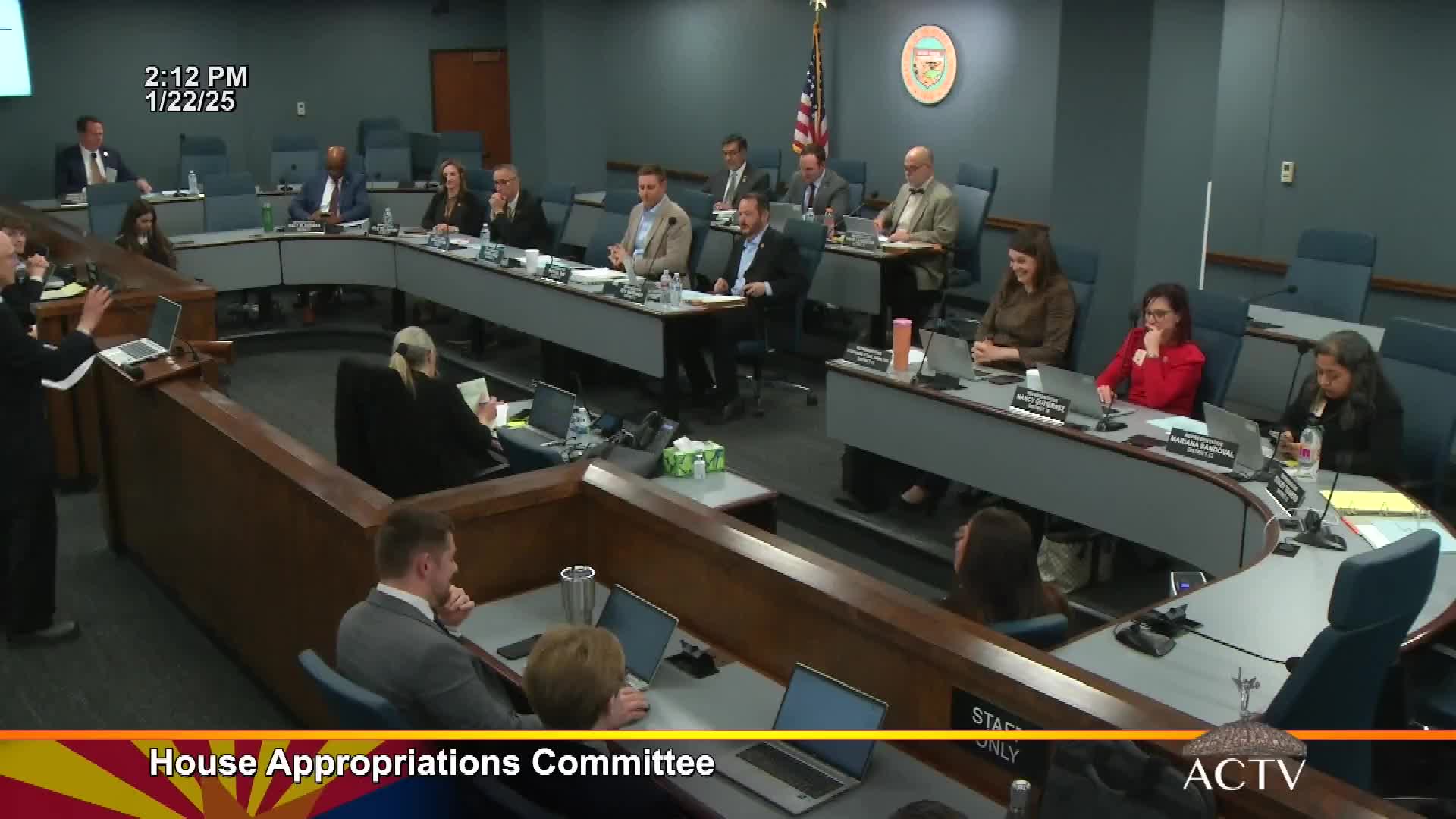
At a Jan. 22 meeting of the Arizona House Committee on Appropriations, representatives from the Joint Legislative Budget Committee (JLBC) presented a baseline budget estimate and identified a significant gap between the JLBC's and the executive branch's revenue and caseload projections that could put multi-year balances at risk.
The JLBC's baseline shows a budget that, after accounting for customary one-time items and a recommended $50 million ending balance, leaves limited discretionary resources for the 2026 budget year, JLBC staff said. "You could allocate $125 million for ongoing and $4.35 billion for one-time," the JLBC presenter said, describing options for available funds, and recommended setting aside at least $50 million as a reserve.
Why it matters: The JLBC told the committee a disagreement with the executive over estimated Medicaid costs tied to the state's "access" program is the single largest driver of divergence between the two plans. JLBC staff said the executive's assumption of flat access caseload costs beginning in 2026 is outside the range of normal forecast differences and would reduce multi-year balances by roughly $800 million if not changed.
JLBC staff summarized the baseline and stressed three components that limit flexibility: recurring one-time appropriations the legislature has historically treated as one-time (including school facility repairs and a state employee health insurance subsidy), formula-driven growth in K-12 and Medicaid spending, and differences in revenue forecasts between the JLBC and the executive. "Our baseline budget is about $16.65 billion," the JLBC presenter said when outlining spending and revenue bars.
On K-12, the JLBC estimated roughly 12,000 new pupils and noted an ongoing requirement to fund inflation up to 2 percent for the base support level. JLBC staff also said growth in Education Savings Accounts (ESA) applicants and a high "switcher" rate from public schools to ESAs have partially offset some K-12 costs.
Committee members questioned specifics. Chairman Livingston said the differences between the JLBC and executive projections made the access caseload projections an urgent issue for budget talks. "If you were to integrate that into the executive plan, that positive number would become negative," the JLBC presenter told the committee.
The JLBC also listed the major ongoing and one-time items the executive included in its proposal, including pay adjustments for state employees, a multi-year provider pay increase for long-term care contractors, and a proposed transfer of prescription drug rebate funds to the general fund.
What was not decided: The JLBC presentation informed the committee; no formal budget action occurred. Members asked JLBC to follow up on several technical points, including the administration's assumptions on caseload growth and details about obligations for housing trust and capital projects.
Ending: JLBC staff said litigation, federal budget changes and continued reliance on labeling ongoing costs as one-time create risks that the legislature and executive will need to manage as budget negotiations proceed.