Get Full Government Meeting Transcripts, Videos, & Alerts Forever!
Get email alerts on the Land Development Code Rewrite topic
No spam. Unsubscribe anytime.
Wasilla attorneys and planners outline major changes in Title 16 draft rewrite; specific use criteria and short‑term rental rules revised
Summary
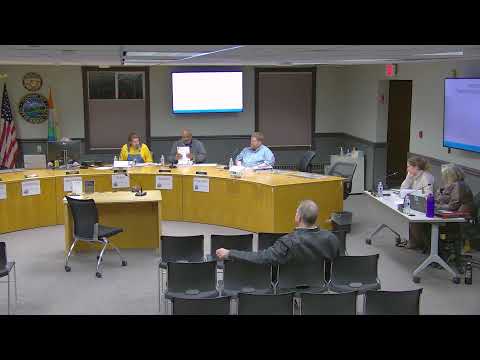
City Attorney Holly Wells and City Planner Wellman outlined a draft rewrite of Wasilla’s Land Development Code (Title 16) at the Jan. 14 Planning Commission meeting, describing reorganization of use sections and substantive changes to short‑term rental, accessory use, density and landscaping rules.
City Attorney Holly Wells and City Planner Wellman used the Jan. 14 Planning Commission meeting to summarize the proposed rewrite of Wasilla Municipal Code Title 16 (Land Development Code), outlining organization changes and key substantive revisions that will be discussed across upcoming meetings.
Wells said the rewrite reorganizes zoning district uses and pulls specific use criteria out of a single, long zoning chapter into dedicated sections so users can find rules for particular uses more easily. The draft separates accessory uses and home occupations into clearer provisions, retains and clarifies existing specific use criteria for higher‑concern uses, and creates a planner discretion rule allowing the planner to find an unlisted use similar to a listed use — subject to commission confirmation at the next regular meeting.
Short‑term rentals: The draft reduces some of the previous regulatory burden while preserving safety and local contact requirements. The packet and Wells’ presentation describe a complementary, separate registration ordinance (no fee) to capture the existing market. Wells said staff research found “over a 100” short‑term rentals listed online while only two entities were complying fully with current city requirements. Under the proposed code: applicants for a short‑term rental administrative or conditional permit must submit a site plan, owner and local contact information, evidence of a valid business license, septic certification, proof of insurance, and an acknowledgment that the owner received the city’s short‑term rental regulations. The draft sets a maximum occupancy of 10 persons, requires specified parking, retains fire and emergency provisions, and makes short‑term rental permits valid for two years (rather than one) to reduce the effect of appeal delays.
Uses and permits: The proposed ordinance narrows permit types in the district use chart to two categories — administrative permits and conditional permits — and removes accessory uses and home occupations from the district use chart into separate sections. Accessory structures meeting specified criteria would be allowed without a permit; some accessory uses would remain conditional. The planner’s new discretion to treat unlisted uses as similar to listed uses is conditioned on commission confirmation at the planner’s next meeting.
Density, measurements and parking: The rewrite clarifies rounding rules and density calculations: fractional units and fractional parking/loading requirements will round up if the decimal is 0.50 or greater and down otherwise. The draft revises rural residential density rules and removes a previous linking of density to sewer/water access; the planner said public works staff were consulted. Parking lot landscaping requirements were reduced in percentage terms: landscaping would be required at a rate of at least 5% for qualifying lots, down from 15% in the current code, and the threshold for when parking‑lot landscaping applies focuses on lots of 40 or more spaces.
Landscaping and definitions: The draft narrows and reorganizes landscaping provisions to emphasize native vegetation, preserve certain protections (for example, a clear‑cutting prohibition near water), and require ground cover on residential lots without mandating conventional lawns. Wells and planner staff said they will return with clarified definitions (including a single definition for “ground cover”) in a later packet; commissioners raised questions about precise definitions and percent retention of vegetation in larger lots.
Process and next steps: The commission entered the Committee of the Whole to discuss Title 16 language and scheduled continued discussion at future meetings; the rewrite will move into a policy‑focused phase 2 after the commission and council have reviewed the reorganized code. Wells said the council and commission worked jointly on many of the use questions and that staff will collect the commission’s comments and prepare a draft to bring back for introduction and possible joint sessions with council.
No ordinance was adopted at the Jan. 14 meeting. Commissioners asked staff for clearer redline/clean drafts and specific chapter redlines (the packet included chapter redlines for density/dimensional and landscaping sections) and requested a follow‑up that addresses definitions and the interface between Title 16 and the comprehensive plan.