Get Full Government Meeting Transcripts, Videos, & Alerts Forever!
Get email alerts on the Cwd Transparency topic
No spam. Unsubscribe anytime.
Supporters call HB1325 a transparency bill; Game and Fish and state veterinarians oppose extra microscopy and necropsy mandates
Summary
House Bill 1325 would require public disclosure of CWD positive detections and requested microscopy and necropsy documentation; proponents said the measure increases transparency while agency and veterinary officials said the requested materials are not standard practice and could be burdensome.
House Bill 1325, described by proponents as a transparency measure, drew sharply different testimony on whether the state should be required to publish additional laboratory material and necropsy documentation for chronic wasting disease detections.
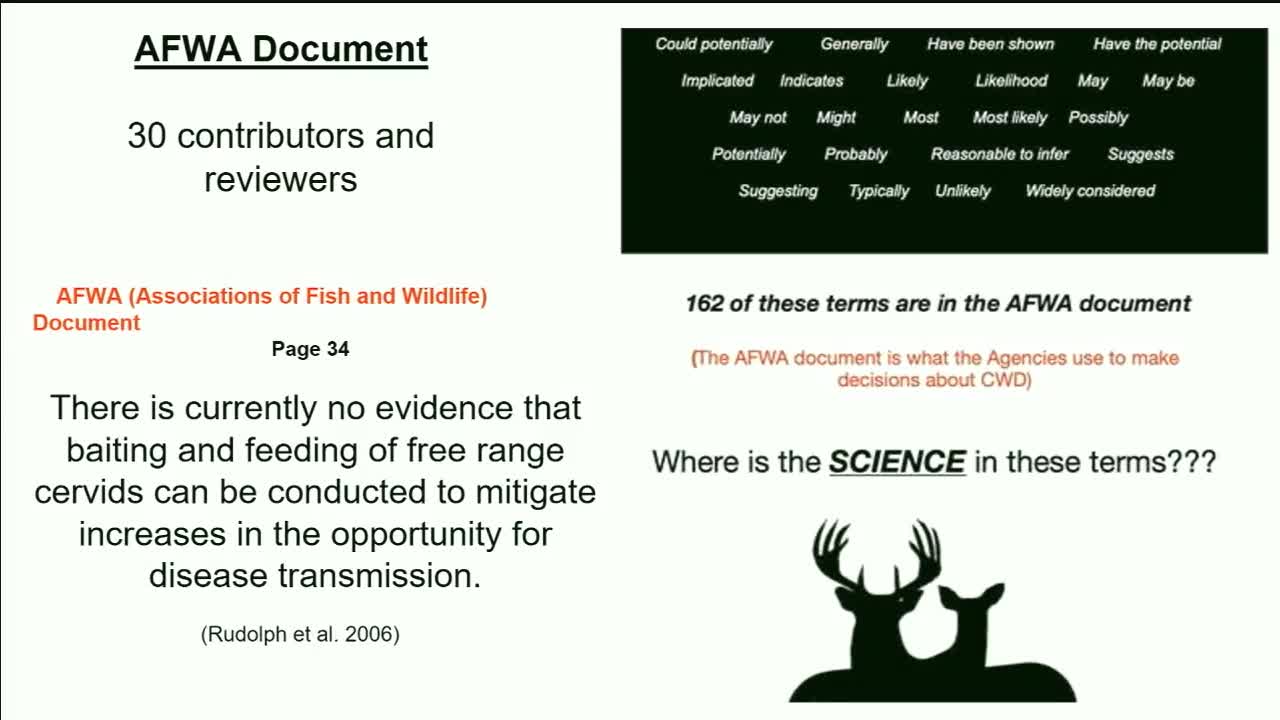
Dusty Backer and other proponents framed HB1325 as a public‑disclosure bill. Backer told the committee he and others have reviewed scientific literature and asked for slide images and necropsy reports to be made available with positive detections; he described skepticism about the prion hypothesis and said additional documentation is necessary for public trust. “This bill is necessary for transparency,” Backer said.
Several hunters and residents who testified in support said the recent emphasis on CWD after a high EHD mortality year raised questions they want answered, and they urged disclosure of laboratory and necropsy results so the public can evaluate findings.
The North Dakota Game and Fish Department and state animal‑health officials opposed the bill as written. Dr. Charlie Bahnsen, wildlife veterinarian for Game and Fish, explained the department’s surveillance and testing workflow: an initial ELISA screen is followed by immunohistochemistry (IHC) confirmation at certified diagnostic laboratories, and IHC slides are already retained by reference labs. “If the sample tests positive by IHC, it’s positive,” Bahnsen said. He added that the department uses USDA‑recognized testing protocols and that surveillance relies on large sample sizes of hunter‑harvested animals to estimate prevalence.
State veterinarian Dr. Ethan Andress and the State Board of Animal Health also opposed the bill. Andress told the committee that requiring microscopic images of prions and necropsy reports “is unnecessary and burdensome,” not standard protocol, and could create trade and regulatory consequences for producers if trading partners view the documentation differently.
Proponents and some committee members argued the public should not have to request information piecemeal and that posting results proactively would build trust. Opponents said existing public reports already summarize sample counts and positives, that IHC slides are retained by reference labs (Utah Veterinary Diagnostic Lab) and that the specialized imaging sometimes discussed in testimony (electron‑microscopy level images) is not a routine surveillance deliverable.
No committee vote was recorded. Department witnesses said they would provide surveillance results and confirmed‑detection reports on request and described the technical limits and costs of producing specialized microscopy for every positive detection.