Get Full Government Meeting Transcripts, Videos, & Alerts Forever!
Get email alerts on the Board Audit Chiropractic topic
No spam. Unsubscribe anytime.
Auditor General special audit finds broad procedural, transparency and enforcement problems at Arizona Board of Chiropractic Examiners
Summary
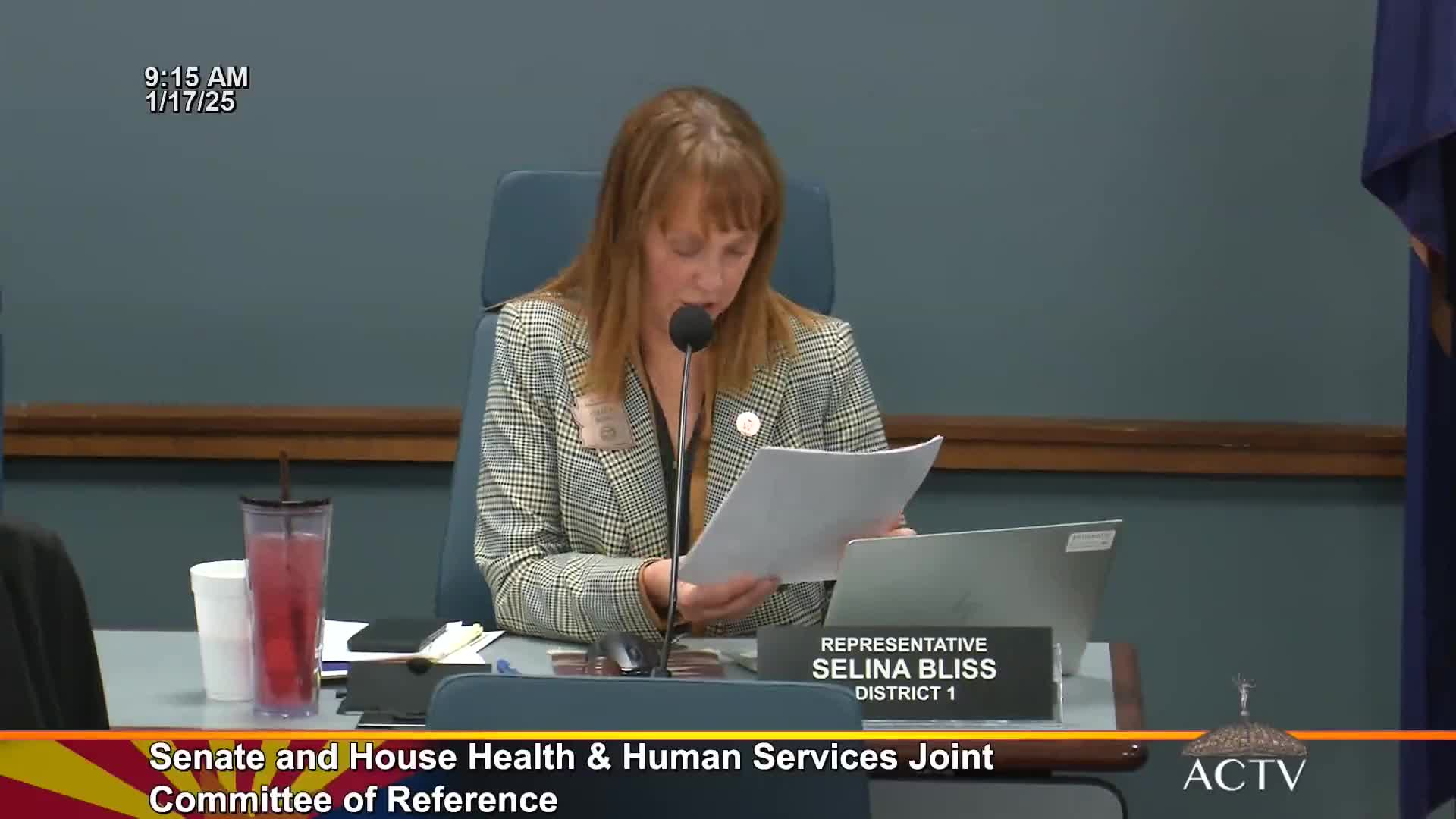
A special audit presented to the Joint House and Senate Health and Human Services Committee found multiple flaws in how the Arizona State Board of Chiropractic Examiners handled investigations, subpoenas, psychosexual evaluations, criminal referrals, open‑meeting requirements and conflict‑of‑interest reporting.
A special audit presented to the Joint House and Senate Health and Human Services Committee found multiple flaws in how the Arizona State Board of Chiropractic Examiners handled investigations, subpoenas, psychosexual evaluations, criminal referrals, open‑meeting requirements and conflict‑of‑interest reporting.
The findings were presented by George Skiles of Sjoberg Evoche Consulting on behalf of the Auditor General and followed a contractor review the Auditor General’s office commissioned. The audit covered the board’s licensing and investigative practices and recommended 28 changes to improve timeliness, statutory compliance and transparency.
The audit matters because the board licenses about 2,500 chiropractors and is the agency Arizonans rely on to investigate allegations that could affect patient safety. The audit links the board’s investigative practices to risks for both patients and licensees: broad subpoenas delayed probes and produced large volumes of unnecessary records; criminal allegations were not consistently referred to law enforcement; and some serious complaints took years to resolve.
Skiles told the committee that the board “regularly requested information beyond the scope of the complaint allegations, which is contrary to its statutory authority,” and that auditors found the board often used broad, standardized requests that were not tailored to specific allegations. The audit reviewed a judgmental sample of 70 complaints and found continuing‑education documentation was requested in 60 of 70 cases when it was not relevant, and full patient records or billing files were sometimes sought even when unrelated to the allegation.
The auditors also found inconsistent use of psychosexual evaluations in sexual‑boundary complaints. Of 13 substantiated sexual‑boundary allegations in the sample, the board ordered psychosexual exams in only three cases. The audit highlighted one case in which no evaluation was ordered, but the board placed the licensee on probation with conditions including chaperones and extensive continuing education.
On criminal referrals the audit reported the board failed to refer most allegations that appeared to indicate criminal wrongdoing. Auditors reviewed 10 complaints with criminal allegations that had not been reported to criminal authorities; the board reported only one of those. Auditors said the board sometimes required complainant consent before referring allegations and lacked clear procedures for timely reporting to law enforcement.
The audit also flagged open‑meeting and records issues: interrupting members of the public during calls to the public; incomplete or untimely posting of meeting minutes and recordings; and redaction of posted recordings without notices explaining the edits. Auditors said the redactions were generally names and patient identifiers but that altering public recordings without clear procedure impairs transparency and may violate open‑meeting law. The audit recommended the board work with the Attorney General’s Open Meeting Law Enforcement Task Force; Jeff Govan of the Auditor General’s office told the committee the auditors had advised that course of action.
Board Executive Director Alyssa VanderVeen responded to the committee saying the board accepted 27 of the 28 recommendations and “has already begun to implement these recommendations.” She said the board had started narrowing subpoenas, implemented a new licensure portal so some information arrives during renewal, added investigators and is rewriting policies for complaint handling, conflict disclosures and open‑meeting compliance. VanderVeen told the committee the board had improved staffing and salary levels to reduce turnover and was working with the Attorney General’s Office on open‑meeting questions.
On one recommendation the board said it would implement a different approach. The Auditor General recommended a requirement that criminal allegations be reported to law enforcement within 48 hours; the board said a mandatory 48‑hour rule could undermine its discretion to evaluate allegations and that it prefers case‑by‑case assessment in coordination with the Attorney General’s Office. Auditors warned that delays or failure to report can impede criminal investigations and leave the public at risk.
The audit also recommended the board update guidance for psychosexual evaluations, stop subpoenaing unrelated material during complaint investigations, set timeframes to resolve complaints (they recommended 180 days and prioritized higher‑severity cases), cease using public resources to lobby licensees on pending legislation, comply fully with open‑meeting law, and improve conflict‑of‑interest procedures and filing. Skiles said the board historically lacked comprehensive policies and had experienced high turnover, including multiple executive directors during the audit period, which auditors linked to inconsistent practices.
Public comment at the hearing included an attorney, Tom Marlowe, who represented a chiropractor and urged committee members to “drill down” to the case level; he told the committee he had an unresolved complaint dating back two years that he described as straightforward and said the board’s process had taken too long.
The committee did not vote on legislation at the hearing; it received the audit and questioned the Auditor General and the board about implementation plans, timelines and whether statutory changes were needed. Auditors said they will follow up on implementation and report to the committee at later intervals.
For now, the formal outcome is that the board agreed to adopt almost all of the auditors’ recommendations and staff told the committee they have begun implementation or policy drafting. Legislators pressed auditors and the board on how the board will ensure complaints are resolved faster and on whether some statutory clarifications — especially around subpoenas and reporting criminal allegations — are needed to ensure prompt action.
The committee’s next steps include follow‑up oversight, and the Auditor General said it will return to review progress on implementing the recommendations in future follow‑up reports.
Ending note: the audit gives the committee a detailed roadmap of changes the board must make to reduce investigative delays, limit requests to information relevant to allegations, increase reporting to criminal authorities when appropriate and strengthen conflict‑of‑interest and open‑meeting compliance.