Get Full Government Meeting Transcripts, Videos, & Alerts Forever!
Get email alerts on the Fertility Coverage topic
No spam. Unsubscribe anytime.
Hearing on fertility coverage bill highlights access, cost and equity tradeoffs
Summary
Senate Bill 5121 would require group health plans to cover fertility preservation services and, after 2027, diagnosis and treatment of infertility; testimony included personal stories, provider support, insurers’ cost estimates and calls to include advanced practice providers in coverage rules.
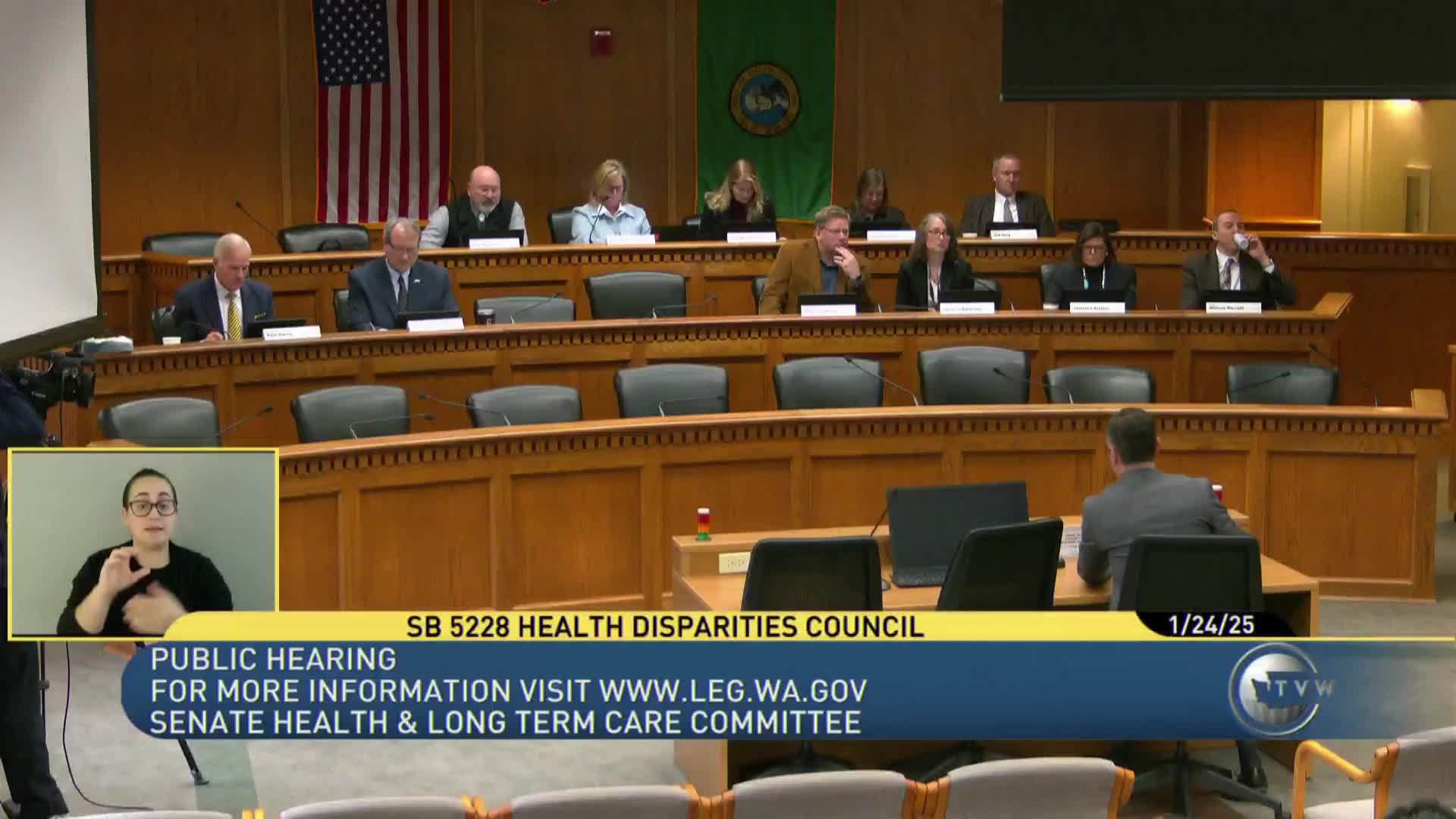
Senate Bill 5121, introduced by Senator Noel Frame, was heard Jan. 24 and would require group health plans to provide coverage for standard fertility preservation services beginning in 2026 and, beginning in 2027, require coverage for diagnosis and treatment of infertility. Committee staff said the bill would provide two complete oocyte retrievals and unlimited embryo transfers consistent with American Society for Reproductive Medicine guidelines and, unlike prior bills, would require Medicaid to cover standard fertility preservation services.
Senator Frame described the bill as a response to the high out‑of‑pocket costs many families face and said coverage should not depend on employment at large employers that already offer fertility benefits. “You shouldn’t have to work for one of the largest corporations in the world to have the privilege of getting to build a family,” she said.
Physicians and patient advocates testified in support. Reproductive endocrinologist Dr. Lori Marshall, who has practiced in Washington for more than 30 years, said the medical community recognizes infertility as a disease and cited a per‑member‑per‑month estimate of about $0.19 for certain public plans under a two‑IVF‑cycle limit. Personal testimonies described ectopic surgeries and infertility leading to medically necessary IVF; several witnesses said they incurred substantial debt to pursue treatment.
Insurers raised cost concerns. Christine Brewer of Premera Blue Cross provided a projected first‑year impact for the carrier of about a 1.4% premium increase (roughly $7.68 per member per month), driven in their analysis by increased high‑risk maternity and newborn care associated with fertility services. Jane Meyer of the Office of the Insurance Commissioner (OIC) noted the state’s essential‑health‑benefits benchmark plan includes some infertility‑related services in the small‑group/individual market but not a full infertility benefit under rules in effect at the time of the benchmark selection. The Association of Washington Healthcare Plans said it is conducting updated cost estimates and would share them with the committee.
Multiple organizations urged inclusion of advanced practice providers (nurse practitioners, physician assistants, certified nurse‑midwives) in the delivery model to expand capacity, and the Board of Nursing testified in support while recommending that advanced practice providers be explicitly included in any provider definitions. Planned Parenthood Alliance Advocates testified that assisted reproductive technologies are part of reproductive freedom and urged passage.
Opponents raised moral and fiscal objections. Testimony opposing the bill included arguments that IVF and some fertility procedures create ethical concerns related to embryos, and that mandating coverage through Medicaid or broad group plans would raise premiums and government costs.
No committee vote was taken. Committee staff said a fiscal note had been requested but not yet received on Jan. 24; plans and advocates committed to provide updated cost estimates to the committee.