Get Full Government Meeting Transcripts, Videos, & Alerts Forever!
Get email alerts on the Retirement Benefits topic
No spam. Unsubscribe anytime.
Bill would let state employees bargain for supplemental early-retirement medical benefits; corrections staff urged passage
Summary
Senate Bill 5044 would allow collective bargaining over contributions to supplemental retirement benefits that can provide lower‑cost medical coverage for early retirees until they qualify for Medicare; corrections staff and union leaders urged passage.
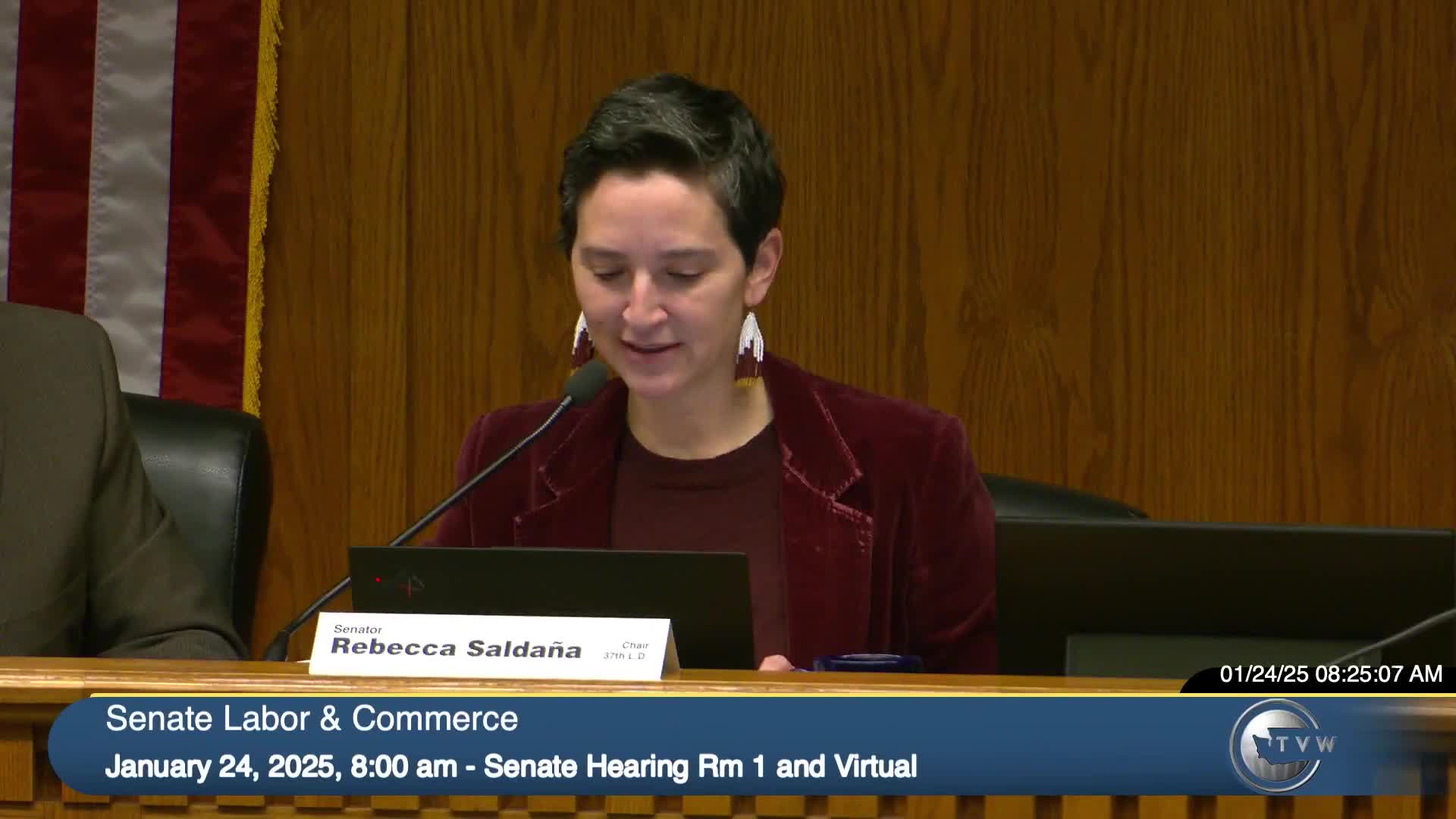
The Senate Labor & Commerce Committee heard Senate Bill 5044 on Jan. 24, a proposal to allow collective bargaining over contributions for certain supplemental retirement benefits that help workers bridge early retirement until Medicare eligibility.
Jared Sachs, committee staff, explained the change in context of the Personnel System Reform Act (PSRA): current law bars bargaining over retirement plans administered by the Department of Retirement Systems, but the bill would allow bargaining over contributions for supplemental retirement benefits administered by other entities. Sachs told the committee a partial fiscal note is available.
Senator Bill Ramos, the bill’s prime sponsor, said the measure would let employees, including many at the Department of Corrections, solve the problem themselves without state funding. Ramos said the supplement would be funded by voluntary payroll deductions: workers could elect to defer part of their compensation to a self-funded program that pays premiums for a supplemental medical plan covering retirees until they reach Medicare eligibility.
Brenda Wiest, vice president of Teamsters Local 117, told the committee such plans already operate in some jurisdictions. “It is about the supplemental medical plan… It is entirely self funded, and it will bridge the gap between retirement and Medicare,” Wiest testified, adding the plans can include dental, vision and prescription coverage and are typically less expensive than state retiree plans.
Multiple corrections staff and union representatives described workplace hazards and early retirements in the Department of Corrections and urged passage. Former DOC employee Daniel Hahn testified he had to delay retirement because the cost of bridge insurance was about $1,500 per month at age 64. Correctional officers Christopher Malone Sr. and Scott Williams said a self-funded supplement negotiated by employees would let staff retire earlier with manageable premiums.
Committee members asked staff whether the bill would preclude bargain agreements that required the state to pay supplemental benefits. Staff replied nothing in the proposed language prohibits bargaining outcomes that increase employer costs; the bill simply allows bargaining over supplemental benefit contributions. That exchange prompted discussion about fiscal exposure: supporters emphasized the common model is employee-funded deductions, while one senator noted nothing in the bill prevents bargained agreements that would increase state costs.
No committee action was taken; the hearing record closed after testimony. Sponsors and supporters urged the committee to allow employee groups to negotiate a self-funded bridge plan for early retirees, particularly in high-stress public-safety roles at the Department of Corrections.
Why it matters: Supporters described the measure as enabling earlier retirement for employees in dangerous, high-turnover jobs by letting workers and unions create self-funded premium pools rather than relying on new state expenditures.