Get Full Government Meeting Transcripts, Videos, & Alerts Forever!
Get email alerts on the Licensure Discipline topic
No spam. Unsubscribe anytime.
Medical Commission reviews licensing, discipline, and international‑graduate reforms
Summary
Micah Mathews of the Washington Medical Commission briefed the Senate Health Committee on licensing timelines, discipline caseloads, a ‘‘soft landing’’ policy for restricted practitioners, compacts and steps to ease international medical graduate licensure.
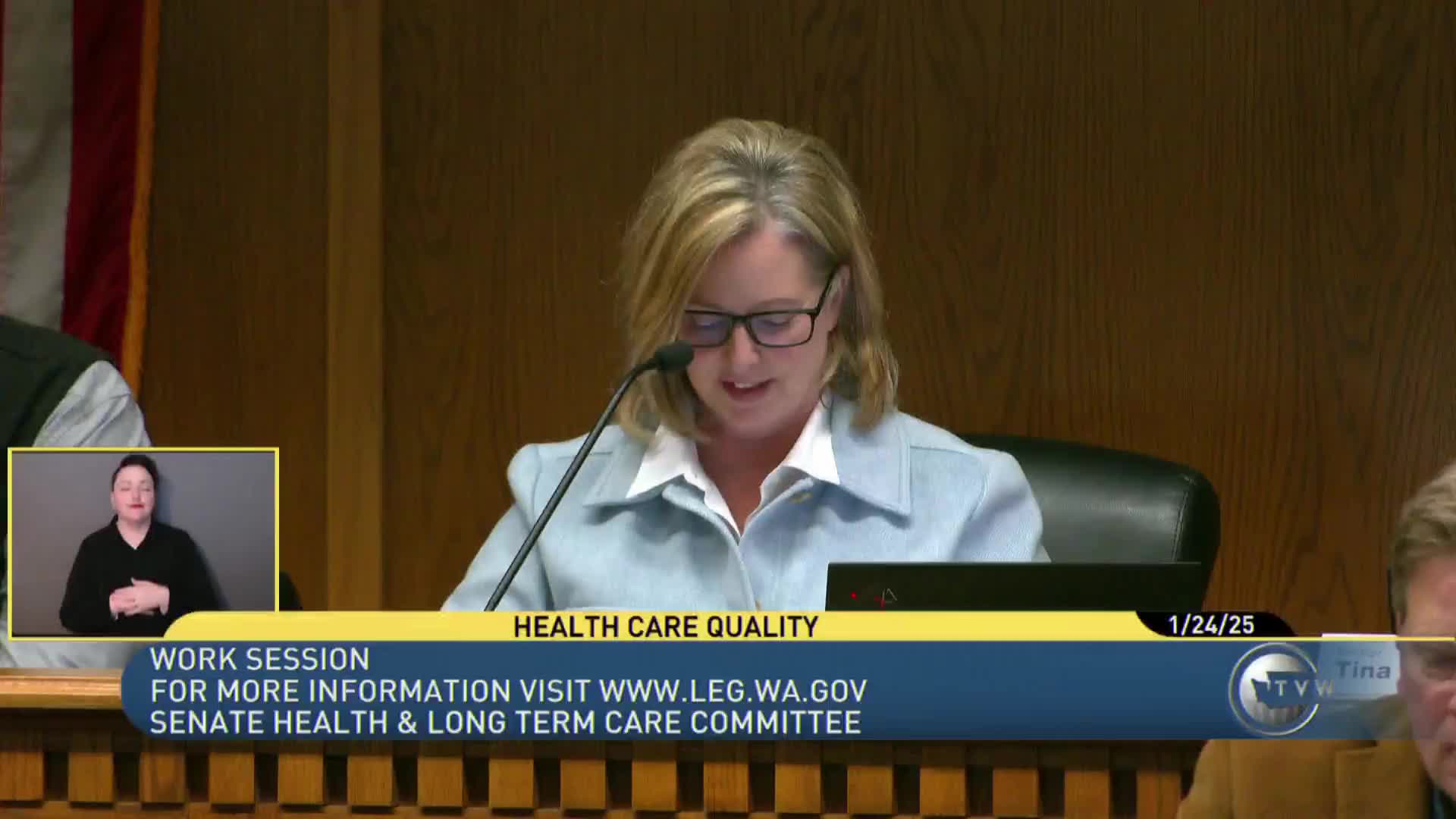
Micah Mathews, deputy executive and legislative director at the Washington Medical Commission, told the Senate Health & Long Term Care Committee on Jan. 24 that the commission combines licensing, discipline, outreach and policy work to support health care quality and public protection.
Mathews described the commission as a governor‑appointed regulatory board with 21 members, roughly 64 staff and a biennial budget he described as about $27 million. He said the commission receives about 2,000 complaints annually, authorizes 30–40% of those for investigation, and takes roughly 70–120 formal actions per year, with three to six administrative hearings when cases go to adjudication. He noted the commission has increasingly used “soft landing” provisions since 2023–24 to allow practitioners subject to summary restriction or suspension a 30‑ to 45‑day window to bridge prescriptions and ensure patient continuity of care.
On licensing, Mathews described the state’s compact participation and said the medical licensure compact and PA compact have improved portability. He discussed international medical graduate (IMG) pathways, including an exceptional‑qualification waiver established under 2019 legislation and work to adopt the SPEX (Special Purpose Examination) as an alternative licensing exam in specific cases. He also said Senate Bill 5185 would provide equal recognition for graduates from certain Canadian medical schools to avoid routing them into IMG processes after July 1, when a U.S. accrediting group will stop dual accreditation.
Mathews summarized the commission’s policy and outreach work: free continuing medical education offerings, a research unit that produces regulator‑level analysis, a communications resolution program with hospitals to capture certified reports that may resolve complaints locally, and guidance on telemedicine and practitioner health. He highlighted a commitment to training on victim interview and trauma‑informed processes for misconduct cases and said the commission offers a speakers bureau and is pursuing an expanded budget to sustain educational programming.
He closed by noting the commission has collected demographic data on licensees since 2011 and is working with the University of Washington health workforce center to analyze trends, specialty density, and geographic needs for residency placement.