Get Full Government Meeting Transcripts, Videos, & Alerts Forever!
Get email alerts on the Taxation Wineries topic
No spam. Unsubscribe anytime.
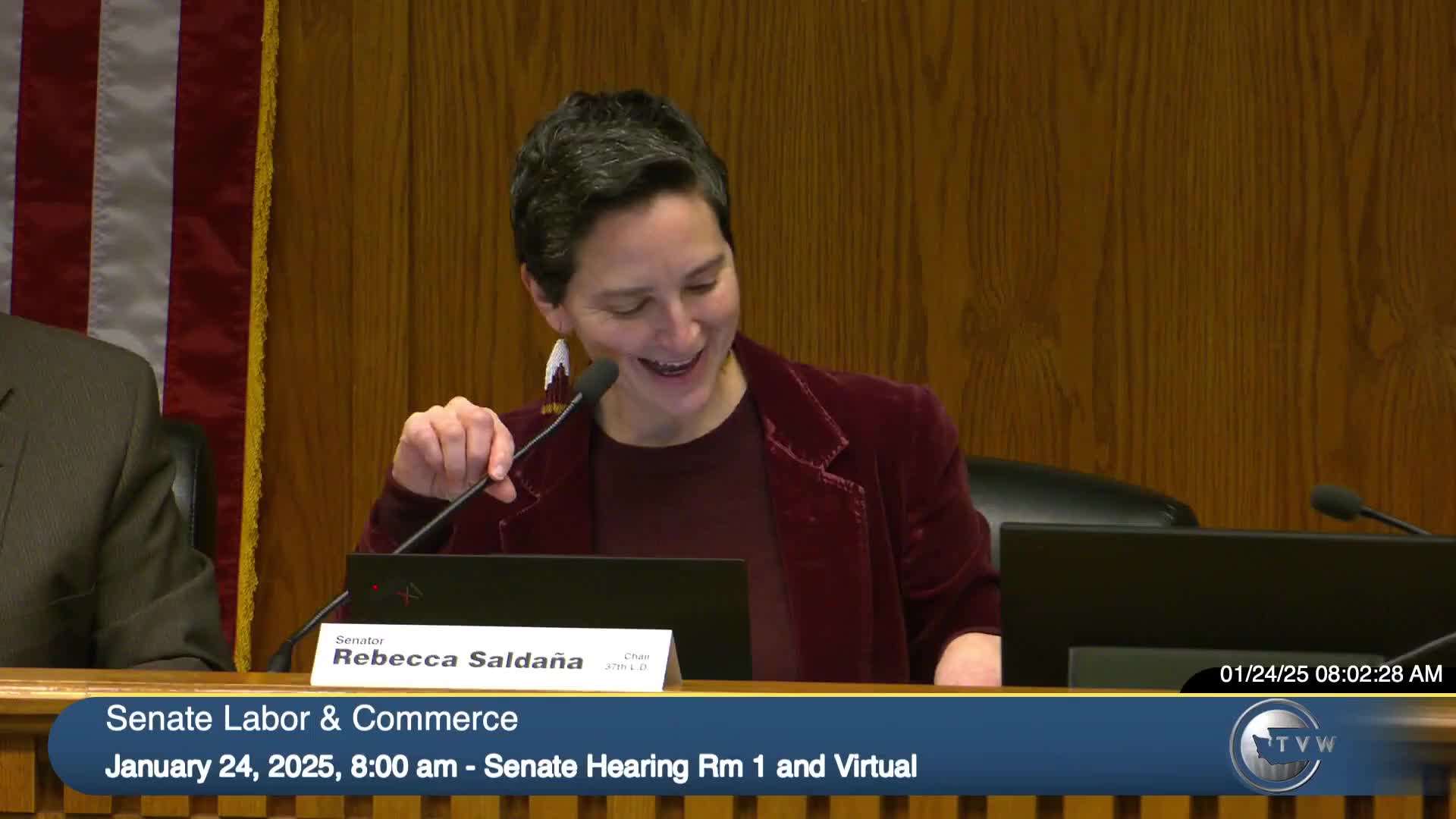
Senate committee hears bill to cut excise taxes for small wineries
Summary
The Senate Labor & Commerce Committee heard Senate Bill 5054, which would set a reduced excise tax rate for wineries that sell 20,000 gallons or less in a calendar year; supporters said the change would aid small family wineries, while witnesses and staff raised questions about interstate application and fiscal impact.
The Washington Senate Committee on Labor & Commerce on Jan. 24 heard testimony on Senate Bill 5054, a proposal to reduce the excise tax on table wine and cider for qualifying small wineries.
Committee staff member Marlon Ioannes summarized the bill, saying, “Senate Bill 5054 relates to tax exemptions for wineries in Washington. … This bill subjects a winery that sells less than a combined total of 20,000 gallons of table wine or cider in a calendar year to a reduced tax rate.” He noted the bill includes a tax preference performance statement and that a fiscal note had been requested but was not yet available.
The bill would lower the tax rate for qualifying sales to a new rate of 0.0528¢ per liter and would exempt qualifying wineries from most other excise taxes on table wine or cider, except for taxes whose revenue is distributed to the Washington Wine Commission. Under the bill, revenue from the reduced base tax would continue to be deposited in the liquor revolving fund and could be distributed to Washington State University for wine and grape research.
Prime sponsor Senator Judy Warncke (District 13) told the committee the measure is intended to help small, primarily family-owned wineries. “Wineries fit into the agricultural industry. Ag industry is really struggling,” Warncke said. She and other supporters said smaller producers face high tax rates and other pressures, and the change would align wine with tax preferences earlier granted to cideries, breweries and distilleries.
Paul Beveridge of Family Wineries of Washington State told the committee the state has lost wineries in recent years and that Washington’s excise tax puts small producers at a competitive disadvantage compared with other states and the federal rate. “In 2023, we lost 69 wineries… We now have less wineries than Oregon,” Beveridge testified. He also provided the committee a conversion factor he said he uses when calculating taxes: “There are 2.37785 gallons in a case.”
Josh McDonald, executive director of the Washington Wine Institute, said his organization supports tax relief but asked the committee to amend the bill so it would cover more family-owned wineries. Roland Thompson, representing California wineries, raised legal and administrative questions about applying a sales-based preference to out-of-state (“foreign”) wineries and cited relevant U.S. Supreme Court decisions that limit state discrimination between in-state and out-of-state producers.
Committee members asked staff and witnesses about measurement (sales versus production), interstate commerce implications, and how the 20,000-gallon threshold would translate into the industry’s usual case-based metrics. Staff and witnesses said the bill’s operative metric is sales, and witnesses gave differing estimates of how many cases equate to 20,000 gallons (roughly 2,200 cases using the factors cited in testimony).
No vote was taken; the fiscal note remains outstanding. Supporters said the bill would provide relief to small family wineries; opponents or cautious witnesses urged amendments to clarify the bill’s geographic application and to address potential fiscal impacts.
The committee paused public testimony on the bill before moving to executive session and additional agenda items.
Why it matters: Small wineries and family producers said the proposal would ease a tax burden they described as a historic leftover from Prohibition and could stem recent closures. Staff and legal witnesses cautioned the committee to clarify interstate-application questions and to account for an unresolved fiscal estimate.