Get Full Government Meeting Transcripts, Videos, & Alerts Forever!
Get email alerts on the Firefighter Retirement topic
No spam. Unsubscribe anytime.
Nebraska committee hears bill to restore Bellevue firefighters’ prior retirement contribution rates
Summary
A committee hearing on LB 108 addressed an inadvertent change from 2024 law that raised retirement contributions for Bellevue firefighters without intended offsets; proponents urged quick correction and the bill received only proponent testimony.
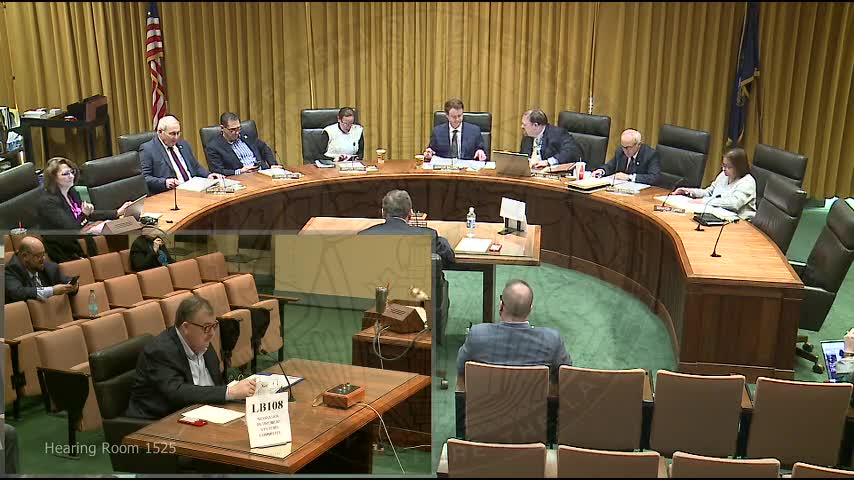
Lincoln — The Nebraska Retirement Systems Committee on Oct. 12 heard testimony on LB 108, a bill introduced by Sen. Mike Jacobson to correct what sponsors say was an unintended change in the Cities of the First Class Firefighters Retirement Act that increased retirement contributions for firefighters in the City of Bellevue.
Sen. Mike Jacobson, Republican of District 42, told the committee the change stemmed from LB 686 (2024) and left Bellevue’s firefighters paying higher retirement contributions while still contributing to Social Security. “This oversight has created an undue financial burden on the Bellevue firefighters since they are contributing more than intended and taking home less pay,” Jacobson said.
The bill would restore the city contribution to 13% and the firefighter contribution to 6.5% for cities meeting the bill’s population thresholds (cities with population greater than 60,000 located in counties with a population greater than 100,000), and declares an emergency for immediate implementation. Testimony and committee discussion made clear that, at present, Bellevue is the only city affected by the specific population-based language in LB 686.
Why it matters: LB 686, enacted in 2024, phased in increased contributions for first-class cities and their firefighters and provided a 6.2% offset for groups required to contribute to Social Security. Sponsors and municipal representatives say an amendment intended to exclude Bellevue from the offset did not also preserve Bellevue’s prior retirement contribution rates; LB 108 seeks to correct that clerical oversight so affected firefighters do not continue to pay the higher, unintended amounts.
Supporters at the hearing included the Nebraska Professional Fire Fighters Association and the city attorney for the City of Bellevue. Gary Bruns, president of the Nebraska Professional Fire Fighters Association, thanked Jacobson for introducing the bill and said it restores the intended treatment for Bellevue firefighters. Amy Bataillon, city attorney for the City of Bellevue, described the history of the negotiations around LB 686 and said LB 108 “seeks to correct this inadvertent result by restoring and preserving the retirement system contributions of 13% by the city and 6.5% by the firefighters, while allowing both to make the Social Security contributions.”
Attorney John Corrigan, representing the RASP Professional Firefighters Association, described the practical effect on paychecks after Oct. 1, 2024, when a roughly 2% increase began appearing in firefighter pay deductions. He asked the committee to move the fix quickly, saying supporters do not want a prolonged period in which firefighters have contributed the higher amount but do not receive the intended offset.
Committee members asked clarifying questions about the numbers and timing. Committee testimony and back-and-forth identified these key figures from the existing statute and the 2024 changes: prior to LB 686 Bellevue’s practice was a 13% city contribution and a 6.5% firefighter contribution plus each party’s 6.2% Social Security contribution; under the effect of LB 686 the firefighter contribution had risen to about 8.7% (plus Social Security) and the city portion was scheduled to increase to 14% beginning Oct. 1, 2026. LB 108 would restore the previous 13%/6.5% split for the affected cities and firefighters.
No opponents testified at the hearing; committee staff noted one proponent letter on file. Senator Jacobson asked the committee to advance the bill to executive session and to the floor. The committee hearing closed without a recorded vote at the time of the hearing.