Get Full Government Meeting Transcripts, Videos, & Alerts Forever!
Get email alerts on the Hospital Dispense Prepacks topic
No spam. Unsubscribe anytime.
Hospitals, pharmacies back bill to let emergency departments dispense full manufacturer packs when pharmacies unavailable
Summary
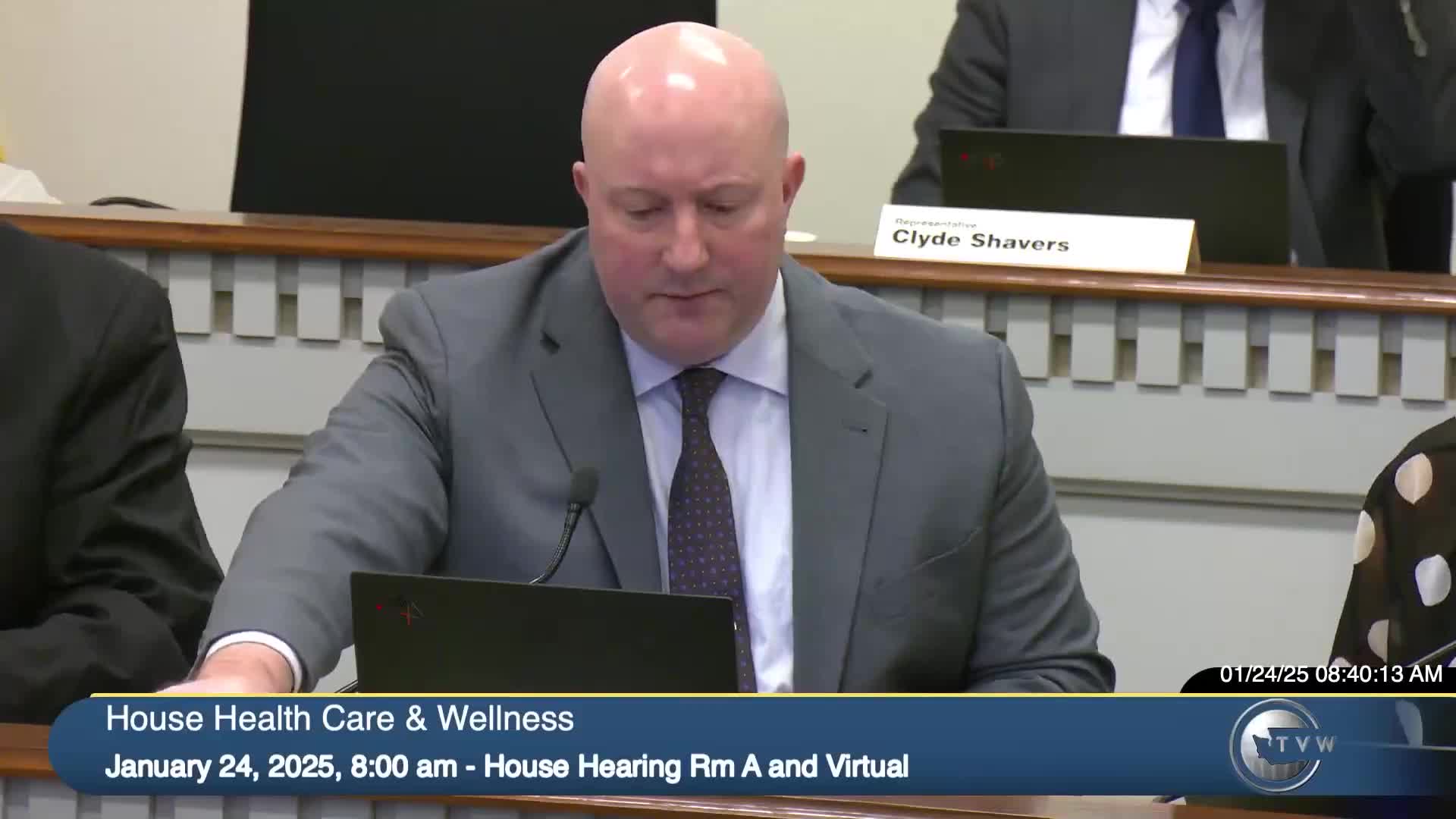
House Bill 1186 would allow hospitals and health-care entities to dispense prepackaged medications in quantities greater than the current 48- or 72-hour limits in situations where pharmacies are unavailable; hospitals and pharmacy groups testified in support, citing waste reduction and patient access.
House Bill 1186 would expand current law that limits how much prepackaged emergency medication hospitals may dispense at discharge. Under current state law cited by committee staff, hospitals may dispense a limited supply (typically 48 hours, with some 72-hour exceptions) in emergency circumstances. HB 1186 would add exceptions allowing longer supplies when anti-infectives or HIV post-exposure prophylaxis (PEP) are required, when drugs are packaged by the manufacturer in quantities larger than a 48- or 72-hour supply, or when local pharmacies will not be available within the stated timeframe.
Staff summarized the current law and the proposed changes, noting existing exceptions and the proposed clarifications about when pharmacies are “unavailable within X miles by road.” Representative Parsley, the bill sponsor, described real-world access problems, including closures of 24/7 pharmacies in Olympia and long travel distances on tribal lands, and urged the committee’s support.
Stakeholder testimony was uniformly supportive. Katie Cohen of the State Hospital Association said the bill reduces waste and better matches real-world packaging (for example, inhalers and seven-day antibiotic packs) that cannot be safely broken into smaller quantities. Kelly Thompson, chief nursing officer at Forks Community Hospital, described a rural critical-access hospital with one pharmacy 60 miles away that is closed evenings and weekends and said allowing prepacks improves timely access and outcomes. Andrea Howell, director of pharmacy at Pullman Regional Hospital, and Cindy Wilson of MultiCare Health System raised similar access and waste concerns. Dr. Jenny Arnold of the Washington State Pharmacy Association supported the bill and offered a friendly amendment to clarify that the bill targets medications packaged by the manufacturer in quantities that cannot safely be altered to a 48-hour supply.
Why it matters: The change would allow hospitals and health-care entities to send patients home with complete manufacturer-packaged inhalers, insulins, topical agents or full antibiotic courses instead of discarding partial manufacturer packs to meet a 48-hour limit. Supporters said the change reduces waste, improves patient adherence, and addresses pharmacy closures and access gaps in rural and underserved areas.
Testimony highlights and clarifying details
- Staff: Described current limits (48-hour prepack general rule; 72-hour allowance for practitioner dispensing) and the bill’s proposed exceptions. - Representative Parsley (prime sponsor): Cited local pharmacy closures and examples where hospitals cannot safely re-package manufacturer quantities such as 7-day antibiotic blister packs or inhalers. - Katie Cohen (State Hospital Association): Support — reduce waste, align law with manufacturer packaging; indicated a friendly technical amendment would be shared with the pharmacy association. - Kelly Thompson (Forks Community Hospital): Support — rural hospital; nearest pharmacy 60 miles away and closed evenings/weekends; prepacks are essential for continuity of care. - Andrea Howell (Pullman Regional Hospital) and Cindy Wilson (MultiCare): Support — cited patient barriers to reaching pharmacies and the clinical benefits of leaving patients with devices they were shown how to use in the ED. - Dr. Jenny Arnold (Washington State Pharmacy Association): Support with friendly amendment language clarifying “medications packaged by the manufacturer in quantities that cannot be altered to limit to a 48-hour supply.”
Next steps: The public hearing concluded with stakeholder support and a recommended technical clarification from the pharmacy association. The transcript does not record a committee vote on HB 1186 during this meeting.