Get Full Government Meeting Transcripts, Videos, & Alerts Forever!
Get email alerts on the Fertility Coverage topic
No spam. Unsubscribe anytime.
Committee amends and reports out fertility-coverage bill after debate over scope and cost
Summary
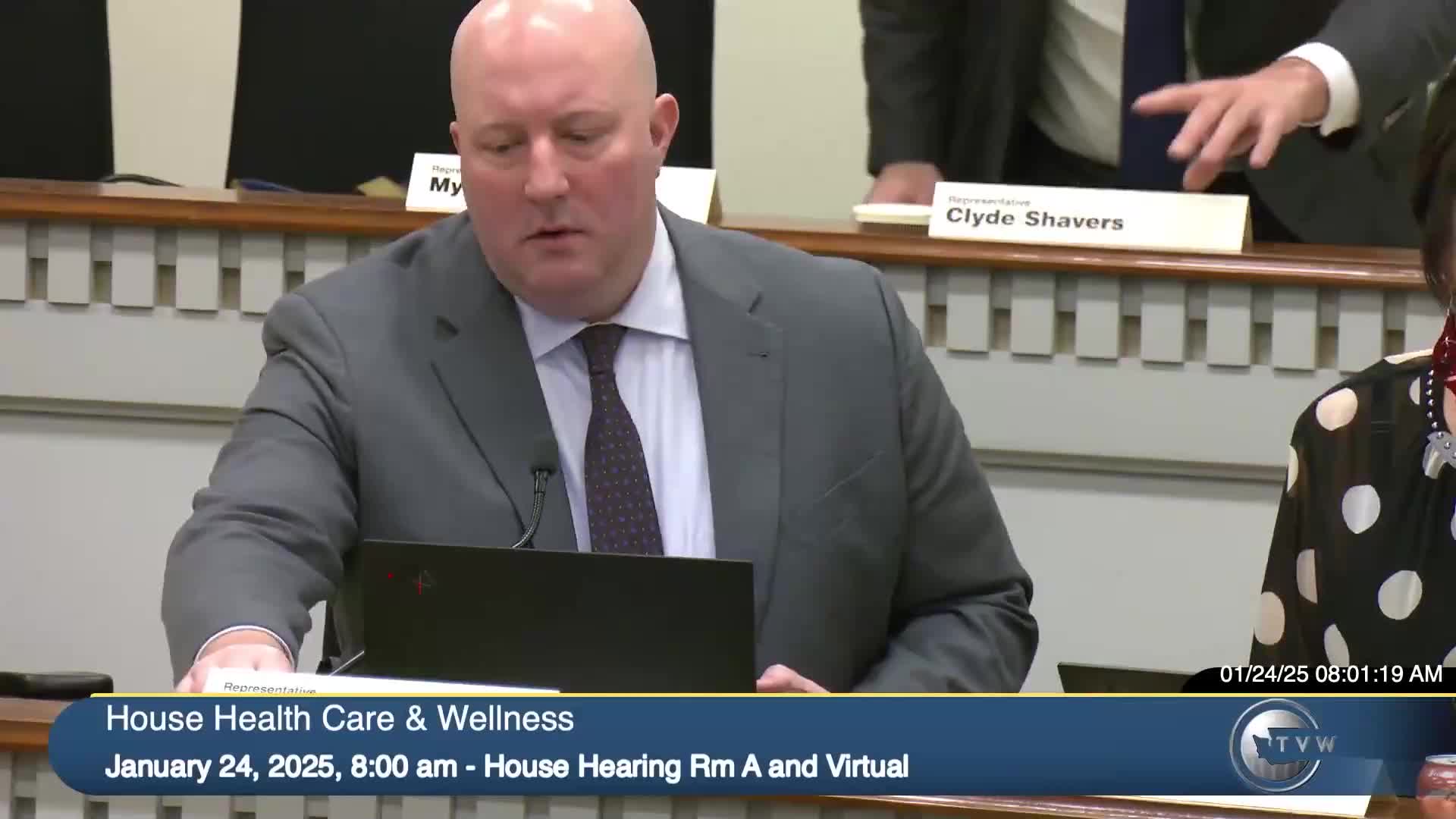
The House Health Care & Wellness Committee adopted two amendments narrowing coverage and reported Substitute House Bill 1129 out of committee with a due-pass recommendation after debate over cost and which plans must cover fertility services.
Substitute House Bill 1129, a proposal that would require coverage of certain fertility services, was amended twice and reported out of the House Health Care & Wellness Committee with a due-pass recommendation after members debated who should be covered and how to limit costs.
The bill was introduced to the committee by staff; Kim Weidner summarized the bill and listed four amendments offered by Representatives Stonier and Schmick. The committee first adopted “week 2,” an amendment from Representative Stonier that narrowed the bill’s coverage to exclude small-group health plans as a cost-mitigation step. The committee then adopted “week 5,” another Stonier amendment that expanded the bill’s definitions of diagnosis and treatment of infertility to allow recommendations and findings from physician assistants and advanced registered nurse practitioners, in addition to physicians.
Two Schmick amendments that would have broadened coverage across plan types and allowed plans to apply certain cost-sharing or utilization limits were rejected by the committee. After debate on scope and cost implications, Vice Chair Lekanoff moved that the adopted amendments be incorporated into Substitute House Bill 1129 and that the substitute be reported out with a due-pass recommendation. Representative Stonier urged support, citing testimony about high out-of-pocket costs for fertility and preservation care; Representative Schmick urged rejection on cost grounds and cited an industry estimate of roughly $7.68 per member per month as a reason to oppose the mandate.
A roll-call vote followed. The committee staff announced the final tally as 11 ayes, 7 nays, and 1 excused; by that vote the substitute was reported out of committee with a due-pass recommendation.
Why it matters: The bill would change which health plans must cover fertility diagnosis, treatment and certain preservation services and would expand the types of clinicians whose findings count toward coverage determinations. Supporters framed the change as a way to increase access; opponents emphasized the potential premium impact on families.
Votes and formal actions
- Motion: Report Substitute House Bill 1129 out of committee with a due-pass recommendation. Mover: Vice Chair Lekanoff. Second: not specified in the transcript. Outcome: approved (reported with a due-pass recommendation). Vote tally announced: 11 ayes, 7 nays, 1 excused. The roll call includes the following names as read on the record: Vernovsky (aye); Lykanov (aye); Rule (excused); Schmick (nay); Caldier (nay); Marshall (nay); Davis (aye); Engel (nay); Lowe (nay); Macri (aye); Mengeras (nay); Obraz (aye); Partially (aye); Shavers (aye); Simmons (aye); Stonier (aye); Stevie (nay); Ty (aye); Tharinger (aye). (Names and spellings are reported as they appear in the committee transcript.)
Clarifying details and limits
- Amendments adopted: “week 2” (narrows coverage to exclude small-group plans) and “week 5” (expands eligible diagnosing providers to include physician assistants and advanced registered nurse practitioners). - Amendments not adopted: 0820.1 and 0821.1 (Schmick amendments seeking to broaden plan scope and permit plan cost-management safeguards). - The substitute, incorporating adopted amendments, is reported out with a due-pass recommendation; the committee did not vote to enact the bill — that requires further floor or calendar action.
What's next: The committee vote advances the substitute bill to the next step in the legislative process; any additional amendments or fiscal analysis would be handled in subsequent stages.