Get Full Government Meeting Transcripts, Videos, & Alerts Forever!
Get email alerts on the Volunteer Emergency Responders topic
No spam. Unsubscribe anytime.
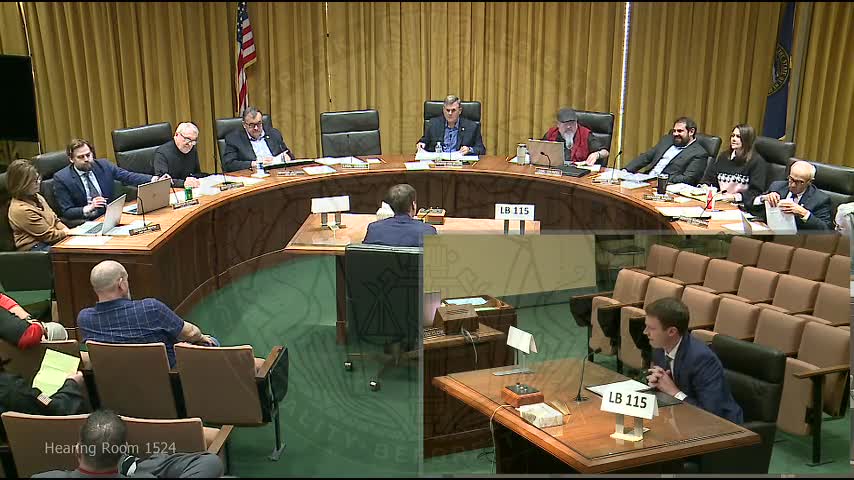
Revenue Committee hears LB 115 to raise volunteer first‑responder tax credit to $1,000 amid recruitment concerns
Summary
Senator Beau Ballard introduced LB 115 to raise the Volunteer Emergency Responder refundable income tax credit from $250 to $1,000 and to let volunteers claim the credit in the tax year they qualify, prompting extensive proponent testimony about recruitment and retention challenges for volunteer fire and EMS services.
Senator Beau Ballard introduced LB 115 to the Revenue Committee seeking to raise the Volunteer Emergency Responder Incentive Act refundable income tax credit from $250 to $1,000 and to allow volunteers to claim the credit in the taxable year they qualify rather than after two years.
"Nebraska's cities, villages, and counties cannot afford the cost of maintaining their current level of volunteer emergency services without the presence of a local pool of committed and dedicated volunteers," Ballard said in his opening remarks. He cited recent wildfire and tornado responses and the strain placed on volunteer fire and EMS rosters.
Dozens of volunteers, chiefs and association representatives testified in favor. Kenny Krause of the Nebraska State Volunteer Firefighters Association described how modern responder expectations — training, equipment and frequent calls — have raised the burden on volunteers. Chief Dan Mallory of Bennington said his department ran 1,500 calls last year but that the current point system can make it hard for many volunteers to qualify for the credit because it emphasizes response percentages and training points; he urged the legislature to examine the point allocation.
Michael DeWyer, co‑chair of the newly formed Nebraska EMS task force, placed the debate in a broader system context: "Calls are up, the number of responders is down, the trend is historic, and the current system of EMS in Nebraska is not sustainable," he said, summarizing findings from an assessment and a 39‑page report prepared for lawmakers. DeWyer told the committee a state assessment estimates replacement costs for EMTs alone at about $174 million annually and contrasted that figure with a fiscal note showing the proposed tax‑credit increase would cost roughly $2 million.
Supporters argued the existing $250 credit is too small to be a meaningful recruiting and retention incentive and noted the credit also serves as public recognition for volunteers. Several witnesses — including Tom Hamernik and John Bohnar of the Nebraska Fire Chiefs and State Volunteer Firefighters associations — said many departments depend on volunteers who cover daytime calls while holding regular jobs and that employers’ willingness to release employees for calls is a growing barrier.
Witnesses and committee members discussed the statutory point system that qualifies volunteers for the credit (a combination of response, training and public‑education points) and how a 10‑percent response threshold can be harder to meet in very active departments where the raw call counts are high. Neutral testimony from a volunteer chief suggested tweaking the points rather than relying solely on raising the dollar amount. Several witnesses urged the committee to consider alternative designs — including a carryforward period, broader tax‑treatment or targeted adjustments for high‑call departments — to reduce the fiscal impact while maintaining incentive value.
No committee vote was recorded at the hearing; Senator Ballard said he would work with the committee on the bill’s numeric amount and possible technical fixes to the qualifying rules.