Get Full Government Meeting Transcripts, Videos, & Alerts Forever!
Get email alerts on the Affordable Housing Tax Credit topic
No spam. Unsubscribe anytime.
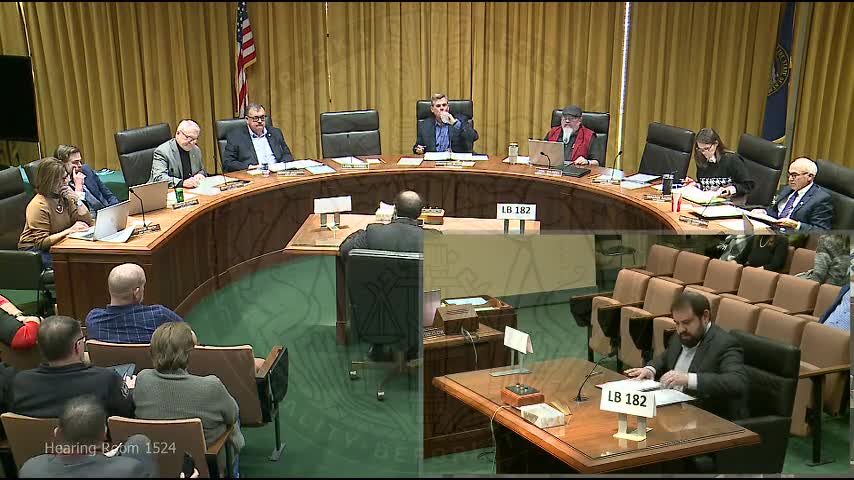
Committee hears LB 182 to expand transferability of state affordable‑housing credits and add insurers to childcare credit eligibility
Summary
Sen. Eliot Bostar told the Revenue Committee LB 182 would allow developers to certificate or sell Nebraska Affordable Housing Tax Credits, broaden investors and increase funds for housing, and would add insurance companies and financial institutions to the nonrefundable childcare contribution tax credit.
Senator Eliot Bostar introduced LB 182 to the Revenue Committee as a pair of changes intended to increase private investment in affordable housing and expand access to the childcare contribution tax credit. "This legislation expands eligible recipients to include nonprofit corporations and make the use of the credits easier by allowing a transfer, sale or assignment of the credit through certification," Bostar said in his opening.
The bill would give developers the option to issue certificated state affordable‑housing tax credits (AHTC) that can be sold to investors who need not hold an ownership interest in the development. Supporters told the committee that allowing certificated credits typically increases the market price investors pay for credits and thus brings more equity into projects.
Shannon Harner, executive director of the Nebraska Investment Finance Authority (NIFA), testified LB 182 would provide developers additional options to structure financing and is likely to expand the pool of investors to include smaller, in‑state buyers such as community banks and insurers. Harner said allocated state credits currently sell at roughly 60–65 cents on the dollar in Nebraska, while states that allow certification see prices up to about 80 cents.
Developers and investors including Chris Hite of Sugar Creek Capital and Jake Hoppe of Hoppe Development supported the change, saying certificated credits reduce transaction costs and can increase proceeds available to developers. Hite said expanding the investor base could "possibly triple" the number of taxpayers interested in buying credits and raise the price paid for the credits, which would free more money for project construction.
LB 182 also seeks to add insurance companies and financial institutions as eligible users for the nonrefundable childcare contribution tax credit by allowing the credit to offset premium, franchise and retaliatory taxes — tax types that apply to those industries and were not included in the original 2023 statute creating the childcare credit. Elizabeth Everett of First 5 Nebraska and Kirsten Higgins of Mutual of Omaha described private‑sector contributions as an emerging source of capital for childcare and said the change would remove an unintended exclusion.
Committee members asked questions about how certificated credits work, the likely change in market pricing and whether the bill produces a fiscal note. Senator Bostar and witnesses said the changes do not increase the number or face value of credits and therefore carry no state fiscal cost; they argued the changes make credits more usable and thus attract more private investment. No committee vote was taken at the hearing.
Discussion points at the hearing included: the mechanics of certificated versus allocated credits, market pricing for credits, how expanded eligibility for the childcare credit would work for premium and franchise taxes, and whether the bill needs further specification on credit lifespan and transfer mechanics. Supporters urged the committee to advance the bill to general file for additional work and testimony.