Get Full Government Meeting Transcripts, Videos, & Alerts Forever!
Get email alerts on the Medical Debt Garnishment topic
No spam. Unsubscribe anytime.
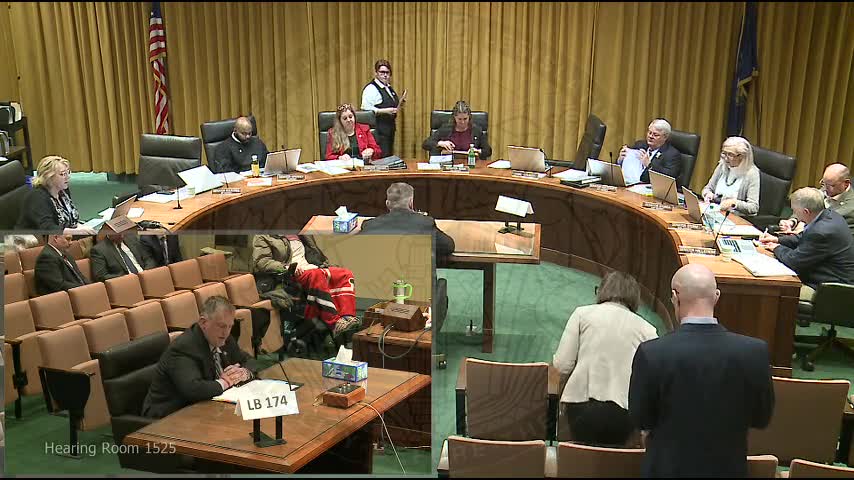
Senate hearing weighs LB 174 to lower wage‑garnishment caps for medical debt
Summary
State Sen. Jason Prokop introduced LB 174 at a Judiciary Committee hearing that drew providers, patient advocates and medical students to urge limits on wage garnishment for medical debt.
State Sen. Jason Prokop introduced LB 174 at a Judiciary Committee hearing that drew providers, patient advocates and medical students to urge limits on wage garnishment for medical debt.
Prokop told the committee the bill would reduce the federal‑law maximum garnishment that commonly applies to medical‑debt collectors: non‑heads of household from 25% to 20%, and heads of household from 15% to 10%. The bill also seeks to clarify the process collectors must follow before taking the higher rate for people claimed not to be heads of household.
Prokop said medical debt is widespread in Nebraska and often not a result of discretionary spending: roughly 11.6% of Nebraska adults report medical debt, above the national average of 8.6%, he said. “Medical debt is unlike other forms of debt. People often have no choice on whether or not they incur that debt,” Prokop said.
Supporters described how garnishment can push families into poverty. Gina Ragland of AARP Nebraska said heavy garnishment can force older and low‑income households to cut essentials or forego retirement savings. Several Creighton University medical students presented research: Allison Benjamin reviewed 275 medical‑debt lawsuits filed in Douglas County and found many suits sought small balances (median amounts under $1,200 in some series) and that nearly 40% of cases in the study resulted in wage or bank garnishment.
Other proponents included Juan Carlos Huertas of First Amendment Church, which ran a local medical‑debt forgiveness project; Andrew Carlson and Nicole Horio, medical students who offered patient stories; and representatives of Nebraska Appleseed and Voices for Children, who said medical debt disproportionately affects communities of color and people with disabilities.
Creditors’ representatives urged caution. David Houghton of the Nebraska Collectors Association testified in opposition, saying existing protections already shield the poorest debtors and that lowering garnishment caps could increase interest and administrative costs, potentially increasing total payments by debtors and raising costs for medical providers. Robert Bryant, an attorney for creditors, said many judgments mix medical and non‑medical debts, and that dividing judgments after the fact would be administratively difficult.
Prokop said the bill aims only at medical debt buyers and collectors and that the amendment filed with the committee clarifies when the lower caps apply and the proof collectors must supply to garnish at the higher rate. He said he would continue discussions to address implementation concerns.
Ending: No committee vote was taken; the hearing included dozens of proponents who urged the committee to reduce the risk that medical debt will leave families unable to pay for other necessities.