Get Full Government Meeting Transcripts, Videos, & Alerts Forever!
Get email alerts on the Restrictive Housing topic
No spam. Unsubscribe anytime.
Nebraska hearing on LB 99 focuses on limiting restrictive housing and banning involuntary double‑bunking
Summary
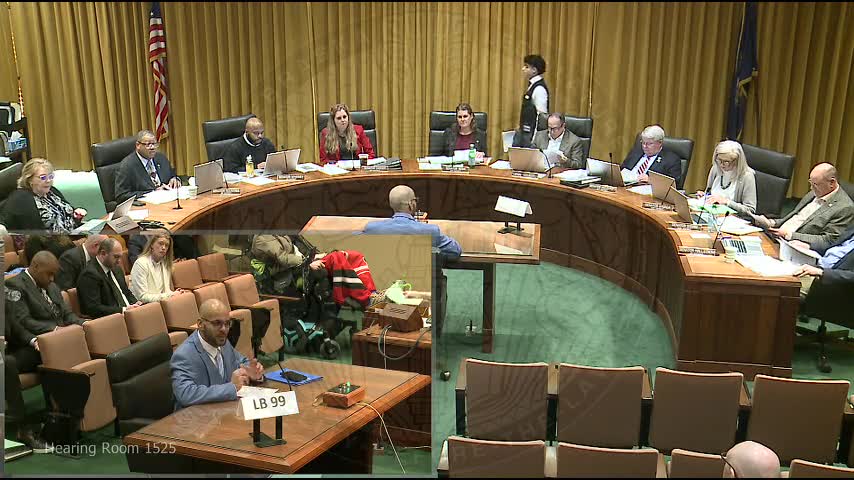
Senator Ashley Spivey on Thursday introduced LB 99 to the Judiciary Committee, proposing limits on the use of restrictive housing in Nebraska prisons and a ban on involuntary double‑bunking in cells designed for a single person.
Senator Ashley Spivey on Thursday introduced LB 99 to the Judiciary Committee, proposing limits on the use of restrictive housing in Nebraska prisons and a ban on involuntary double‑bunking in cells designed for a single person.
The bill would cap consecutive days in restrictive housing at 15 and bar placing two people in a cell designed for one unless both inmates consent. Supporters told the committee that prolonged isolation harms mental health and public safety; the Department of Correctional Services (NDCS) argued the proposal could be unsafe or unworkable in the state’s existing facilities.
LB 99’s sponsor, Senator Ashley Spivey (District 13), opened by saying restrictive housing — commonly called solitary confinement — can produce severe psychological harm and worsen reintegration outcomes. “Restrictive housing confines individuals to a cell for the majority of the day with minimal human contact,” Spivey said, and cited research linking even short periods of isolation to increased anxiety, depression and suicidality. Spivey pointed the committee to an Inspector General’s report showing 42 people spent more than 180 days in restrictive housing and said nine people had been held for more than 2,000 days.
Proponents described personal and programmatic alternatives. Jason Witmer, who said he was formerly incarcerated and is now working with peer‑support programs, urged a shift toward trauma‑informed and peer‑led approaches. “The act of isolation is an act of violence,” Witmer said. Robby McEwen, legal director at Nebraska Appleseed, described involvement in litigation over NDCS solitary practices and told the committee expert reviews found those with serious mental illness are at “substantial or extreme risk of harm” when confined in isolation.
Others who testified included Fran Kaye and David Kaseman, who recounted art and volunteer programs that highlighted the harmful effects of confinement, and Nature Villegas and Jason Witmer, who offered firsthand accounts of prolonged isolation and its aftereffects. Jasmine Harris of RISE, a reentry service provider, said most people in restrictive housing will return to communities and that the state must minimize practices that worsen physical and mental health and impede reentry.
NDCS Director Rob Jeffreys testified in strong opposition, telling the committee the department has reduced use of restrictive housing and uses multidisciplinary reviews for placements. “The average number of persons in restrictive housing is approximately 3% of our total population,” Jeffreys said, and noted the department’s daily restricted‑housing population had fallen from an average of about 193 in 2024 to about 155 at the time of testimony. He warned a hard 15‑day cap and required 10 hours of daily out‑of‑cell time would be impractical in some facilities, maintain that buildings and staffing were not configured to meet that level of out‑of‑cell programming without substantial expense and construction.
Jeffreys also cautioned that a blanket prohibition on double‑bunking could remove flexibility needed in overcrowding incidents and said the department uses specialized review teams — operations, classification and behavioral health — before placing someone in restrictive housing.
Doug Koebernick, the Inspector General of Corrections, testified in a neutral capacity and told the committee he was not aware of any current involuntary double‑bunking in restrictive housing “as of today” but noted his office had repeatedly recommended ending double‑bunking after deaths in restrictive units. He distributed excerpts from an OIG report and offered to provide the committee the full report.
Committee discussion centered on definitions and tradeoffs: members asked whether Nebraska has physical conditions that meet the statutory definition of solitary confinement, how restrictive housing differs from protective management or special management units, and whether any statutory changes should be limited to double‑bunking or expanded to include time‑out‑of‑cell requirements. Director Jeffreys told the panel the statutory definition of restrictive housing hinges on out‑of‑cell time rather than a physical location and said Nebraska’s policy already requires mental‑health and multidisciplinary review for placements.
What’s next: Spivey said she is open to negotiation and will meet with NDCS staff to discuss a compromise on the fiscal note and operational concerns. The committee did not vote; the hearing was for public testimony and questions.
Ending: Testimony underscored a persistent tension — civil‑rights and public‑health advocates pointing to research and inspector‑general findings, and corrections leadership stressing facility design, staffing and safety risks. The committee will weigh technical fixes and operational realities if it advances the bill.