Get Full Government Meeting Transcripts, Videos, & Alerts Forever!
Get email alerts on the Climate Snowpack topic
No spam. Unsubscribe anytime.
State climatologist warns shrinking snowpack will reduce summer water availability
Summary
Karen Bumbaco, deputy state climatologist, told the Agriculture and Natural Resources Committee that Washington has already lost roughly 25% of spring snowpack since 1950 and models show further declines (about 40–60% by century's end at higher elevations), shifting water storage and increasing late‑summer scarcity.
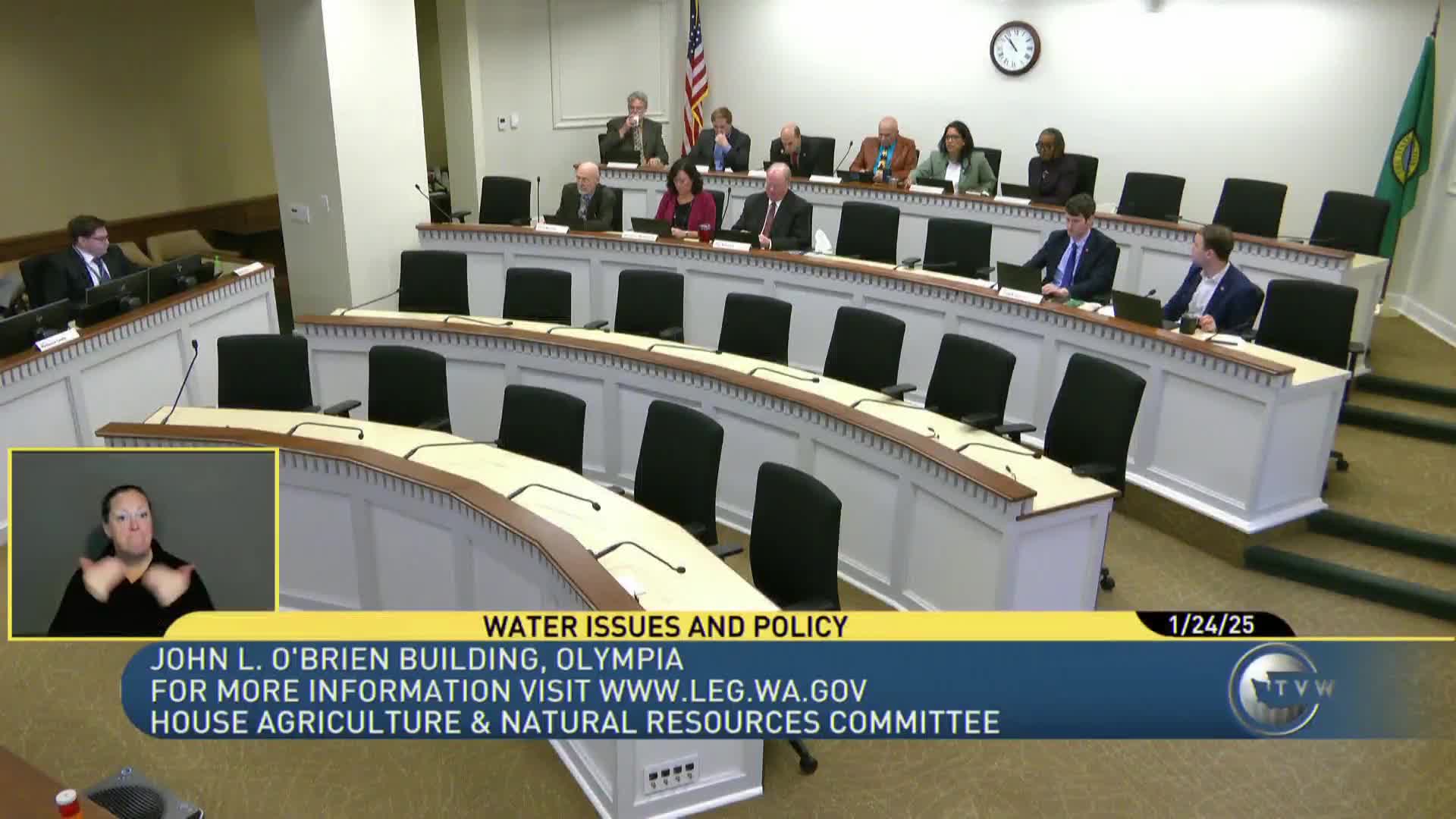
Karen Bumbaco, deputy state climatologist in the Office of the Washington State Climatologist, told the House Agriculture and Natural Resources Committee on Jan. 24 that Washington has already warmed about 1.7°F over the last century and that spring snowpack in the Cascades has declined roughly 25% since mid‑20th century baselines. Bumbaco said continued warming will raise the rain–snow line, converting mid‑elevation seasonal snow to rain and reducing the state’s natural mountain storage.
She cited studies and the state’s Climate Resiliency Strategy (compiled with contributions from the Climate Impacts Group at the University of Washington) projecting a further decline in spring snowpack — commonly reported as about a 40–60% reduction by late century relative to 20th‑century baselines — and noted that projections depend on model and baseline period choices. Bumbaco stressed that total annual precipitation is not projected to change much overall, but seasonal timing will: more winter rain, less spring/summer snow, and declines in summer precipitation (the dry season), which together reduce summer streamflows and increase drought and wildfire risk.
Bumbaco reviewed recent climate‑related events and vulnerabilities: the temperature‑driven 2015 drought (near‑normal precipitation but record warmth that produced very low snowpack), the worst wildfire seasons in the state, and repeated drought declarations (Washington had declarations covering parts of the state in 6 of the last 10 years and a nearly statewide declaration issued in April 2024). She said localized benefits from well‑timed summer rains can temporarily ease impacts, but projected late‑century July–September streamflow declines and increased evapotranspiration will worsen low‑flow conditions.
The climatologist concluded that Washington needs to invest now in climate resiliency, including reconsidering storage strategies (surface reservoirs, managed aquifer recharge, engineered wetlands) and integrated multi‑benefit projects to retime water for summer use. She offered to provide committee members with citations and the underlying studies she referenced.