Get Full Government Meeting Transcripts, Videos, & Alerts Forever!
Get email alerts on the Medicaid Policy topic
No spam. Unsubscribe anytime.
Gonshorowski, nominee for Nebraska Medicaid director, tells committee he will prioritize fiscal sustainability and data access
Summary
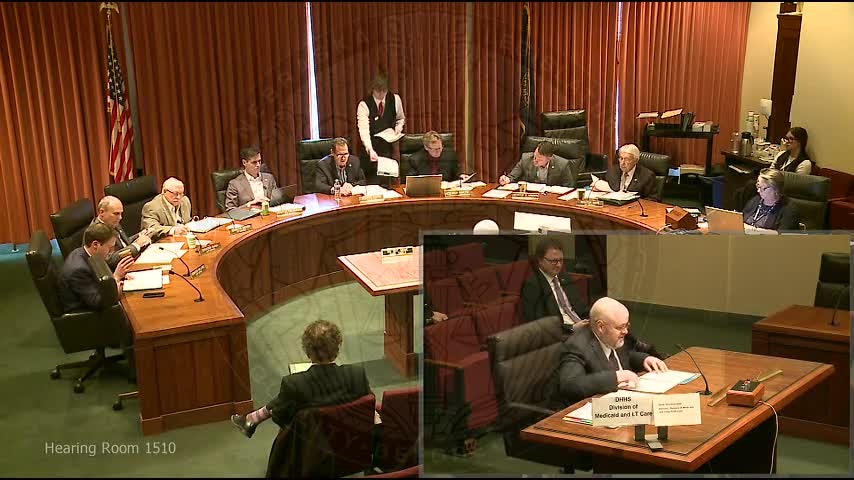
Drew Gonshorowski, nominee to lead the Division of Medicaid and Long Term Care at the Nebraska Department of Health and Human Services, appeared before the Health and Human Services Committee to begin his confirmation hearing and said he will prioritize fiscal sustainability, data access and operational improvements.
Drew Gonshorowski, nominee to lead the Division of Medicaid and Long Term Care at the Nebraska Department of Health and Human Services, appeared before the Legislature’s Health and Human Services Committee to begin the confirmation process, saying he plans to prioritize fiscal responsibility, administrative efficiency and improved data access.
Gonshorowski described his background in economics and health-policy analysis as central to the role. “I have always been driven by the goal of improving the health outcomes of individuals while ensuring the fiscal sustainability of government programs,” he told the committee, noting prior work at the Heritage Foundation’s Center for Data Analysis and Paragon Health Institute and ongoing participation with the National Association of Medicaid Directors.
The committee’s questions focused on how an economics-trained nominee would handle the division’s operational and personnel responsibilities, data access for policymaking, and network adequacy in rural parts of the state. “My background is specifically, being able to articulate to them not only what's going to happen in the short term … but also these long running, implications,” Gonshorowski said, describing how he would translate federal changes into state-level, actionable information for lawmakers.
Several senators pressed him about day-to-day operations and supervisory experience. Senator Ricky asked whether he would have a “number two” and raised concerns about personnel management; Gonshorowski said he has relied on an experienced operational team since joining the division and that he engages with peer Medicaid directors nationwide to learn operational best practices. On whether auditors should be inside DHHS or report to an external auditor, Gonshorowski acknowledged the department must ensure adequate internal controls and suggested that the question of reporting lines is an important oversight matter for the Legislature to consider.
On Medicaid financing and federal uncertainty, Gonshorowski urged a disciplined state approach. He told senators that federal budget conversations include many options and cautioned against prematurely “sounding the alarm,” saying Nebraska should “inject as much fiscal sustainability in our processes” so the state can respond if federal changes occur.
Rural network adequacy and provider reimbursement were recurring themes. Senators described provider shortages outside Lincoln and Omaha and asked how the division would balance fiscal responsibility with ensuring access. Gonshorowski said better data and clearer communication with managed care organizations and providers would guide targeted responses: “The more that we are able to provide services in a really efficient way … it does free up more resources to do this direct need.”
On data access, Gonshorowski said the division should be “as open as we can be given the constraints … from the federal government” and noted HIPAA and CMS rules limit sharing of individually identifiable information. He said the division would advocate for timely, appropriately de-identified data to help legislators craft policy.
Committee members also asked about the nominee’s experience with information-technology modernization; Gonshorowski said he has been briefed on system-improvement efforts and described an approach that accounts for broadband and reporting differences across the state. He cited examples such as accommodating providers who face GPS or connectivity issues in remote areas while automating reporting for locations with reliable service.
The hearing record shows substantial committee interest in the candidate’s ability to combine fiscal analysis with practical operational oversight. Gonshorowski closed by thanking the committee and saying he looked forward to working with legislators and state stakeholders if confirmed.
No vote on confirmation was recorded in the hearing transcript.