Get Full Government Meeting Transcripts, Videos, & Alerts Forever!
Get email alerts on the Alcohol Regulation topic
No spam. Unsubscribe anytime.
Delegation discusses simplifying beer-and-wine tasting rules; drafting changes to be revisited
Summary
The delegation reviewed proposals to change local beer-and-wine tasting rules to allow multiple smaller tastings up to a single standard drink; members debated whether to permit a single 12-ounce beer as part of a tasting and whether to leave technical sizing to liquor-board regulation rather than statute.
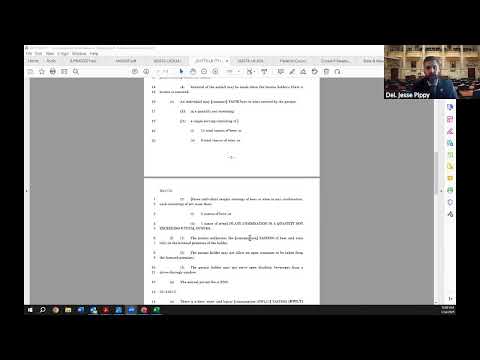
Delegation members and the Liquor Board discussed proposed revisions to the county’s beer-and-wine tasting permit. The original aim was to allow retailers to offer multiple small tastings whose combined volume does not exceed a single full drink, addressing retail wine- and beer-tasting events that are currently blocked by rigid serving-size language.
Dawn, representing the Liquor Board, explained that earlier drafts capped combined tastings at the equivalent of a single drink — for example, 6 ounces of wine — and that a later revision had reintroduced an option for a single 12-ounce beer. Dawn said the board’s survey of local establishments found most do not offer a 12-ounce tasting; several delegates argued a single full beer is not typically used for tastings and that the statute should prioritize a simple, consistent rule.
Suggestions at the meeting included: (1) define a tasting as any combination of smaller servings whose combined alcohol does not exceed one standard drink, (2) move specific portioning and measurement details to liquor-board regulation rather than statute, and (3) study language used by other Maryland counties (Carroll, Garrett, Washington) to inform a local approach that avoids repeated legislative changes.
No vote was taken. Delegates asked Liquor Board staff to provide comparative language from other counties and to return with a clarified draft; several members recommended leaving precise portioning and sampling rules to the Liquor Board’s regulatory authority rather than embedding convoluted measurement language in statute.