Get Full Government Meeting Transcripts, Videos, & Alerts Forever!
Get email alerts on the Farm Policy Budget Tax topic
No spam. Unsubscribe anytime.
Maryland Farm Bureau lays out priorities; Eastern Shore lawmakers warn estate tax, budget shifts threaten farms
Summary
Maryland Farm Bureau highlighted private property rights, solar siting and agricultural education as top priorities; delegation members and farm leaders warned that proposed estate-tax changes and state cost shifts to counties could force land-rich, cash-poor family farms to sell.
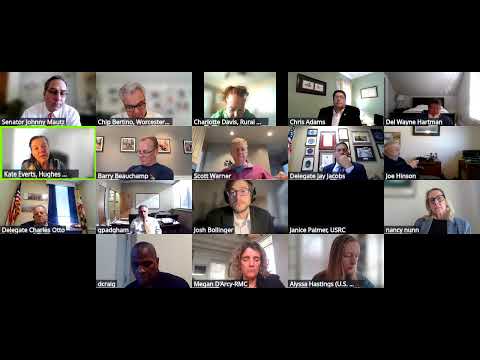
Tyler Huff, director of government relations for Maryland Farm Bureau, told the Eastern Shore delegation Jan. 24 that the organization's top three policy priorities for 2025 are private property rights and eminent domain protections, solar-energy siting that preserves prime farmland, and expansion of agricultural education including FFA and 4‑H programs.
Huff described the Farm Bureau’s grassroots structure and cited U.S. Census agricultural statistics for the 1st Congressional District to underline the Eastern Shore’s importance to Maryland agriculture. "The poultry industry on the Delmarva is essential and is essential for the grain production in the state," Huff said, summarizing the region’s role.
Delegation members pressed on the governor’s budget proposals, including an estate-tax exemption change and a $143 million shift of state costs to local governments. Huff and several delegates warned that lowering the state estate-tax exemption from $5 million to $2 million (a proposal discussed in the meeting) would quickly affect multigenerational farms. "Farmers are land rich, cash poor," Huff said, arguing that lower exemptions and higher property assessments could force farm sales or make succession difficult.
Delegation members also warned that shifting state costs to counties will leave local governments with limited revenue options, often forcing higher property taxes that could further stress farmers who do not have corresponding cash flow increases.
No legislative actions were taken; speakers said they plan to lobby on budget language and seek protections for agricultural estate succession and fair treatment of farmland in local assessment rules.