Get Full Government Meeting Transcripts, Videos, & Alerts Forever!
Get email alerts on the Land Use Development topic
No spam. Unsubscribe anytime.
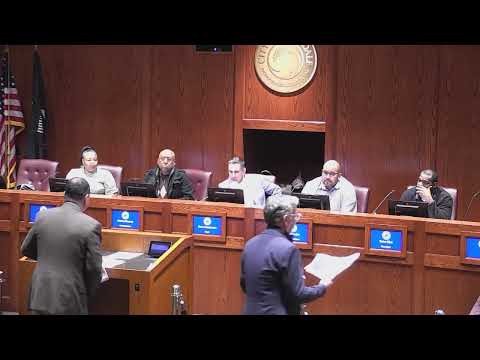
Palmdale planning panel recommends approval of Ritter Ranch Phase 1B; residents press fire‑station concerns
Summary
The Palmdale Planning Commission voted to recommend City Council approval of entitlements for Phase 1B of the Ritter Ranch master plan, allowing about 627 single‑family homes on roughly 75 acres.
The Palmdale Planning Commission voted to adopt Resolution PC2024-029 recommending City Council approval of entitlements for Phase 1B of the Ritter Ranch master‑planned community, a package that would allow roughly 627 single‑family homes on about 75 acres and provide two neighborhood parks.
Planning Manager Brenda Magana told the commission the item would “facilitate the construction of 627 residences and 2 neighborhood parks” within Phase 1B and that a subdivision development plan will be reviewed by city staff to ensure compliance with development standards for the master‑planned community.
The project team said Phase 1B completes the first Ritter Ranch neighborhood and will add parks, bikeways and trails that integrate with Phase 1A. Applicant representative Peter Gutierrez said the entitlements also include steps to fund infrastructure: the team has worked on forming a community facilities district to help finance backbone infrastructure. Ramiro Alberon, identified as an owner representative, said, “we are the owners of Ritter Ranch” and that the owner has worked with the city for years to bring the project forward.
Why it matters: Staff and the applicant said the first Ritter Ranch phase will supply a large share of housing the city identified in its housing element and will fund local infrastructure work. Opponents focused on public‑safety readiness, saying existing fire resources are too distant to serve new subdivisions in a severe wildfire.
Public commenters pressed the commission on fire protection. Anne Wotton, who spoke during the public hearing, said a fire station that had been discussed previously was never built and that local residents now face longer response times; she warned that roads and evacuation could be inadequate in a wildfire. Community stakeholder Michelle Royal, speaking during non‑agenda public comment, said her home burned in Leona Valley and urged the commission and council to press Los Angeles County for additional fire stations.
The applicant and staff addressed those concerns. Gutierrez and Alberon said the specific plan includes a fire‑station requirement that triggers when the broader Ritter Ranch development reaches a threshold of units. Gutierrez told the commission, “There is a fire station requirement in the specific plan and it comes at 1800 units.” He also said the applicant will pay fire mitigation fees and that Phase 1A included a pumper truck and other equipment commitments. Magana said the Los Angeles County Fire Department participates in the city’s Development Advisory Board and that the department reviewed the plans; a staff speaker later clarified the fire department approved the plans in July 2024.
Staff and the applicant also noted mitigation measures required by state law and the project’s environmental review: building standards, brush‑clearance and noncombustible materials, new water lines to support firefighting, and a required evacuation plan that must be approved by the sheriff and fire department before occupancy.
Commission action and next steps: Commissioner Jones moved and Commissioner Olivares seconded the motion to adopt Resolution PC2024‑029; the record shows the motion passed with four votes in favor and one against. The commission’s action is a recommendation to the City Council; the project will return to the council for final approvals and for any required environmental review tied to later phases.
Commissioners asked whether a new environmental impact report would be required for future phases; the applicant said the remainder of the developable land will be part of a new specific plan and that a new EIR will be prepared during that reimagining process, which could establish different mitigation triggers (for example, the applicant said the 1,800‑unit threshold might change based on future environmental analysis).