
State officials brief commissioners on Chesapeake Bay TMDL, call for local watershed plans and milestone reporting
Get AI-powered insights, summaries, and transcripts
Subscribe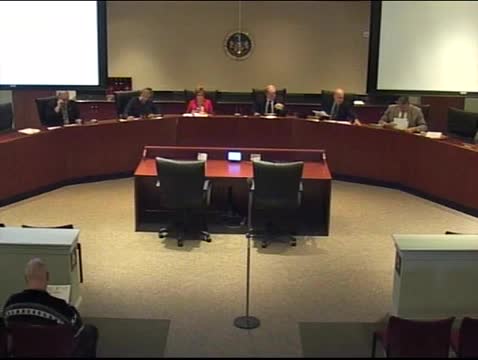
Summary
Maryland Department of the Environment officials described the Chesapeake Bay total maximum daily load (TMDL) and the state—s watershed implementation plan (WIP) process, urging county teams to prepare 2012—6 milestones, tracking systems, and local strategies that account for agriculture, wastewater, stormwater and septic systems.
Maryland Department of the Environment (MDE) officials told the Saint Mary—s County Board of County Commissioners that the Chesapeake Bay total maximum daily load (TMDL) process will require local watershed implementation plans (WIPs), interim milestones and tracking systems to document progress toward nutrient and sediment reductions.
Dr. Richard Eskin, director of technical and regulatory services for MDE, and Quentin Forrest, chief of chemical and biological monitoring, briefed the board on a federal-state process in which the U.S. Environmental Protection Agency (EPA) set nutrient and sediment caps for the Bay and each state must provide reasonable assurance that nonpoint-source reductions will be achieved. MDE said the WIP provides the reasonable assurance by describing actions, schedules, and funding for agriculture, wastewater, stormwater and septic systems.
"EPA has signaled it will take an active backstop role if states do not demonstrate progress," Eskin said, describing 2-year milestone checks beginning in the early 2010s and a reevaluation in 2017. Eskin told commissioners EPA led the TMDL development and that Maryland and the other Bay states must subdivide the load allocations down to county and local scales and show how they will implement reductions.
Derek Berlage, county director of Land Use and Growth Management, said the county understands the WIP—s potential to affect agriculture, land development and county operations and called for early public outreach and local teams. Commissioners asked about how the modeling apportions loads across counties, how growth and offsets will be handled, and funding options. Eskin said the watershed model aggregates land-use cells and can report loads by county, by watershed or by subareas; he said offsets for new development will be required and that states may permit local options such as stormwater utilities and bonding to finance needed work.
Commissioners and staff discussed concerns specific to Saint Mary—s County: a large portion of county land lies in the Critical Area, the county—s fiscal and staff capacity to implement programs, and the distribution of costs across private property owners and ratepayers. Eskin and MDE staff said they will work with county liaisons, help set up local teams, and provide a web-based tool for local "what-if" analyses. MDE urged counties to develop tracking systems so local best-management practices (BMPs) receive credit.
Commissioners asked about the role of air emissions and the Healthy Air Act; Eskin said air reductions have been considered and that federal and state air control programs contribute to Bay reductions. Funding questions were raised; Eskin identified farm-bill programs, Bay Restoration Fund bonding approaches and potential state or regional financing as possible tools and said that phase 2 WIP work will include gap and cost analyses.
MDE provided a contact number (410-294-4428) and said state liaisons will convene local teams and provide guidance. County staff said they will schedule outreach and stakeholder briefings; MDE said it will validate locally developed strategies with EPA as part of the WIP process.