Get Full Government Meeting Transcripts, Videos, & Alerts Forever!
Get email alerts on the Search Warrants Cell Phones topic
No spam. Unsubscribe anytime.
Appellate panel hears dispute over suppression of Ronald Andrew Archie’s cell‑phone data
Summary
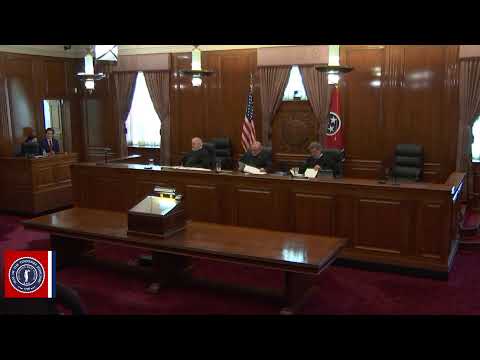
Attorneys for the State and the defense argued whether a trial court erred in suppressing cell‑phone data collected under a search warrant in the murder prosecution of Ronald Andrew Archie; the court took the case under advisement.
At an appellate oral argument, attorneys for the State of Tennessee and for defendant Ronald Andrew Archie debated whether a trial judge wrongly suppressed cell‑phone data seized under a search warrant in a murder prosecution. The panel heard competing legal theories on probable cause and on whether the so‑called Leon good‑faith exception should allow admission of the seized data; the court took the case under advisement.
The State, represented at argument by Alan Gross, urged reversal of the suppression order. Gross told the court that the magistrate’s finding of probable cause should be assessed on the “totality of the circumstances” and summarized four categories of factual allegations in the affidavit: the timing of Archie's phone use around the murders, the defendant’s girlfriend’s apparent deception about his phone use, evidence suggesting the involvement of at least two accomplices, and the affiant investigator’s training and experience. Gross argued that, read “in a common sense and practical manner,” these allegations permitted a reasonable inference that the phone contained evidence of the crimes and that the warrant therefore was supported by probable cause. As Gross put it, the court’s review asks whether there was “a substantial basis to support that decision based on the entire evidence in the record.”
Defense counsel Drew Justice countered that the affidavit was a “bare bones” showing that did not establish probable cause to search all data on Archie’s phone. Justice argued the affidavit at most suggested that finding evidence on the phone was “possible,” and he warned that accepting the State’s theory would allow phone searches in “virtually” every case involving alleged accomplices. Justice relied on this court’s prior decisions limiting searches of phones when the affidavit shows only phone possession or minimal use. He also urged that the State had not proved any entitlement to the Leon good‑faith exception at the suppression hearing and that Tennessee precedent requires the State to shoulder a burden of proof on such a claim.
Both sides disputed related procedural and doctrinal points. The State emphasized that the trial court’s written ruling rested solely on probable cause and did not decide overbreadth (the particularity of the warrant), arguing that overbreadth would be a separate issue for remedy by severing any offending provisions. The defense contended the affidavit failed to allege facts tying phone contents to the crimes — for example, there was no clear allegation the defendant used the phone during the killings — and maintained that the affidavit’s references to “brothers” or to non‑specific communications did not establish accomplice coordination sufficient to justify a full forensic search.
Several reported decisions were discussed at length by counsel, including Riley v. California and United States v. Leon, and state appellate decisions (transcript references: McLawhorn/McLaughorn, Bass, Harbison/Hardison, Lowe, Eldridge, Adams, Green). Counsel also referred to an investigator named Reid as the affiant who described his training and experience in the affidavit. No witness testimony was taken during the appellate argument; the panel heard counsel’s oral arguments and indicated it would consider the briefs and take the matter under advisement.
The court did not announce a ruling at the hearing. The panel concluded argument and invited the clerk to call the next case; a written opinion will determine whether the suppression order is reversed, whether the Leon good‑faith exception applies, or whether other remedies (such as severance for any overbroad warrant terms) are appropriate.