Get Full Government Meeting Transcripts, Videos, & Alerts Forever!
Get email alerts on the Criminal Appeals Sentencing topic
No spam. Unsubscribe anytime.
Tennessee Court of Criminal Appeals hears challenge to Bianca Bankston’s sentence in aggravated vehicular assault case
Summary
At a January sitting in Nashville, an appellate panel heard arguments over whether the trial court misapplied an enhancement factor and failed to weigh mitigating evidence when it imposed a maximum sentence on Bianca Bankston for aggravated vehicular assault.
A three-judge panel of the Tennessee Court of Criminal Appeals heard oral arguments in its January session in Nashville over whether a trial court misapplied an enhancement factor and failed to consider mitigating evidence when it imposed the maximum sentence on Bianca Bankston for aggravated vehicular assault.
The appeal centers on whether the trial court erred by applying enhancement factor 6 — which applies when the personal injuries inflicted upon the victim were particularly great — where the defense argues psychological injury is part of the statutory definition of serious bodily injury and therefore inherent in the offense. Appellate counsel also contends the trial court overlooked mitigating factors and did not meaningfully consider a validated risk-and-needs assessment when it sentenced Bankston.
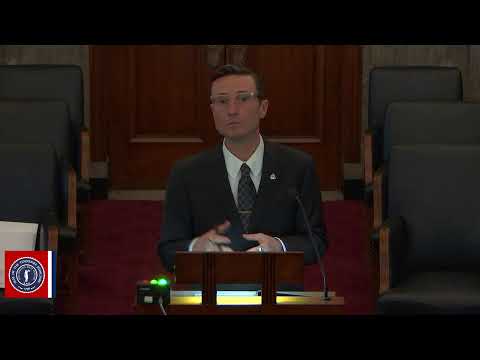
Appellate attorney William Gill of the Appellate Division of the Public Defender’s Office told the panel that the trial court’s use of enhancement factor 6 was legally improper because serious bodily injury, including psychological injury, is an element of aggravated vehicular assault in this case. "We ask that the court reverse the judgment of the trial court and either remand for resentencing or, order that she serve the remainder of her sentence on probation," Gill said. He also argued that the trial court gave only conclusory reasons for declining to apply two mitigating factors the defense had raised, including mitigating factor 11 (no sustained intent to violate the law) and mitigating factor 13 (catchall), and that the Strong R validated risk-and-needs assessment indicated a low risk of reoffending if appropriate mental-health care were provided.
Deputy Solicitor General Katie Neff, arguing for the state, urged the court to affirm. Neff said the record "overwhelmingly supports the imposition of the maximum sentence of confinement," describing evidence that the victim, identified in the record as Mr. Pugh, suffered severe physical and psychological injuries, recalling nightmares, psychiatric hospitalization and ongoing mental-health diagnoses. Neff also told the court that Bankston’s conduct before and after the incident — including use of cocaine, driving with a suspended license and a blood-alcohol concentration the state said was above 0.25 percent — showed a sustained intent and justified the trial court’s decision to decline mitigation.
Counsel on both sides acknowledged some clerical errors in the trial-court judgments. Gill and the state agreed the record should reflect that Bankston pleaded guilty to an amended aggravated vehicular-assault count and that the other vehicular-assault counts should be nolle prosequi, with DUI counts merged into the count to which she pleaded guilty; Gill noted these corrections were laid out in the parties’ briefs.
The court also heard argument about whether the validated risk-and-needs assessment (referred to in the record as the Strong R assessment) was before the trial judge at sentencing. Gill said a Strong R addendum filed after the pre-sentence report did not appear to have been admitted as an exhibit at sentencing and therefore may not have been considered. Neff responded that the validated risk-and-needs assessment is part of the presentence report and that the trial court’s statement that it considered the presentence report necessarily included that assessment.
Panel members did not rule from the bench. After oral argument concluded, the court said it would take the matter under advisement.