Get Full Government Meeting Transcripts, Videos, & Alerts Forever!
Get email alerts on the Criminal Justice topic
No spam. Unsubscribe anytime.
Defense asks Tennessee appellate court to remand vehicular-assault conviction over delayed blood test and contested restitution
Summary
The Tennessee appellate court heard argument in the appeal of State of Tennessee v. Aaron Joseph Ben Arstell on questions about suppression, causation for vehicular assault and the size and basis of a $119,100 restitution award.
The Tennessee appellate court heard argument in the appeal of State of Tennessee v. Aaron Joseph Ben Arstell on questions about suppression, causation for vehicular assault and the size and basis of a $119,100 restitution award.
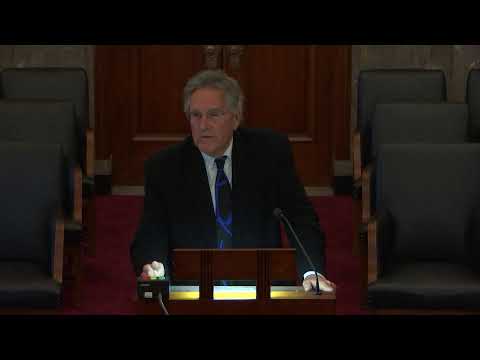
Defense lawyer Chuck Blackard, appearing for Aaron Ben Arstell, told the court that the record lacks a transcript of the suppression hearing and that the delay between the crash and the blood draw left the evidence "very hard" to interpret. "What caused the accident? No one knows," Blackard said, arguing that missing testimony and uncertainties about timing make it inappropriate to rely on the later blood-alcohol reading to prove causation.
Blackard described the case facts as presented at trial: shortly before midnight the defendant rode a motorcycle about 4.9 miles after leaving a bar; he handed his helmet to the passenger, who later sustained severe injuries and was transported by ambulance to Davidson County. He said Tennessee Highway Patrol personnel arrived about 18 minutes after midnight, the officer conducted field sobriety testing and obtained consent for a blood draw only after a substantial further delay — roughly an hour and a half to two hours in different parts of the record — and that expert testimony acknowledged the difficulty of reconstructing blood-alcohol at the time of the crash from a belated sample.
Blackard also challenged the restitution award. He said the trial judge ordered $119,100 in restitution and a $1,000 monthly payment schedule but that the sentencing record does not show how the total was calculated or whether the victim had received any civil recovery or insurance payments. "We just don't have proof of what it is," Blackard said, urging a remand for a contested restitution hearing.
On behalf of the state, Ben Ball urged the court to affirm. Ball said the trial evidence included a blood-alcohol measurement of 0.135 and the presence of cocaine metabolites, and that circumstantial evidence — evidence the state summarized as the motorcycle "went straight" on a curve and that the passenger ended up about 55 feet from the bike with catastrophic injuries — was sufficient to support a vehicular-assault conviction. "The evidence here is sufficient to sustain the jury's verdict," Ball said. He added that the trial court heard testimony about the victim's lost wages and ability to pay and that the restitution figure was not arbitrary.
Both sides discussed case law. Blackard relied on a line of authority he described as requiring a causal link between impairment and an accident and invoked a Whiteside decision; he also cited a recent opinion, State v. Cleave, decided Jan. 14, as relevant to restitution. Ball replied that Whiteside involved a different legal theory and that the circumstantial pattern here differs from Whiteside’s facts.
At several points a justice pressed the parties about gaps in the record. One justice asked directly, "Why is there no transcript in our record?" The parties noted delays and incomplete materials in the appellate record and discussed appellate procedures for reconstructing missing portions if the parties agree or the trial court approves a statement of the evidence.
No decision was issued at argument. The court took the matter under advisement after the parties submitted. The appeal raises three principal questions for the justices: whether the absence of an adequate suppression-record warrants relief, whether the circumstantial evidence suffices to link intoxication to the crash, and whether the restitution award should be remanded for a hearing that clarifies the components of the $119,100 total and any overlap with civil or insurance recoveries.